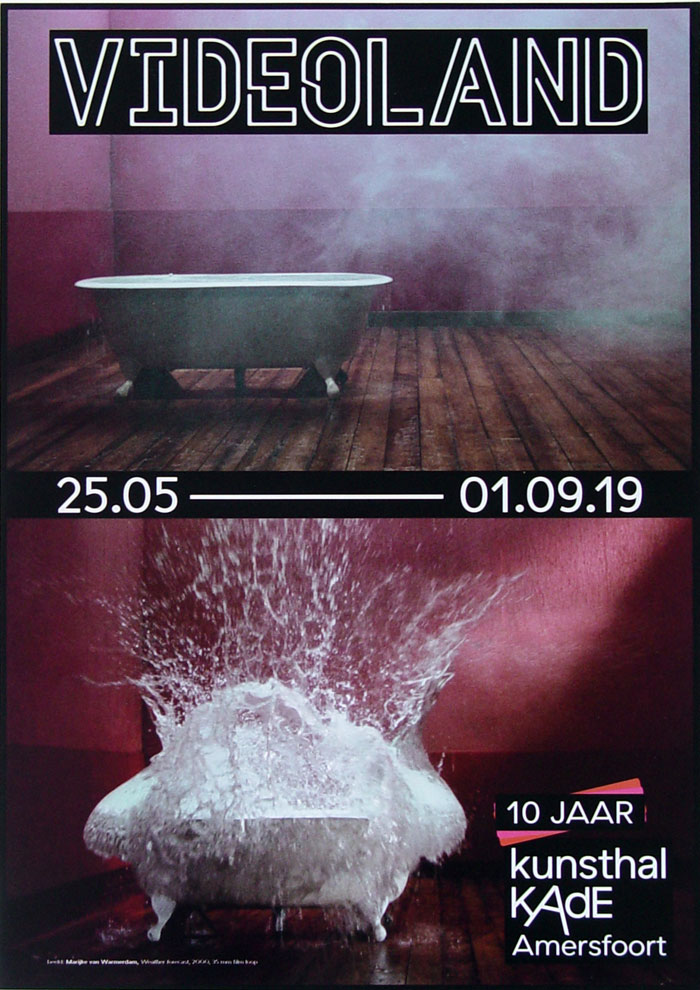
MARIJKE VAN WARMERDAM, Weather Forecast, 2019
41.9 x 29.8 cm
offset poster
published by Kunsthal KADE, Amersfoort, Netherlands
inv.MvW 716
MARIJKE VAN WARMERDAM, Weather Forecast, 2019
41.9 x 29.8 cm
offset poster
published by Kunsthal KADE, Amersfoort, Netherlands
inv.MvW 716
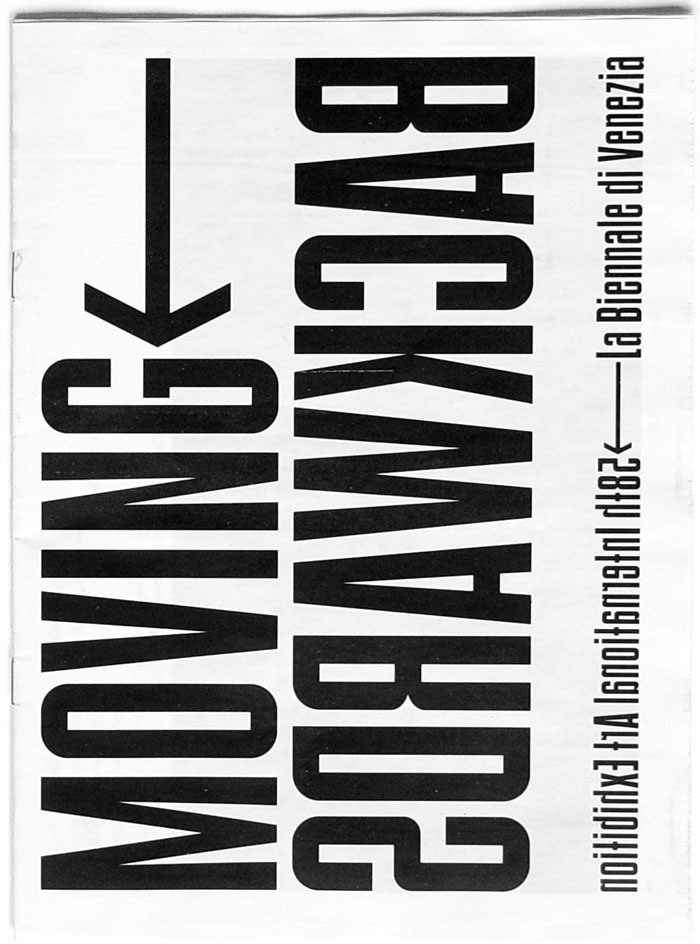
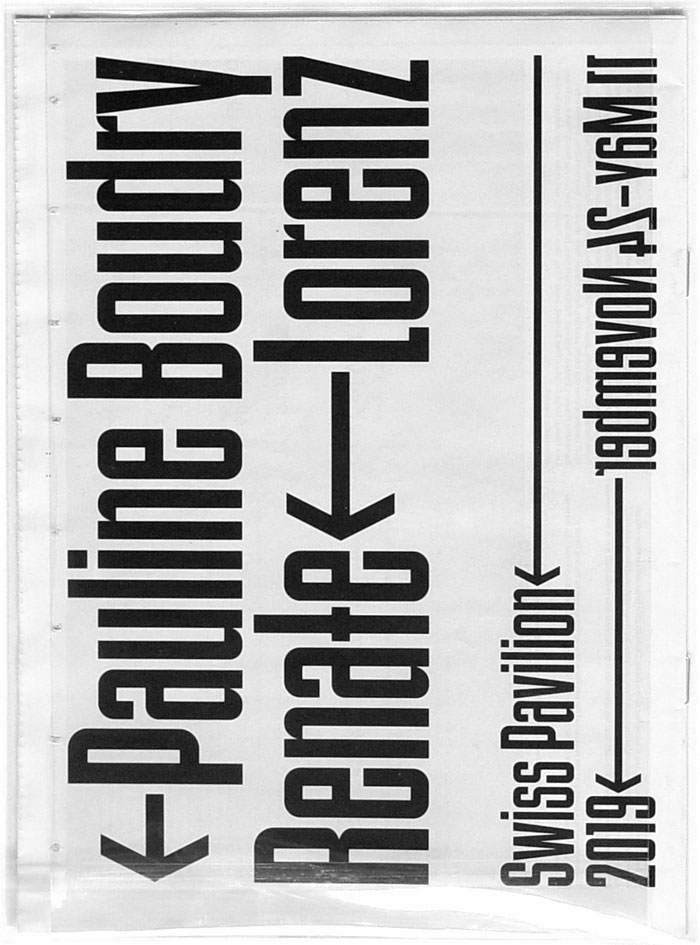
PAULINE BOUDRY and RENATE LORENZ, Moving Backwards, 2019
31 x 22,6 cm
newspaper, stapled, 40 pp. (incl. couver)
pristine condition
published by Pro Helvetia, Geneva, Switzerland
inv.PBou 717
Published on behalf of the Swiss Pavilion, La Biennale di Venezia, Italy.
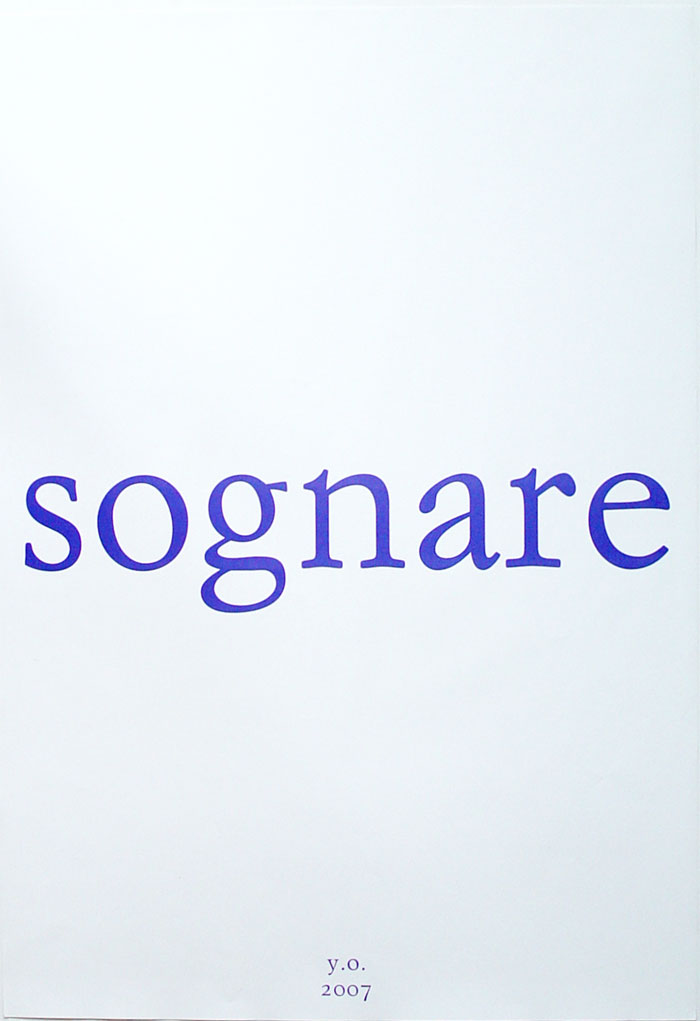
YOKO ONO, Sognare, 2007
98 x 68 cm
offset, poster
edition unknown
condition good
published by Museo di Santa Caterina, Treviso, Italy
The verb “sognare” is Italian for dreaming and Yoko Ono has often stated that ‘A dream you dream alone is just a dream, but a dream you dream together is reality’. She has consistently expressed her faith in the power of positive wishing. As a Fluixus artist she likes to make instruction pieces like e.g. “Painting to be Constructed in Your Head” (1962). In many cases Yoko Ono affirms the power of the viewer, by inviting him to become a co-creator of the work.
“War Is Over, if you want it” is a 1969 poster and billboard action that inspired enough political action that the president of the United States Lyndon B. Johnson sought to have Yoko Ono and John Lennon deported for fear that they would undermine his foreign policy and political fortunes.
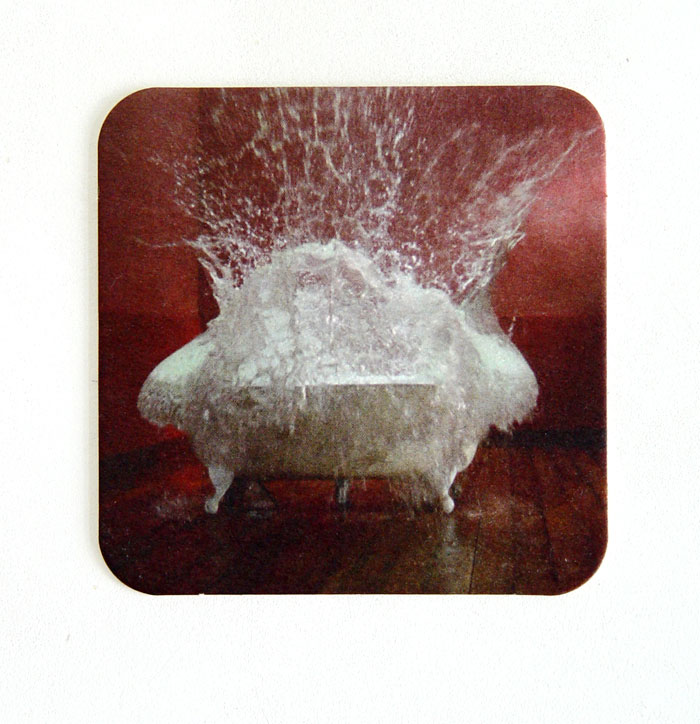
MARIJKE VAN WARMERDAM, “Weather forecast”, film still on coaster, 2019
9.4 x 9.4 cm
edition unknown
issued on behalf of group exhibition “Videoland” at Kunsthal Kade, Amersfoort, Netherlands
Kunsthal KADE in Amersfoort is celebrating a 10 years anniversary with “Videoland”, a group exhibition with videos of Matt Calderwood, IsaacJulien, Ragnar Kjartansson, Christian Marclay, Hans Op de Beeck, Nira Pereg, Tom Pnini, Martin & Inge Riebeek, Guido van de Werve and Marijke van Warmerdam.
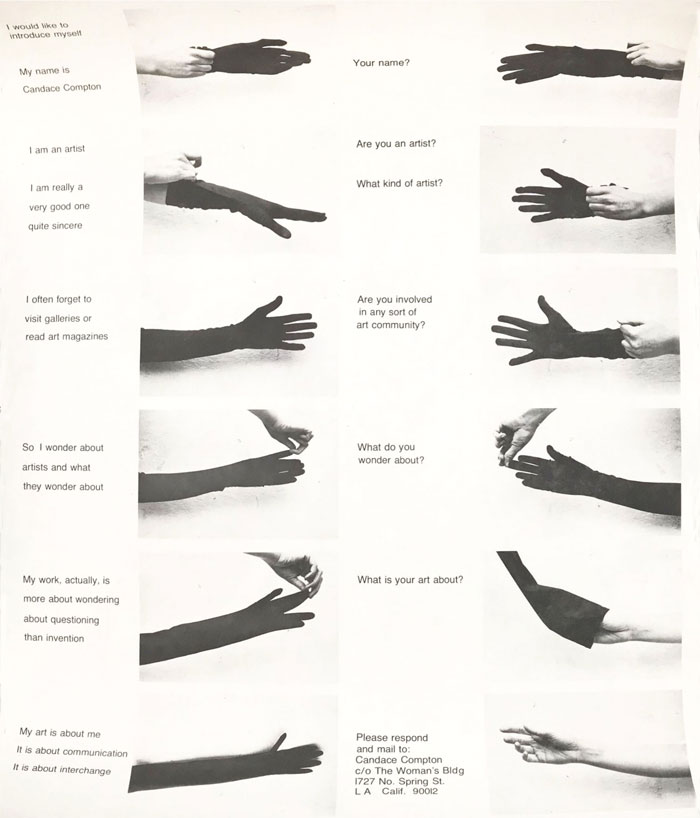
CANDACE COMPTON, I Would Like to Introduce Myself, n.d. [ca 1970-’75]
57,2 x 44,5 cm / 22.5 x 17.5 inches
offset, poster
published by The Woman’s Building, Los Angeles, USA
fine condition
extremely rare
p.o.r.
inv.CCom 000-pr
This poster depicts a pair of hands in various stages of putting on and taking off a black glove, with pieces of text introducing the artist:
‘I would like to introduce myself. My name is Candace Compton – Your name?’
‘I am an artist. I am really a very good one, quite sincere – Are you an artist? What kind of artist?’
‘I often forget to visit galleries or read art magazines – Are you involved in any sort of art community?’
‘So I wonder about artists and what they wonder about – What do you wonder about?’
‘My work, actually, is more about wondering about questioning than invention – What is your art about?’
‘My art is about me. It is about communication. It is about interchange
Please respond and mail to: Candace Compton c/o The Woman’s Bldg, 1727 No. Spring St. LA Calif. 90012′
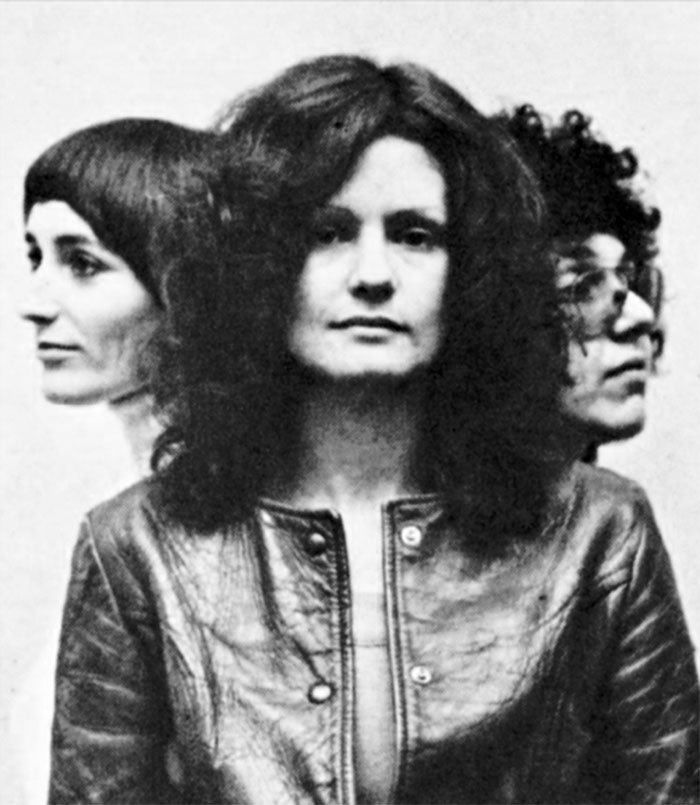
In 1973 The Woman’s Building was founded by graphic designer Sheila Levrant de Bretteville, art historian Arlene Raven and artist Judy Chicago (from left to right). In the same year they founded SFW / Feminist Studio Workshop.
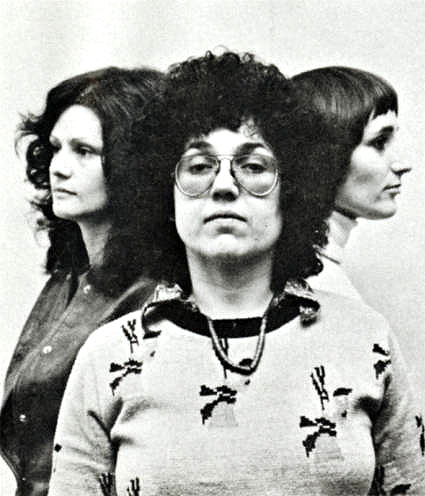
Arlene Raven, Judy Chicago and Sheila Levrant de Bretteville (from left to right).
‘It was a house large enough for everyone, all women, we claimed. It was Womanspace, Womanhouse, and the House of Women, “At Home,” Everywoman’s space, and Femme/ Maison. It was female space, safe space, sacred space, contested space, occupied space, appropriated space, and transformed space. It was revolution and revelation. We were squatters and proprietors, renegades and healers; we dichotomized and fused. We had one commonality: we were convinced that we were transforming culture by offering alternatives, as women, not only in the arts and culture, but also in the way we used space and conducted politics in that space. In its theory and praxis, the Los Angeles Woman’s Building, a material site for nearly two decades, appeared to epitomize much of what is sometimes referred to as second-wave feminism.’
Sondra Hale
The Woman’s Building was a public center for women’s culture in Los Angeles from 1973-1991, and housed the Feminist Studio Workshop, a two year program for women in the arts; the Women’s Graphic Center; galleries; performance space adjacent to a café and thrift store; Chrysalis: a Magazine of Women’s Culture; Sisterhood bookstore; a feminist travel agency, and the LAWVC / Los Angeles Women’s Video Center. The LAWVC was cofounded at the Woman’s Building by Nancy Angelo, Candace Compton, and Annette Hunt in 1976 and joined by Jerri Allyn in 1977. In the same year Candace Compton, Nancy Angelo, Cheri Gaulke and Laurel Klick founded the Feminist Art Workers, a collaborative performance art group doing performances in museums and busses. Later on Vanalyne Green joined the group.
Ref. 1
Lucy R. Lippard (forword) with authors: Terry Wolverton, Sondra Hale, Laura Meyer, including dialogue between Arlene Raven and Terry Wolverton, Betty Ann Brown, Michelle Moravec, Jennie Klein, Sheila Levrant de Bretteville/Bia Lowe, Cecilla Dougherty, Michele Kort and Theresa Chavez From Site to Vision – The Woman’s Building in Contemporary Culture
Ref. 2
Documentary on Feminist Art Workers founded in 1976.
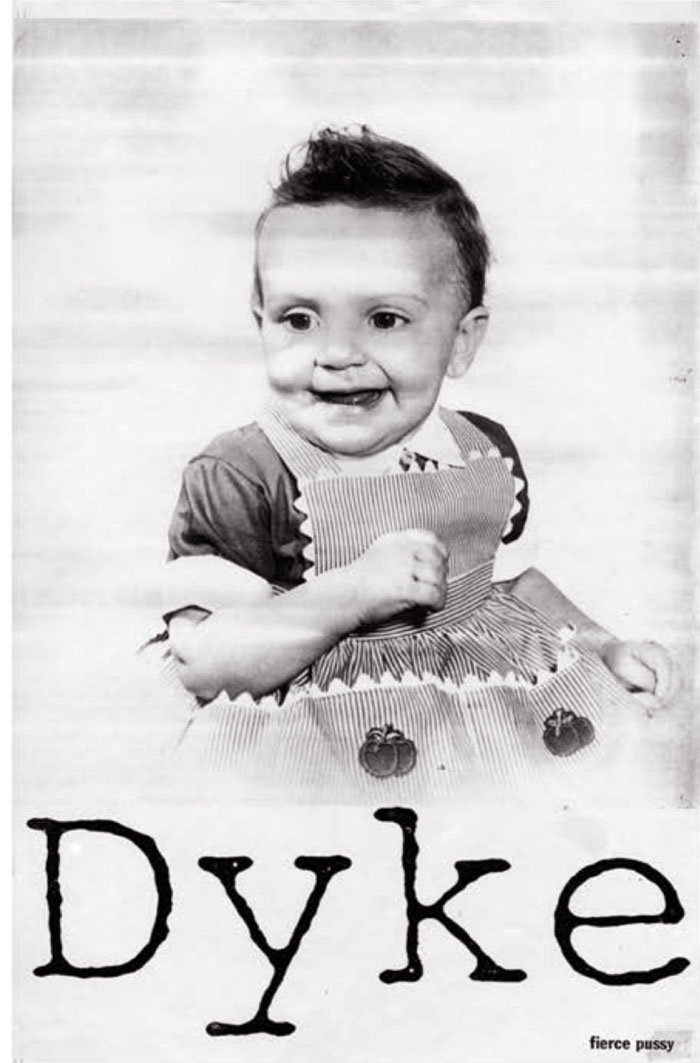
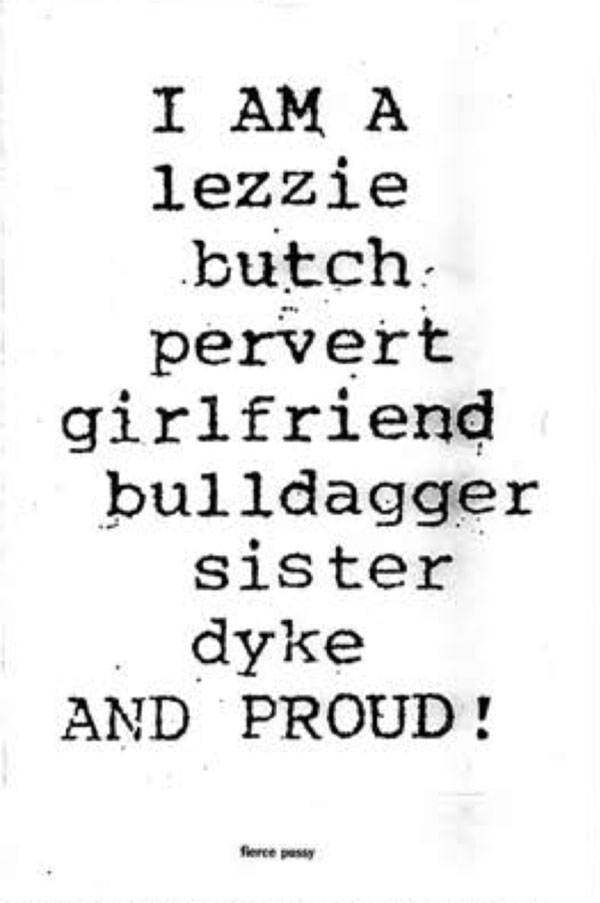
ZOE LOENARD / Fierce Pussy, “List” posters, 1991
each 43,1 x 48 cm
Xeroxgraphy, stack of posters with sticker as issued
some slightly yellowed due to age
provenance: Printed Matter, New York, USA
inv.ZLoe 000
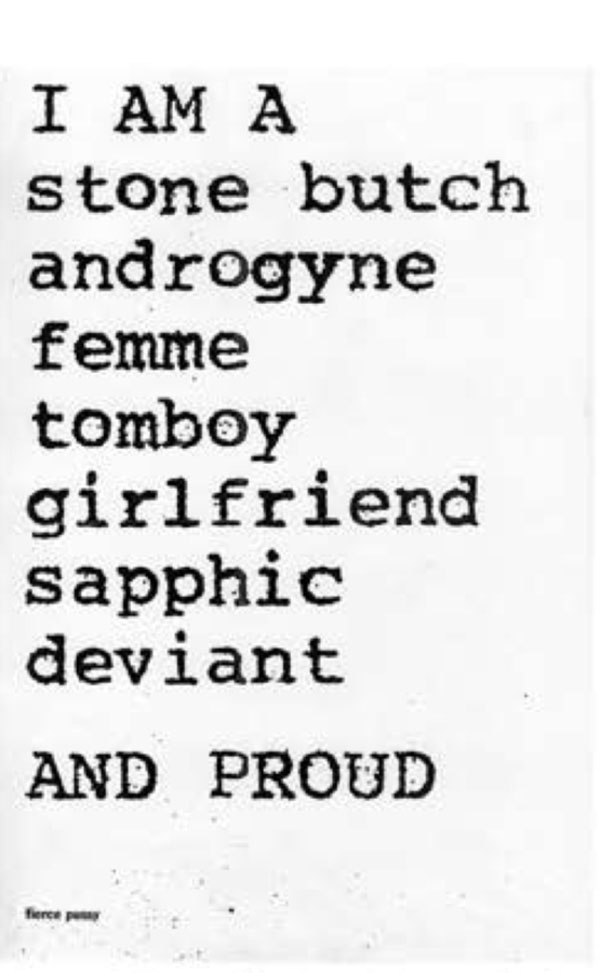
‘During the collective’s first meeting, at Zoe Leonard’s apartment in East Village in 1991, its members adopted Robert’s Rules of Order * and produced a no-frills poster on the spot using paper, scissors, a typewriter and inserted texts in between a matrix with capitals: “I AM A …… AND PROUD!”, i.e. words like “I AM A lezzie, butch, pervert, girlfriend, bulldagger, sister, dyke AND PROUD!” were used.
This is a stack of one of the first “List” posters printed by a New York-based collective with Nancy Brooks Brody and Zoe Leonard in 1991. The latter were respectively working in the design departments at GQ and Traveller magazines in the group’s early days. During quiet moments around the office, they ran off hundreds of patchy Fierce Pussy posters on the available copy machines.’
* Robert’s Rules of Order is the most widely used manual of parliamentary procedure in the United States. It governs the meetings of a diverse range of organizations — including church groups, county commissions, homeowners associations, nonprofit associations, professional societies, school boards, and trade unions — that have adopted it as their parliamentary authority.
Ref. NY Arts Magazine, p.54, Vol. 13
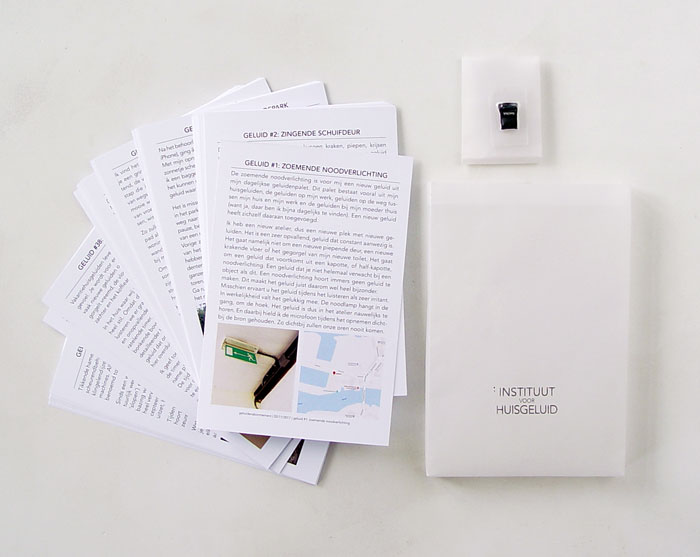
ELISE ‘T HART, Instituut voor Huisgeluid, 2019
21 x 14,5 x 2 cm
52 cards, 52 digital prints, USB stick with 52 sounds, comes in sleeve of tracing paper
texts in Dutch
open edition
published by the artist
info abonnement op uitgaven van Instituut voor Huisgeluid
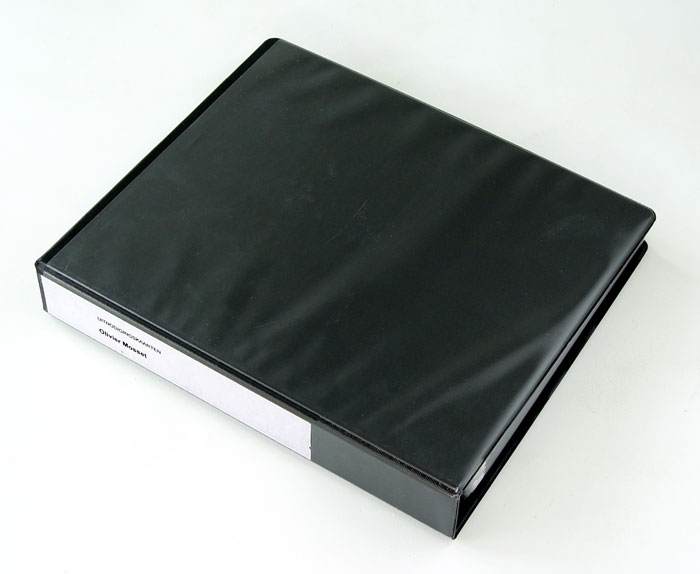
OLIVIER MOSSET, invitation cards of exhibitions 1990-2010
32 x 26 x 5 cm
printed matter: ring binder with 56 exhibition invites, plastic sleeves
€ 950,- plus € 18,50 Track & Trace registered EU mail
inv. OM 000-pr
This collection of printed matter is almost a complete set of exhibition invitations from this period.
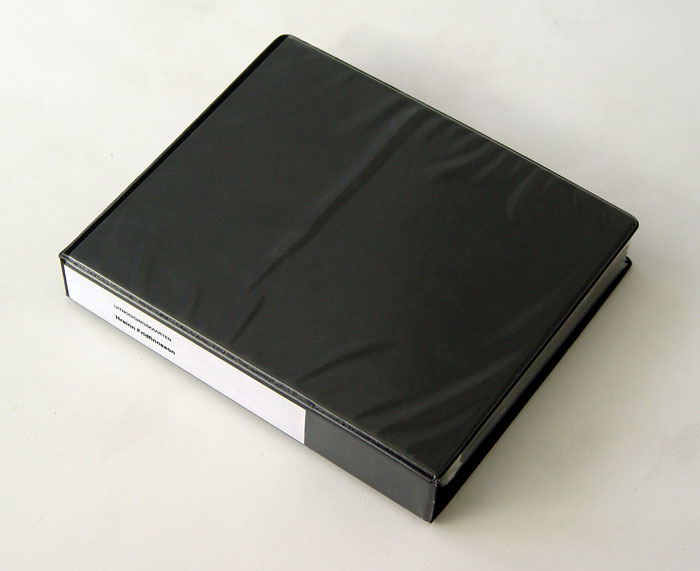
HREINN FRIDFINNSSON, invitation cards of exhibitions 1972-2010
32 x 26 x 5 cm
ring binder with most probably a complete set of exhibition invites in plastic sleeves
€ 1.200,- plus € 24,- Track & Trace registered EU mail
inv.HF 000-pr
The invites in this binder have been collected during a period of 28 years and as such a rarety. It includes a hand written hand-out invite for an exhibition at In-Out Center in Amsterdam in 1972. The card could be considered a self made multiple in tiny envelope, both hand written in pencil. It is unknown if there are any left apart from this one.
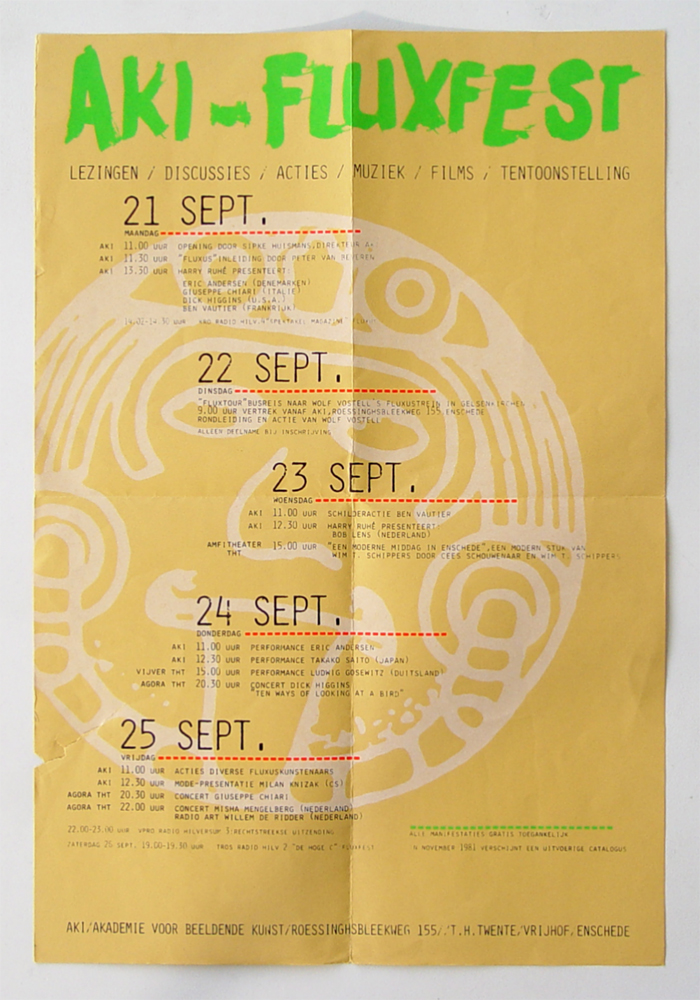
AKI-Fluxfest, 1981
49.4 x 33.5 cm
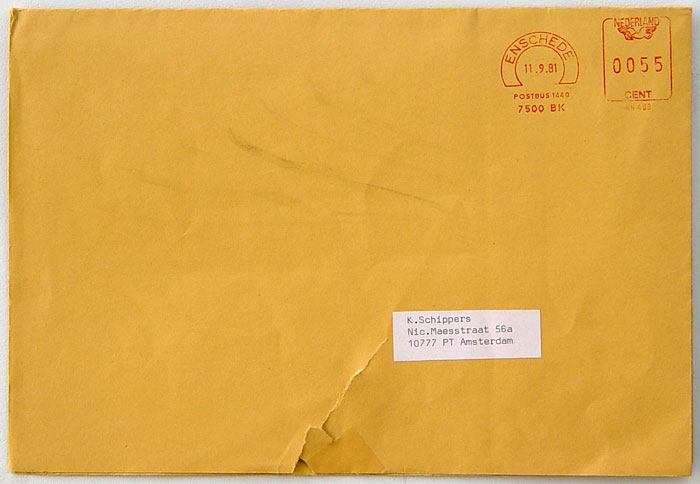
screen print on paper, poster folded as mailed (17 x 24.8 cm)
condition: reasonable, tear lower left, missing chip of paper
rare
inv.Fluxus 687
Peter van Beveren and Harry Ruhé invited Fluxus artists to participate in a Fluxus Festival at the AKI Art Academy in Enschede in The Netherlands. Participating artists were Eric Andersen, Giuseppe Chiari, Dick Higgins, Ben Vautier, Wolf Vostell, Bob Lens, Wim T. Schippers, Takako Saito, Ludwig Gosewitz, Milan Knizak and Mischa Mengelberg. The director Sipke Huismans of the AKI gave carte blanche to the two curators. Van Beveren and Ruhé managed nine artists to come over for five days to this Fluxus event, namely Eric Andersen, Ben Vautier, Wolf Vostell, Bob Lens, Wim T. Schippers, Takako Saito, Ludwig Gosewitz, Milan Knizak and Mischa Mengelberg. Every artist got a fee of Dfl. 3.000,- (“It is about time that artists should be properly paid…’). In the end the AKI almost went bankrupt caused by the high bills of hotel, dinner and free booze, trip and traveling costs.