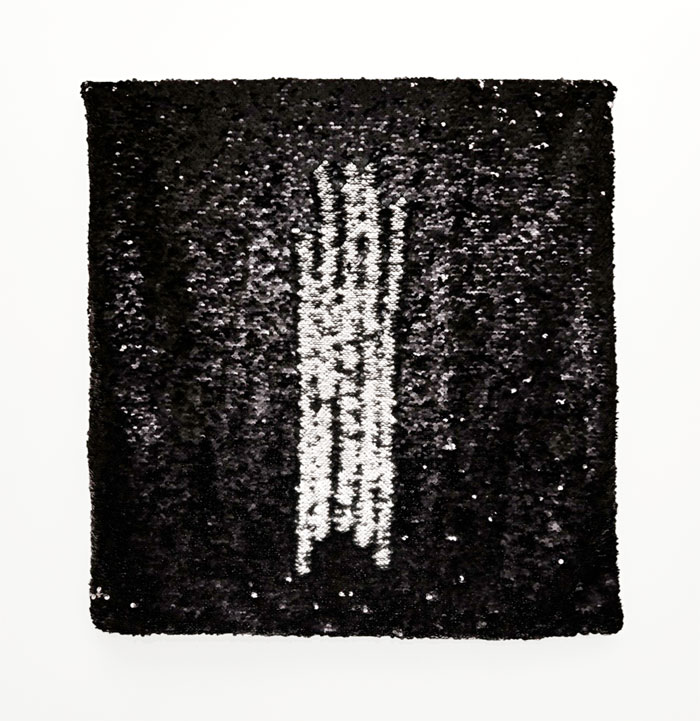
PAULINE BOUDRY / RENATE LORENZ, Untitled (Moving Backwards), 2019
60 x 65 cm
edition 50 + 6 AP
sequin textile, wooden stick, accompanying postcard as certificate
signed, numbered, here nr 20/50
published by the Swiss Pavilion of Biennale di Venezia, Venice
issued on behalf of the Venice Biennale 2019
Here, comes with handmade customised light weight box.
inv.PBou 160
The exhibitions of this artists duo reflect on the current political situation, that is characterised by its regressive and reactionary forces of closure towards the other and towards difference. Faced with the scale of this recent backlash, the artists, instead of practicing an outright opposition, suggest «backward movements» as a potential tool for producing alternative forms of resistance and action.
As Charlotte Laubard observes: «Pauline Boudry / Renate Lorenz conceive their installations as devices that lead us to renegotiate our representations. Their work produces a double inversion: it introduces gestures, images and objects that refer to current political and social issues. At the same time, it grants these elements a high degree of autonomy so that they can interact with the public and establish interrelations that challenge our modes of perception and identification.»
“Long-term symbol of attention-grabbing glamour – from hollywoodian icons’ outfit, cabarets and drag performances – the sequin fabric inhabits the work of Pauline Boudry / Renate Lorenz. Used often as a curtain in their installations and films, its glittering and reflecting texture enhences the physical presence of the canonnical stage material. The curtain refers to roleplay and to the performative dimension of the construction of identities. When touched, abstract and moiré shapes appear. The surface can also completely change color.”
PAULINE BOUDRY / RENATE LORENZ, Wig Piece, 2019
60 x 45 cm
edition 10 + 2 AP signed, numbered
published by the Swiss Pavilion of Biennale di Venezia, Venice
issued on behalf of the Venice Biennale 2019
inv.PBou 000
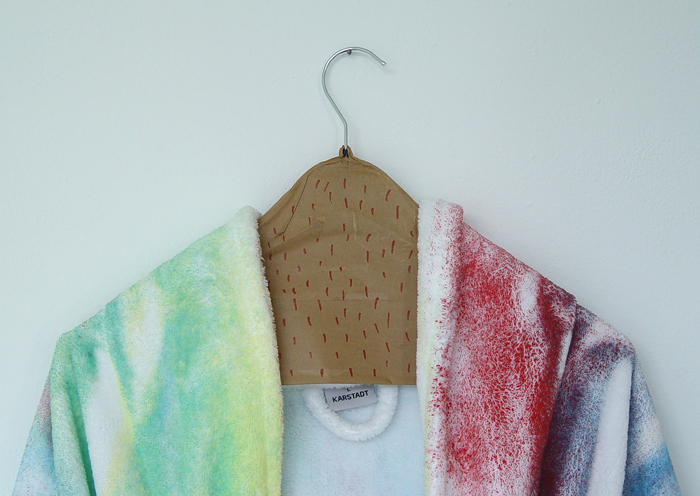
“By introducing hair in a painting’s visual space, the artists comment here on the tactile, bodily, and even an uncanny aspect of painting. The meeting between a hairpiece as painting creates a composition, an assemblage that is reminiscent of characters in their films like Salome in “Salomania” which gathers in one figure the stories of Alla Nazimova, Wu Tsang, Yvonne Rainer, Oscar Wide or Aida Walker. The hair materiality makes us aware of our sexual bodies as spectators in an exhibition. As a structure that hides and unveils altogether, this curtain of hair refers to role play and to the performative dimension of the construction of identities.”
The exhibitions of this artists duo reflect on the current political situation, that is characterised by its regressive and reactionary forces of closure towards the other and towards difference. Faced with the scale of this recent backlash, the artists, instead of practicing an outright opposition, suggest «backward movements» as a potential tool for producing alternative forms of resistance and action.
Additional information
PAULINE BOUDRY and RENATE LORENZ, Untitled (Wig Painting), 2016
50 x 50 cm
artificial hair, aluminum
edition 5 + 2 AP
numbered, signed
published by Kunsthalle Zurich, Switzerland, € 1.900, April 2019
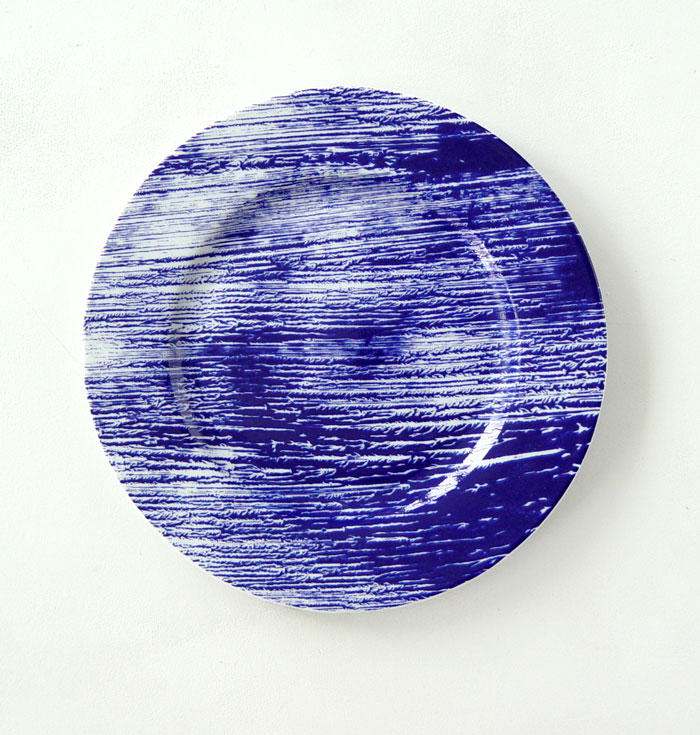
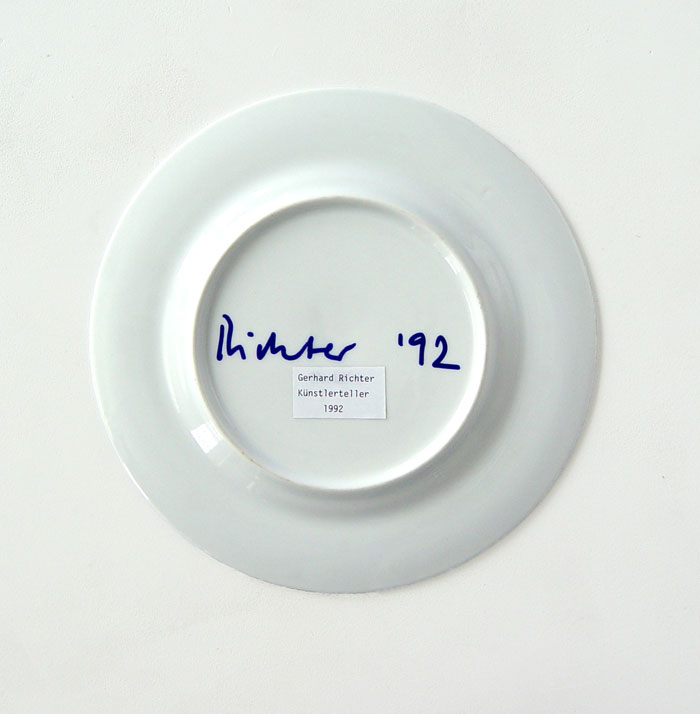
GERHARD RICHTER, cake plate, 1992
diameters 32 cm
porcelain
signed and dated in glazing
published by Edition Obelisco, Cologne, Germany rare
mint
€ 800,- plus € 24 Track & Trace registered EU mail
inv.GR 000-pr
History of price:
eBay-mva130878, Emmerich, Germany € 899,- 8 May 2025
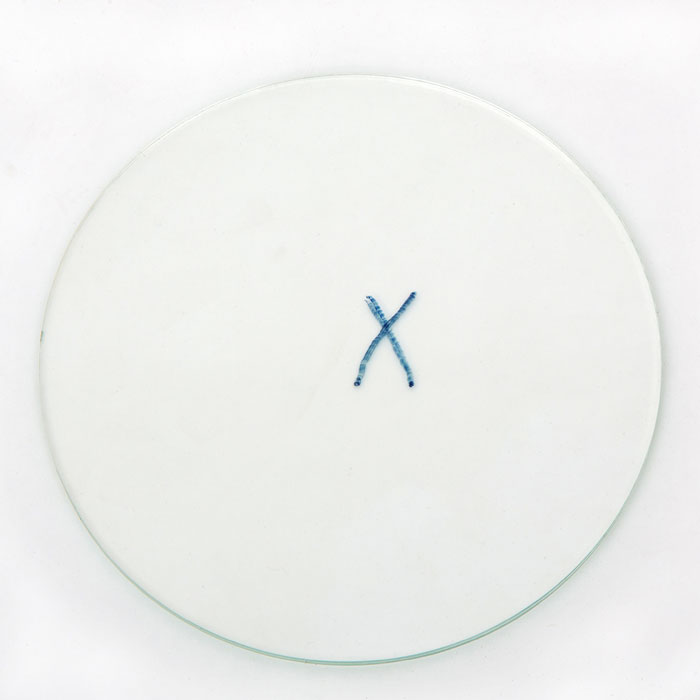
JOËLLE TUERLINCKX, X X, 1999
diameter 14,8 cm
2 parts, felt pen on glass
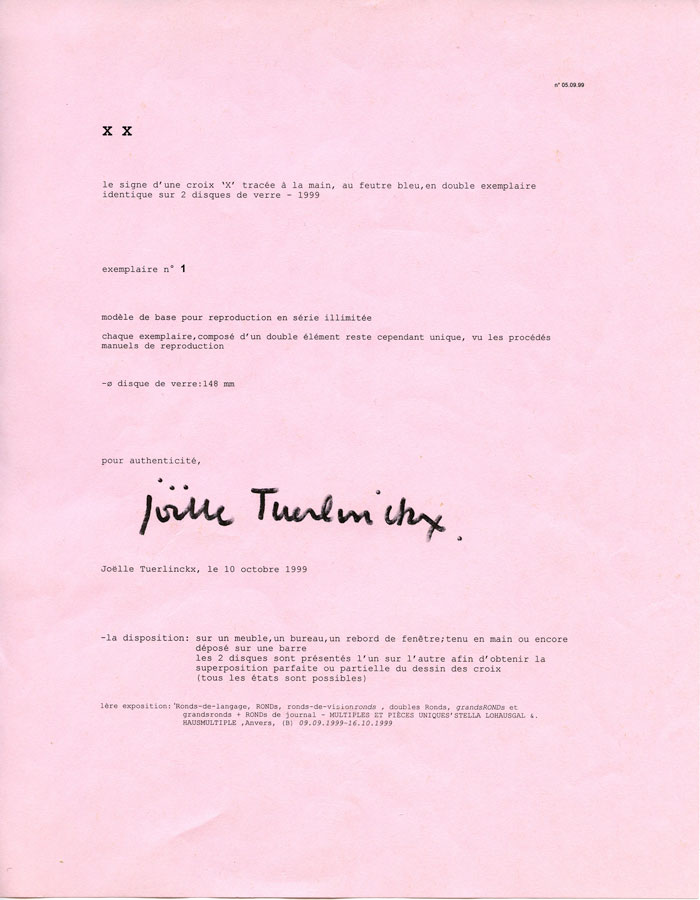
signed, dated sample number 1, certificate (27,5 x 21,5 cm) with instructions
provenance: The Kersten van Steenbergen Collection and acquired from Stella Lohaus Gallery, Antwerp, Belgium
sold
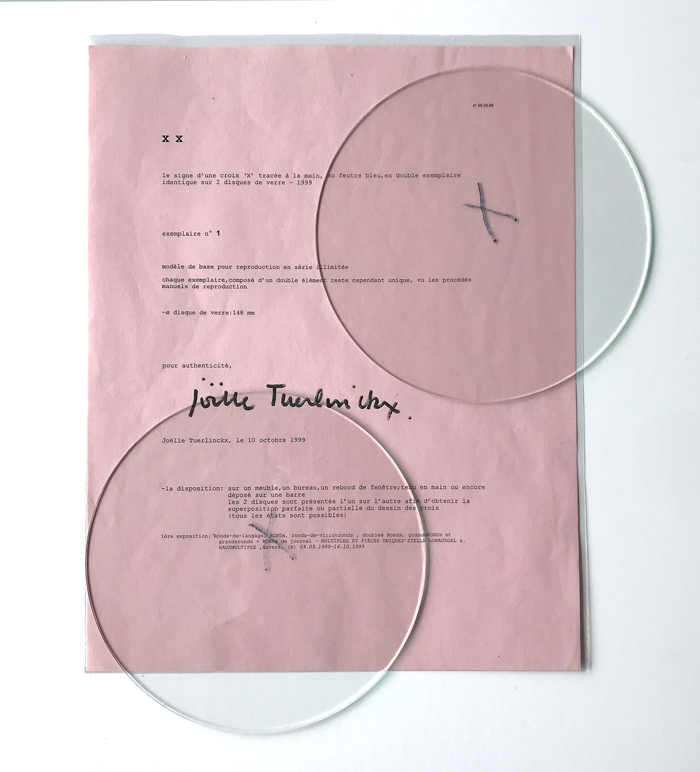
The work ‘X X’ is a series of glass discs that each time is produced on demand, or is for whatever reason by the artist. This sign of a cross “X” is drawn by hand with felt pen, made in duplo on two discs of glass and put on top of each other. This sample is the basis for reproduction of a series of unlimited pairs of discs and seen as such this piece is unique. For display Joëlle Tuerlinckx suggests in the accompanying certificate to use a furniture piece, a desk, a window sill, to hold it in one’s hand or to put it on a shelf. The two discs are shown on top of each other with the crosses not necessarily perfectly fitting, i.e. all positions are right. Right at the top of he certificate it is emphasized by Tuerlinckx that each cross is unique; ‘…considering the manual process of reproduction by hand’.
The work of Joëlle Tuerlinckx should be considered as Fundamental art. Through exhibition interventions she aims to demonstrate how the place in which things are seen shapes our perception of them. It incorporates projections, audio recordings, videos, drawings, collages, photographs, found and crafted objects, and her own writings. She says: ‘An exhibition is an experience of space that proposes action, or reaction, as a means of reflection, of thinking on our human condition…’.
This copy is the basic model for making “X X” in an unlimited edition. This is most likely the only copy from the planned series of unique works, as no second copy has ever been shown or published anywhere.
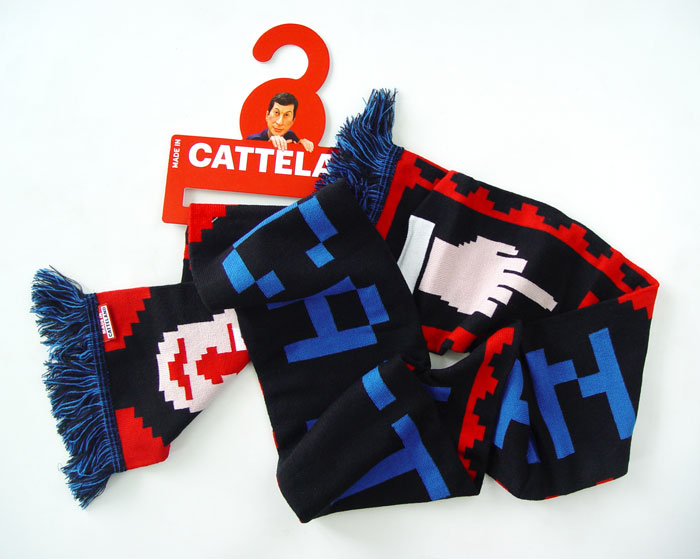
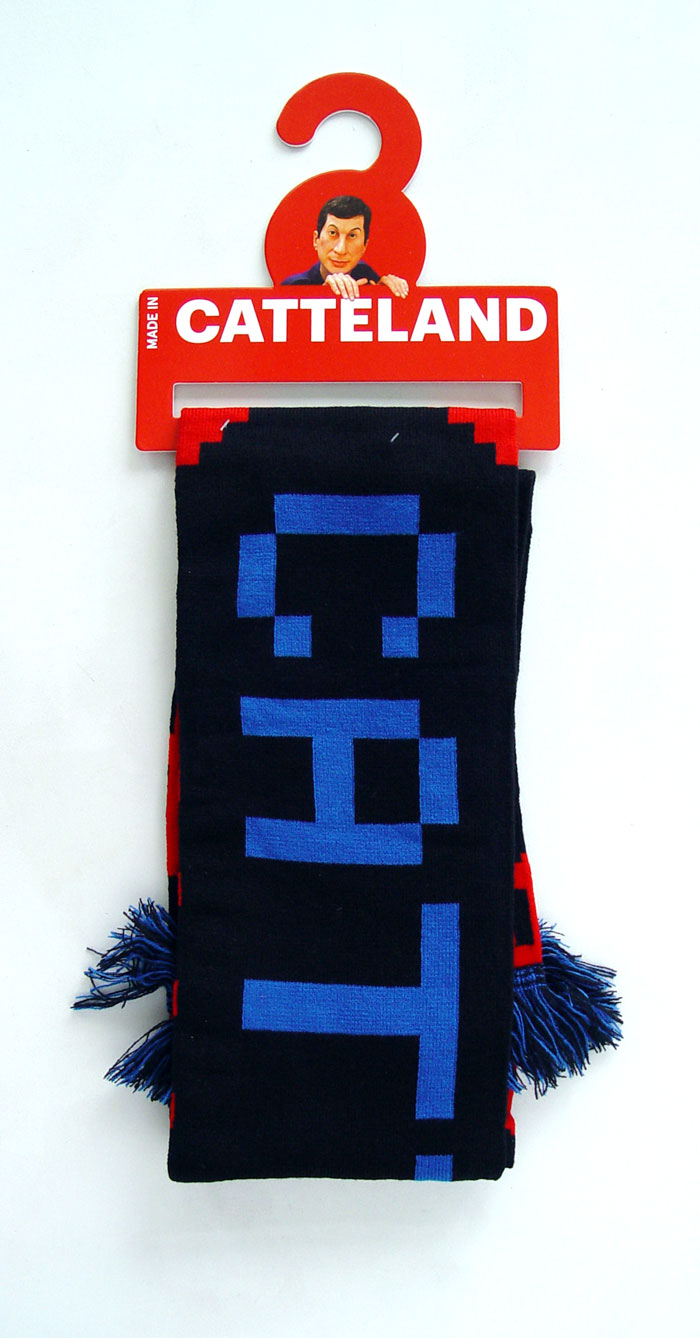
MAURIZIO CATTELAN, Blah, blah, blah, 2018
190 x 20 cm
scarf, polyacrylic fibres, cardboard hanger, offset
limited edition 400
mint very rare
published by Made in Catteland, Italy
€ 360, – plus € 18,00 Track & Trace registered EU mail
inv.MCat 000
This is the only scarf with the name of Maurizio Cattelan on it, out of a huge series of fan scarfs referring to football clubs and museums situated all over the Western world. The rest of the scarf bears the text ‘Blah, blah, blah’, a digitized self-portrait and a hand with a raised middle finger.
In spite of its edition of 400 copies this item is extremely difficult to find on Internet.
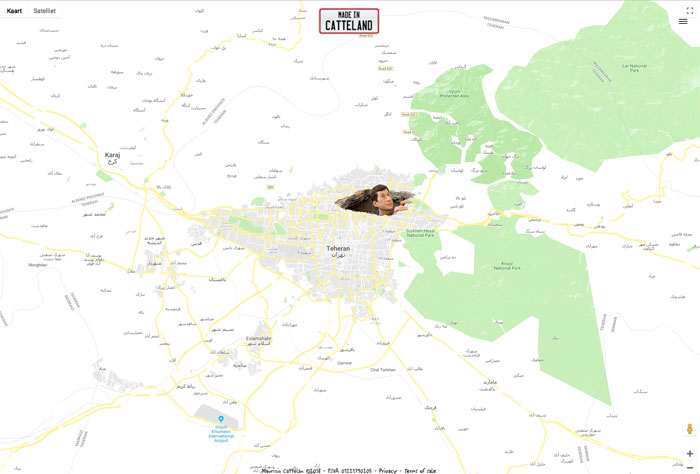
Maurizio Cattelan’s address for contacting Made in Catteland shows the following image:
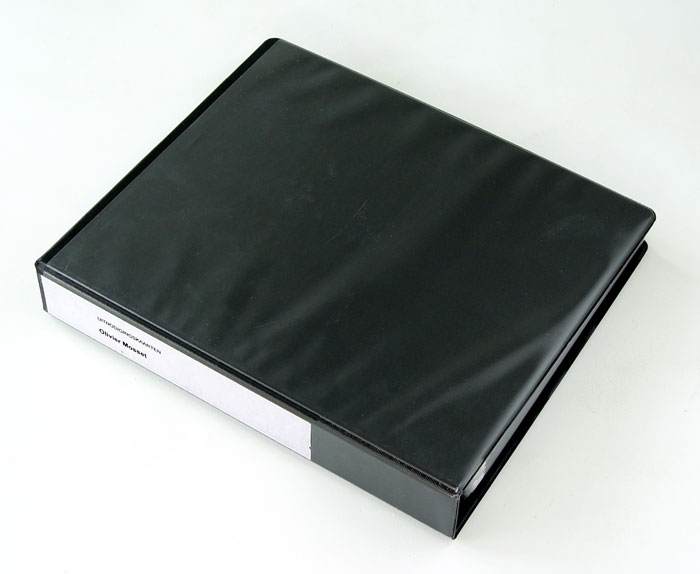
OLIVIER MOSSET, invitation cards of exhibitions 1990-2010
32 x 26 x 5 cm
printed matter: ring binder with 56 exhibition invites, plastic sleeves
€ 950,- plus € 18,50 Track & Trace registered EU mail
inv. OM 000-pr
This collection of printed matter is almost a complete set of exhibition invitations from this period.
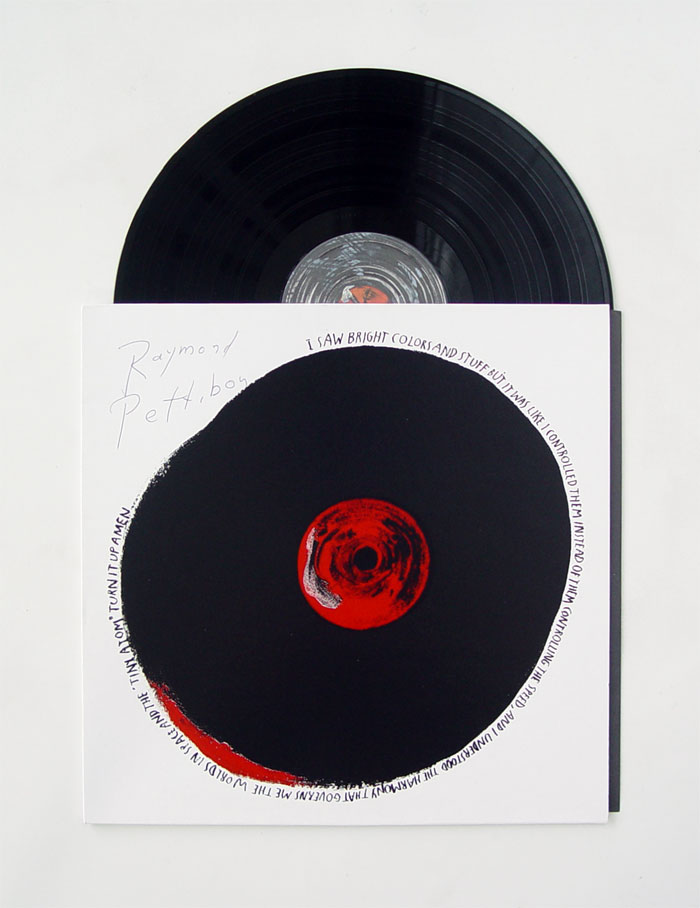
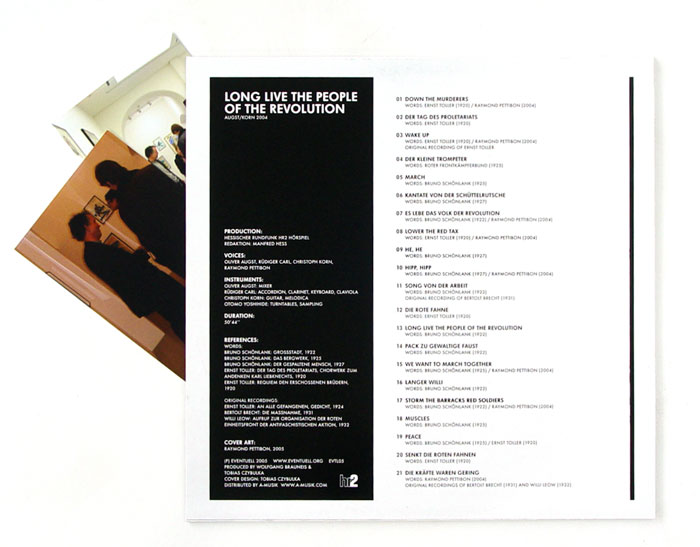
RAYMOND PETTIBON, Blank / “Long Live the People of the Revolution”, 2005
31,1 x 31,5 cm
LP, 12″
signed on cover
comes with 2 private photos of sign event
edition 400, of which unknown signed copies rare
published by Eventuell, Cologne, Germany
€ 450,- plus € 32,- Track & Trace registered EU mail
inv.RPett 698
The cover is a reproduction of a drawing with the following text: ‘I saw bright colors and stuff but it was like I controlled them instead of them controlling the speed, and I understood the harmony that governs me the worlds in space and the ‘tiny atom’ turn it up amen….’ This record is in the collection of MoMA, New York, USA.
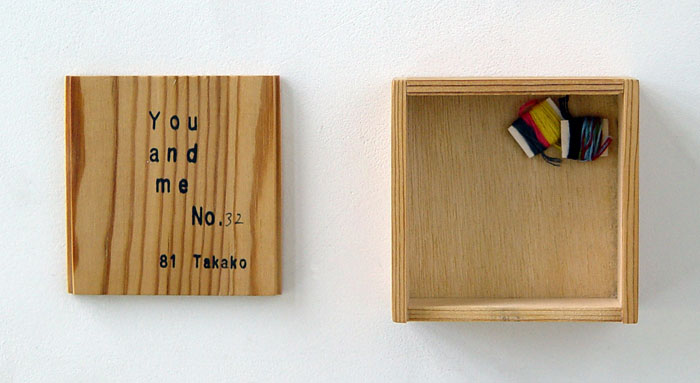
TAKAKO SAITO, You and Me, 1981
3,6 x 8 x 8 cm
yarn spools, coloured threads, wooden box, ink stamps
signed, dated, numbered, here No. 32
€ 960,- plus € 18,- registered mail Track & Trace
inv.TSait 691
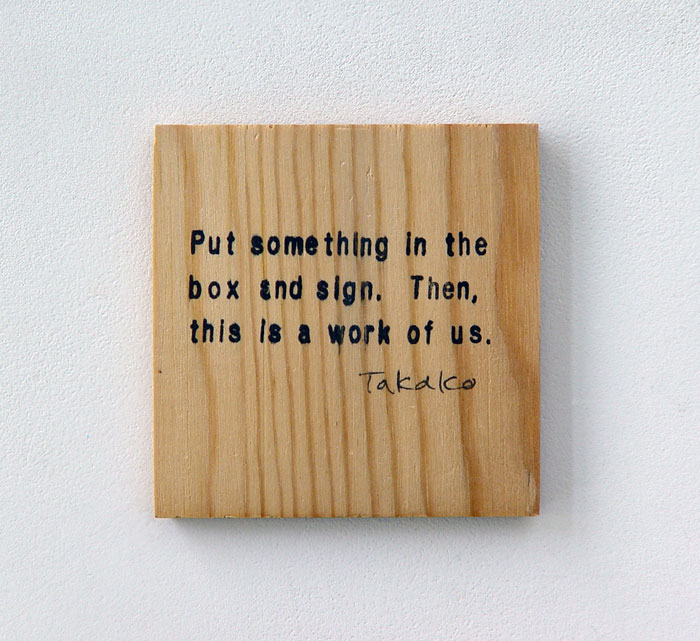
Ink stamped instructions on the reverse of the lid read ‘Put something in the box and sign. Then, this is a work of us.’.
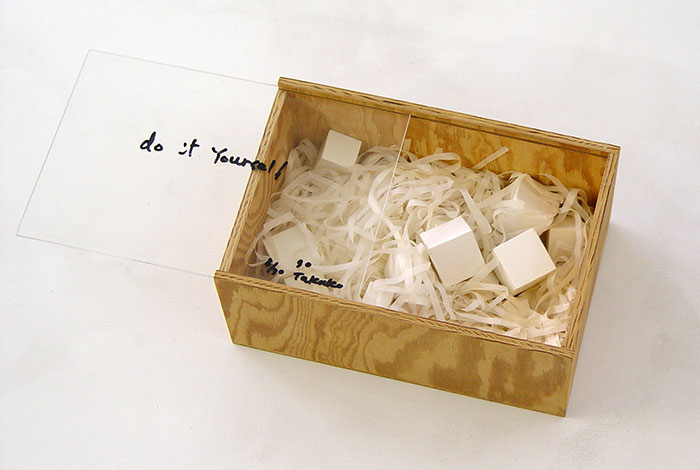
TAKAKO SAITO, Do it Yourself, 1990
10 x 23 x 15.3 cm
17 hand made paper cubes, shredded paper, wooden box, felt pen ink on perspex lid
video tape that accompanied this edition is lacking
signed, dated, numbered
edition 30, here number 8/30
published by Bonner Kunstverein, Bonn, Germany
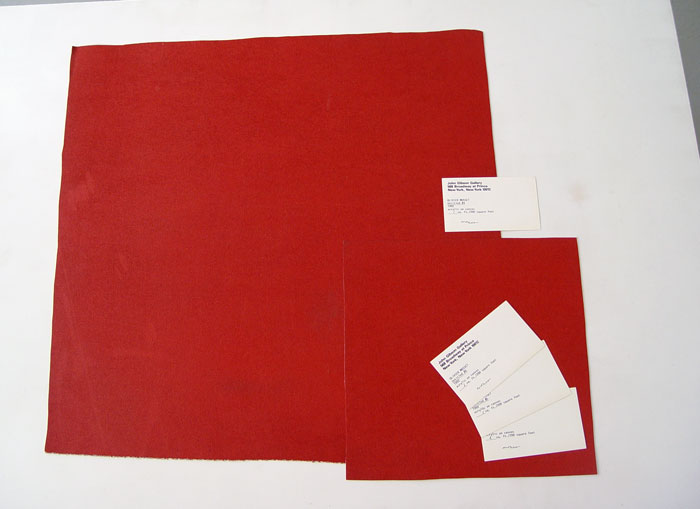
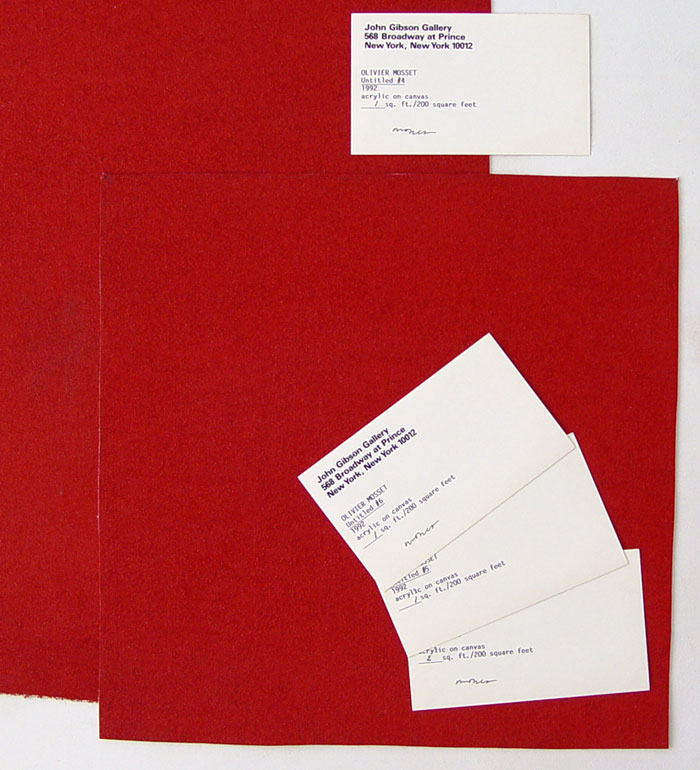
OLIVIER MOSSET, Untitled # 3, #4, #5 and #6, 1992
ca 60 x 60 cm (4 sq. feet) / 31 x 30.5 cm (1 sq. foot)
two pieces of acrylic paint on canvas, 4 labels; 6 parts
signed on 3 labels
numbered and dated in print only sold as unique piece of work
p.o.r.
inv.OM 696-697-pr
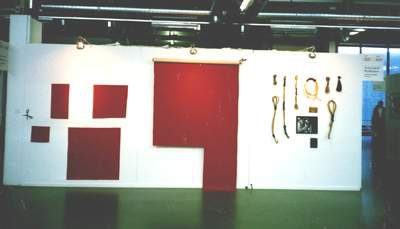
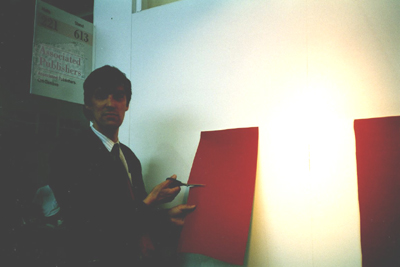
In 1992 John M Armleder proposed several gallerists to show together multiples at the Basel Art Fair under the name Associated Publishers. Participating publishers were Daniel Buchholz, Cologne / Ecart, Geneva / Gallery John Gibson, New York / Galerie van Gelder, Amsterdam / Daniel Newburg, New York and Caroline Nitsch Editions, New York. Gallery John Gibson showed a 10 meters long rolled up canvas originally rejected by Olivier Mosset and kept in his studio. For the Art Basel Editions 1992 he proposed to revive this painting by adding a pair of scissors to the red roll, including pre-signed labels for each sale. This was meant for buyers to cut out a piece of one square foot or more.
During the Art Basel art fair no visitor bought a piece of the edition and at the end of the art fair Kees van Gelder and John Gibson swapped an edition with each other. After the fair the roll of canvas and samples got lost and until today Olivier Mosset has never seen it again. This makes the set pictured above into an unique piece that originally was meant as a kind of DIY edition until the canvas was finished.
Since the roll of red painted canvas is lost for over a period of thirty years, let alone the signed labels, this work should be considered as more than unique. It is a set of three signed editions cut out from the vintage rol for the very first time on the Basel Art Fair. This is all that is left over and therefore this group of works ought to stay together in order to preserve a lucid idea of Olivier Mosset to give a twist to his originally disapproved very large painting. KvG