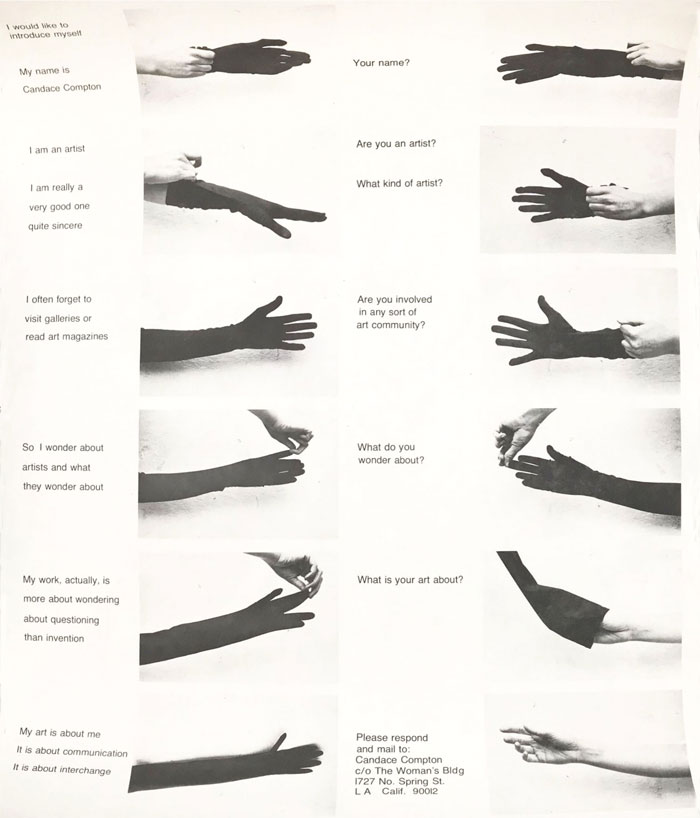
CANDACE COMPTON, I Would Like to Introduce Myself, n.d. [ca 1970-’75]
57,2 x 44,5 cm / 22.5 x 17.5 inches
offset, poster
published by The Woman’s Building, Los Angeles, USA
fine condition extremely rare
p.o.r.
inv.CCom 000-pr
This poster depicts a pair of hands in various stages of putting on and taking off a black glove, with pieces of text introducing the artist:
‘I would like to introduce myself. My name is Candace Compton – Your name?’
‘I am an artist. I am really a very good one, quite sincere – Are you an artist? What kind of artist?’
‘I often forget to visit galleries or read art magazines – Are you involved in any sort of art community?’
‘So I wonder about artists and what they wonder about – What do you wonder about?’
‘My work, actually, is more about wondering about questioning than invention – What is your art about?’
‘My art is about me. It is about communication. It is about interchange
Please respond and mail to: Candace Compton c/o The Woman’s Bldg, 1727 No. Spring St. LA Calif. 90012′
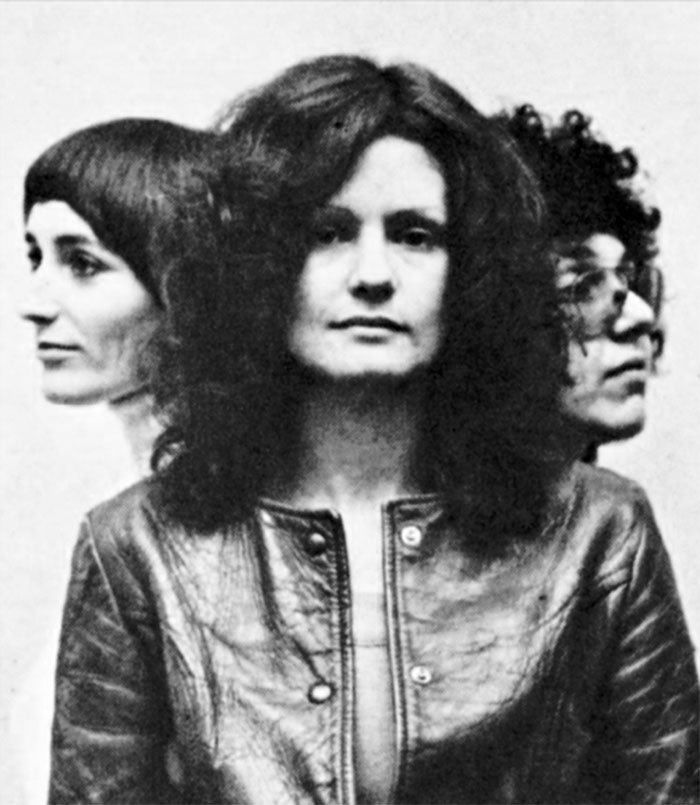
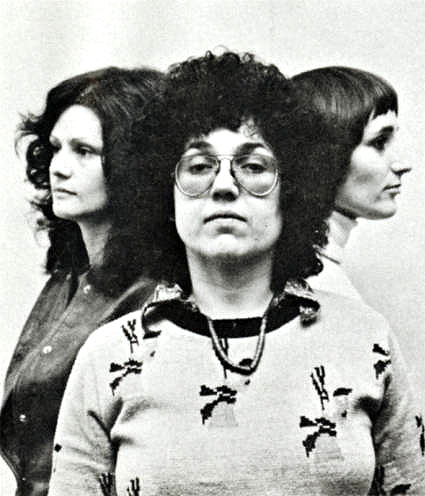
In 1973 The Woman’s Building was founded by graphic designer Sheila Levrant de Bretteville, art historian Arlene Raven and artist Judy Chicago (from left to right). In the same year they founded SFW / Feminist Studio Workshop.
Arlene Raven, Judy Chicago and Sheila Levrant de Bretteville (from left to right).
‘It was a house large enough for everyone, all women, we claimed. It was Womanspace, Womanhouse, and the House of Women, “At Home,” Everywoman’s space, and Femme/ Maison. It was female space, safe space, sacred space, contested space, occupied space, appropriated space, and transformed space. It was revolution and revelation. We were squatters and proprietors, renegades and healers; we dichotomized and fused. We had one commonality: we were convinced that we were transforming culture by offering alternatives, as women, not only in the arts and culture, but also in the way we used space and conducted politics in that space. In its theory and praxis, the Los Angeles Woman’s Building, a material site for nearly two decades, appeared to epitomize much of what is sometimes referred to as second-wave feminism.’
Sondra Hale
The Woman’s Building was a public center for women’s culture in Los Angeles from 1973-1991, and housed the Feminist Studio Workshop, a two year program for women in the arts; the Women’s Graphic Center; galleries; performance space adjacent to a café and thrift store; Chrysalis: a Magazine of Women’s Culture; Sisterhood bookstore; a feminist travel agency, and the LAWVC / Los Angeles Women’s Video Center. The LAWVC was cofounded at the Woman’s Building by Nancy Angelo, Candace Compton, and Annette Hunt in 1976 and joined by Jerri Allyn in 1977. In the same year Candace Compton, Nancy Angelo, Cheri Gaulke and Laurel Klick founded the Feminist Art Workers, a collaborative performance art group doing performances in museums and busses. Later on Vanalyne Green joined the group.
Ref. 1
Lucy R. Lippard (forword) with authors: Terry Wolverton, Sondra Hale, Laura Meyer, including dialogue between Arlene Raven and Terry Wolverton, Betty Ann Brown, Michelle Moravec, Jennie Klein, Sheila Levrant de Bretteville/Bia Lowe, Cecilla Dougherty, Michele Kort and Theresa Chavez From Site to Vision – The Woman’s Building in Contemporary Culture
Ref. 2
Documentary on Feminist Art Workers founded in 1976.
ZOE LOENARD / Fierce Pussy, “List” posters, 1991
each 43,1 x 48 cm
Xeroxgraphy, stack of posters with sticker as issued
some slightly yellowed due to age
provenance: Printed Matter, New York, USA
inv.ZLoe 000
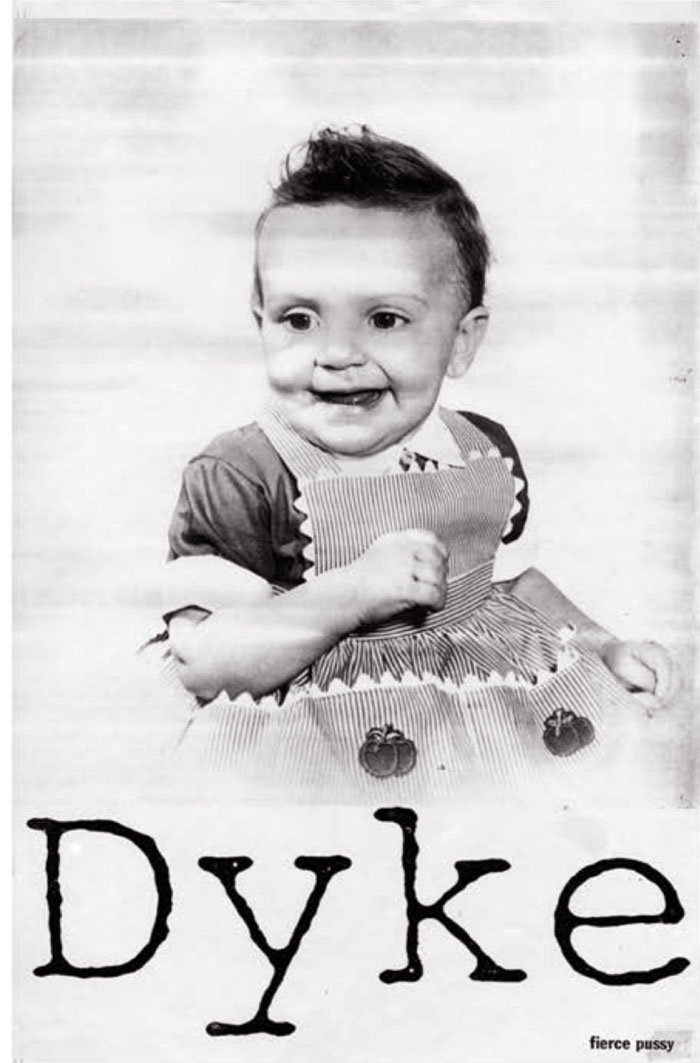
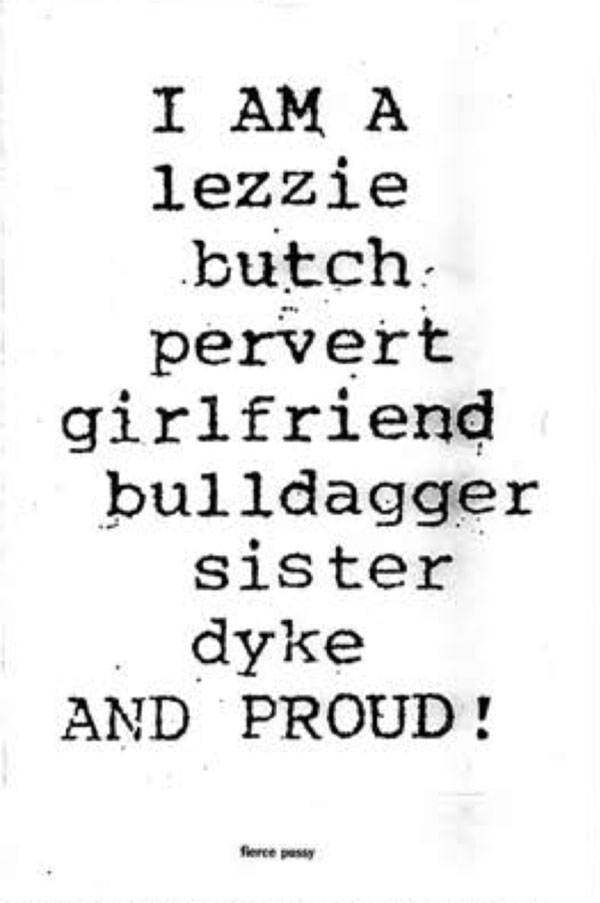
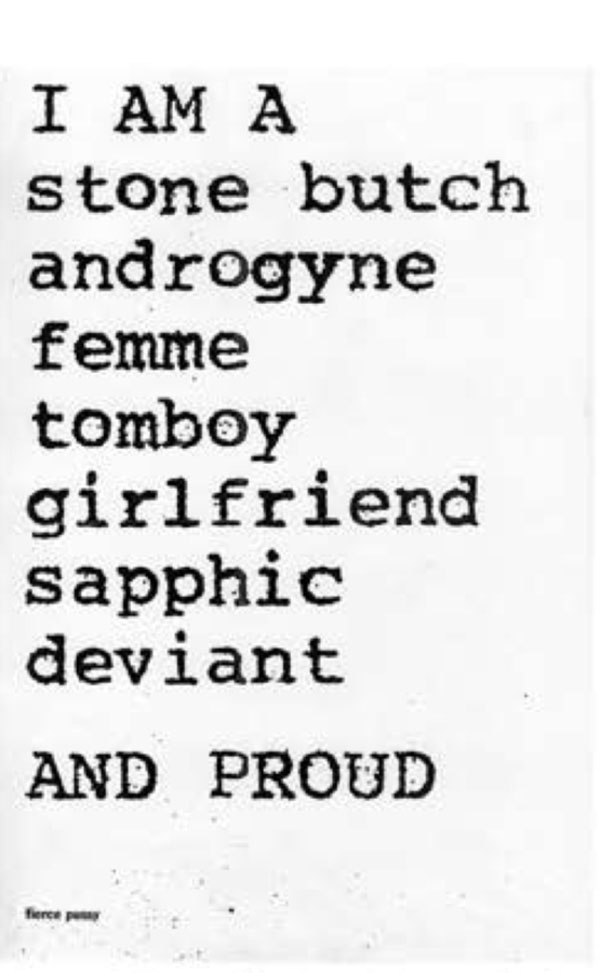
‘During the collective’s first meeting, at Zoe Leonard’s apartment in East Village in 1991, its members adopted Robert’s Rules of Order * and produced a no-frills poster on the spot using paper, scissors, a typewriter and inserted texts in between a matrix with capitals: “I AM A …… AND PROUD!”, i.e. words like “I AM A lezzie, butch, pervert, girlfriend, bulldagger, sister, dyke AND PROUD!” were used.
This is a stack of one of the first “List” posters printed by a New York-based collective with Nancy Brooks Brody and Zoe Leonard in 1991. The latter were respectively working in the design departments at GQ and Traveller magazines in the group’s early days. During quiet moments around the office, they ran off hundreds of patchy Fierce Pussy posters on the available copy machines.’
* Robert’s Rules of Order is the most widely used manual of parliamentary procedure in the United States. It governs the meetings of a diverse range of organizations — including church groups, county commissions, homeowners associations, nonprofit associations, professional societies, school boards, and trade unions — that have adopted it as their parliamentary authority.
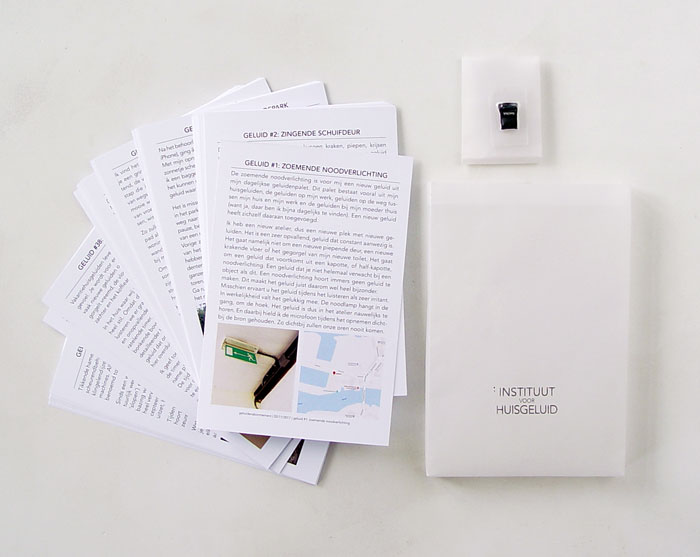
ELISE ‘T HART, Instituut voor Huisgeluid, 2019
21 x 14,5 x 2 cm
52 cards, 52 digital prints, USB stick with 52 sounds, comes in sleeve of tracing paper
texts in Dutch
open edition
published by the artist
info abonnement op uitgaven van Instituut voor Huisgeluid
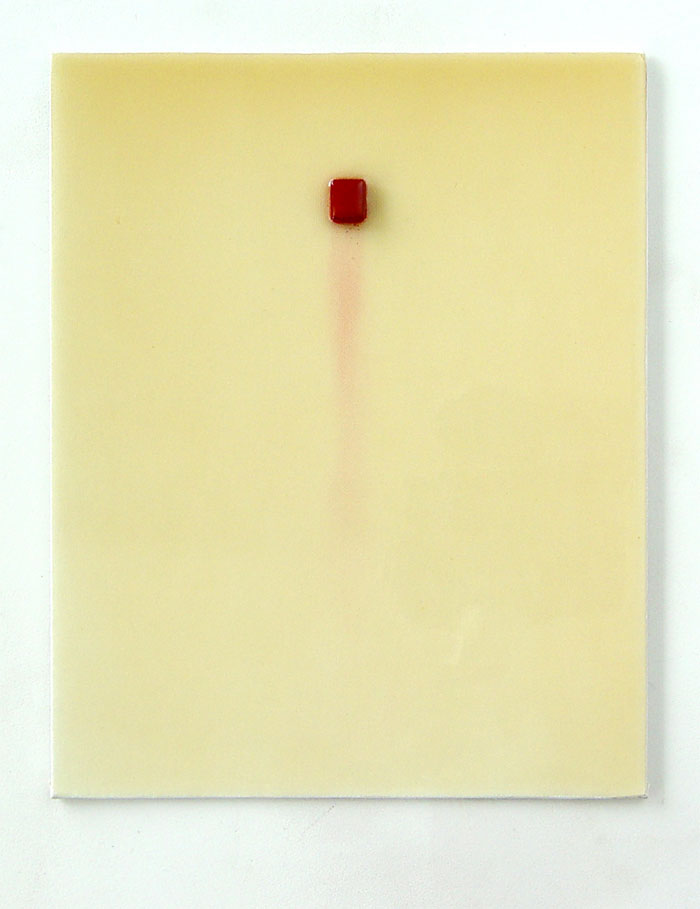
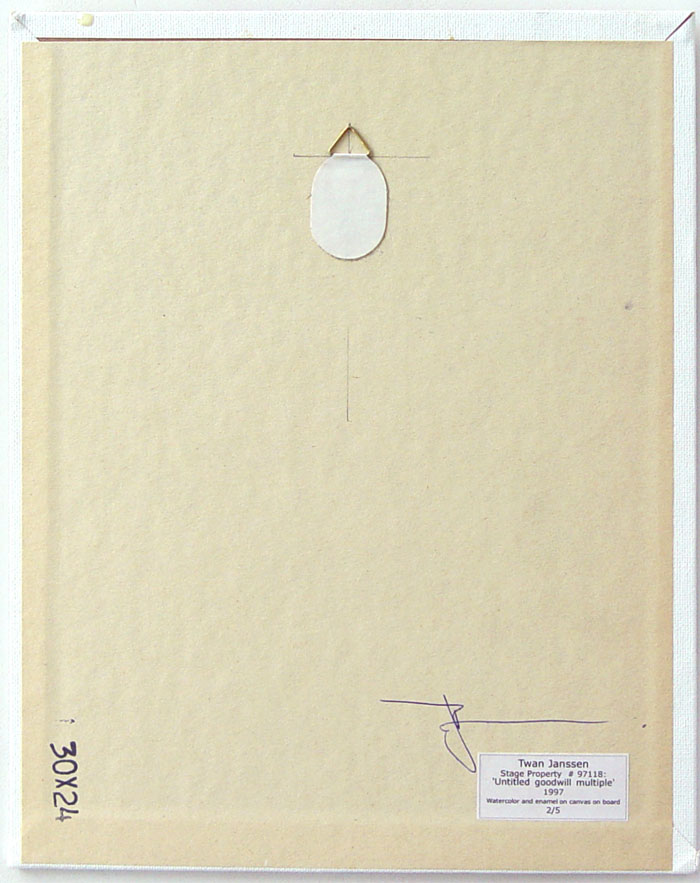
TWAN JANSSEN, Stage Property # 97118: “Untitled goodwill multiple”, 1997
30 x 24 x 1 cm
block of aquarel paint, enamel
edition 5, here nr 2/5
signed, dated, numbered
published by the artist
Collection K. van Gelder, Amsterdam
Twan Janssen – Inside the Art World
“In the past decades, the art world has met with increasing interest from philosophers and sociologists. Whereas the art world (galleries, museums, critics) used to be regarded as a mere vehicle for great art to be created and made public, it is now studied as such. Starting in the 1960s, philosophers like Arthur C. Danto and George Dickie theorized on how (factions within) the art world decided what is art and what is not; it was an attempt to develop an institutional theory of art as an alternative for old definitions of art. [1] According to the institutional theory of art, something is art when the art world decides that it is art; no more can be said about the ‘essential’ characteristics of works of art. In this theory of art, ‘the art world’ was used as a philosophical abstraction, but in the 1980s and especially the 1990s there was more and more sociological research into the workings of the art world. Especially influential was Pierre Bourdieu’s investigation of the literary world as a social ‘field’ with different factions, progressive or conservative, small and elitist or more mass-oriented. [2]
It was not only in the area of theory that the art world was explored. Artists themselves have been active in this regard as well. In the 1970s artists like Hans Haacke made works that criticized the art world and its ties to corporate capital (sponsors or trusties of museums were exposed by Haacke as ruthless exploiters), whereas in the 1980s artists took a less militant, more ironic view at their own world: Belgian artist Guillaume Bijl created a show with work by four young American artists, all of them fictional – a comment on how young ‘talents’ are hyped by the market. Twan Janssen is therefore far from being the first artist to take the context of art as his subject, but he is unique in treating the art world as a stage, himself as a player, and the works of art as props. In his work, fact and fiction intermingle, a career turns into a drama (or a farce, or a soap opera), and exhibitions become stage sets.”
Plays and Props
In 1996, Twan Janssen gave a talk entitled Lecture in Pasadena (California). The talk, which was in Dutch, was translated into English by an interpreter. Gradually, the translator’s text differed more and more from Janssen’s Dutch text. When it was finally time for questions from the audience, the interpreter completely misrepresented both the audience’s questions and Janssen’s answers to the other party. [3] It was a carefully planned performance, which was not so much an exercise in mocking the audience but an absurd little play in which everyone participated in the creation of confusion (the audience unknowingly, Janssen and the interpreter knowingly). While it was first and foremost a good prank, it can also be seen as an allegory on the relationship between artist, the media (the interpreter) and the audience. The artist attempts to control the diffusion and reception of his work, but in Lecture, this seems to be a rather doomed attempt, with the process of signification getting completely out of hand. Nonetheless, as it is all planned, the artist in fact asserts his control. For Janssen, who cannot stand wrong information about his work being passed on in the press, this might almost be an exercise in exorcism.
On the other hand, Janssen himself creates confusion by turning himself into an almost fictional character. Janssen plans his career in advance, which results in differences between plan and reality. Gallery owners and museum curators may get letters in which Janssen informs them that his career plans for the year in question demand that he has an exhibition in their institution. Understandably, these people do not always take on the offer, so new fictions have to be created to keep up appearances: in 1999, Janssen recreated the Paris-based gallery Air de Paris in a Museum in Schiedam (the Netherlands), because having a show at Air de Paris was one of his goals for 1999. Even though the gallery had nothing to do with this exhibitions, it received the usual percentage for works from this show that were sold. Another example of Janssen’s bizarre kind of career management is his exhibition Folly at Stedelijk Museum Bureau Amsterdam in 1997, wich contained a hilarious exchange of letters between Janssen and Sjarel Ex of the Centraal Museum in Utrecht; in this show, Janssen also presented letters to critics, who were warmly invited to write articles or make TV-items about the show. But Janssen is not an artist who is engaged only with strategies, and Folly did not consist primarily of texts on pieces of paper. These texts were comparatively small elements in an installation that consisted of paint in all kinds of shapes and forms: there were objects that might qualify as paintings, but there were also sheets of paint dangling from the system of chrome tubes which Janssen had installed in the gallery space. Janssen uses acrylic paint as a material that can be used in lots of ways, to make sculptures, reliefs, objects. The works of art, called Stage Properties, are combined in exhibitions to form installations that are like sets for plays or television shows.
In his famous series of Artforum articles called ‘Inside the White Cube’, Brian O’Doherty has analysed how artists have increasingly used the white space of the modern art gallery or museum as a constituent element of their work rather than just as a space in which to show self-contained works of art. [4] This has led to the rise of environments and installation art since the 1960s, in which the work of art takes possession of the gallery space. This has made art more theatrical, as one does not contemplate an isolated work of art anymore but rather walks through the work of art like an actor in a stage set. [5] But if much contemporary art is theatrical in nature, Janssen is much more explicit about this than most. He turns the work of art into a ‘stage props’ as if they were objects on the set of a play or a TV show; Janssen’s show Folly had numerous TV-references, including a ‘blue box’ that could be used for chromakey effects, and a theme song, Twan’s Theme. By giving his works titles like Untitled (Stage Property # 96018), the glorious work of art, an object of veneration and economic interest, is equated to objects that play a merely functional part in sets for the theatre or television. These works of art are thus ‘outed’ by Janssen as being not cult objects in an art-for-art’s-sake religion, but props in a social theatre, in the gallery or in a collector’s home, in the soap opera of our lives.
Janssen’s 1996 exhibition Solo at the Museum voor Moderne Kunst in Arnhem consisted of a set for a play which was also called Solo; the set consisted of a gallery with some works of art in it, and next to this there was a wardrobe and all kinds of other objects needed for the production of the play. The play itself – which was not preformed but published as a book – was about a young artist called Twan Janssen, who has his first exhibition in the gallery of the fictional Rienk Kamps. [6] This comic play is reminiscent of Dutch artist and comedy-author Wim T. Schippers – whose regular composer Clous van Mechelen composed Twan’s Theme for Folly. In Solo, like in Schippers’s television shows, radio programmes and plays, the characters are unable to really communicate with others, absorbed as they are by their own silly preoccupations and by their desire to appear clever and on top. The interplay of this egotistical cast does not lead to a happy ending: the fictional Twan’s show is a commercial failure, and because of this the gallery owner loses his interest in Twan’s work. For the real Twan Janssen things have worked out differently, but he still feels the need to will himself a career by making it up beforehand. Even more than a witty take on today’s art world with its career-mindedness, this looks like an attempt at practical magic, as if wishes might charm reality into complying with them.
Presents and Parties
One of the most successful ‘formats’ which Janssen has developed in recent years is that of small canvasses (usually white) that are wrapped with a ribbon of acrylic paint, which is tied with ornamental curls. Instead of being used to form a composition on the canvas, the paint is used as material to wrap the canvasses up as gifts. The result is both witty and beautiful. Art is presented here as a luxury, as an alluring commodity which might make a nice (expensive) gift for one’s loved ones. These pieces are both alluring and, so to say, meta-alluring. The term ‘stage property’ is in fact much too modest for such works; they have clearly been created with such care that they are more than that. But they are also something different than ‘normal’ luxury goods: while Janssen reflects the fact that art is a commodity and the art world its market, he also suggests that this commodity might still differ in some important ways from other commodities.
According to Marx’s description of ‘commodity fetishism’, commodities seem to engage in ‘social’ relations with one another, their prices seemingly resulting from their relations to other (more or less expensive) goods. [6] Marx stated that this is an illusion (the illusion of commodity fetishism), because in fact the prices result from the amount of labour invested in the production of the commodity, not from the exchange value of goods on the market. Works of art can be seen as the ultimate commodity because their prices are often (especially in the case of famous artists) completely unrelated to the costs of production; if the aura of the artist is strong enough, prices can be immense. In his monumental theory of aesthetics, Theodor W. Adorno has elaborated upon the relationship between modern works of art and other commodities. Adorno realized that when the work of art is made for art’s sake, without a specific social purpose, it turns into the ultimate, free-floating commodity, but he also stated that since “the magical fetishes are among the historical roots of art”, works of art may still be tied to some form of fetishism which “transcends commodity fetishism”. [7] The term fetishism was of course derived by Marx from the religious practice of fetishism which had been studied by western observers in Africa, where certain objects (fetishes) were regarded by the believers not as dead objects but as the seat of some deity or spirit. Even in commodified modern and contemporary works of art, something of this ancient magic may according to Adorno still remain. Like in the case of ‘primitive’ fetishes, human fears and desires are projected on the work of art, which seems to become a living entity.
Career-minded as he is, Janssen might be expected to rejoice in the commodified status of the work of art – which has only become more pronounced since Adorno’s day – and work within its limits. Still, his enticing commodities can be seen to regress to a status where the object becomes something that has a life of its own. Janssen’s works sometimes take the form of little bachelor machines that seem to be completely-self contained: Five Small Creative Dips (Stage Property # 79091) from 1997 consists of metal sticks being dipped into cans of paint; they are hanging from wires that are automatically lowered and then raised again. As a result, the sticks collect more and more paint and turn into small paint sculptures. Funny and absurd as such a piece is, it also makes clear that Janssen’s works are far from being mere ‘stage props’. In this case, the work rather seems to consist of ‘actors’ that perform a futile play. The objects are animated, as things might appear to be animated by a god or spirit to a practitioner of ‘primitive’ fetishism – or to someone under the spell of commodity fetishism, the two becoming all but indistinguishable. But Janssen’s works do not have to be animated in a literal sense to have this kind of effect: his ‘gift-paintings’ are for instance animated by the fact that gifts are charged with human hopes and fears that are externalized by the subject. Sometimes hints of melancholy make themselves felt in these pieces, especially the more ornamental and refined ones, where a lot of labour seems to have been spent in order to create something splendid enough to fill some kind of void. After all, presents and ribbons are not only associated with festive occasions, but also with disease. Gifts and tragedy have an intimate relation. Even if gifts are or have been commodities, once they attain the status of a present they partake in a different (psychological) economy. In such works, the artist and his schemes took a step back in order to leave the stage to objects that are hovering somewhere between the status of stage property, ultimate commodity and a primitive fetish.
In 1998, Janssen presented the exhibition Big Boy Now at Galerie Van Gelder. On this occasion, Janssen’s mastery at playing with the art world once again showed itself: the invitation card mentioned that there was no official opening (rather unusual for a gallery show), but there was a second version of this invitation for a smaller group: this card mentioned that while there was no opening, Twan would celebrate his thirtieth birthday at the gallery on the evening when the opening would normally be. After this party, the installation was far from being jubilant. Two monitors showed video images of an abstract landscape of paint, which was reminiscent of Caspar David Friedrich’s painting of an ice sea: a bleak, lifeless landscape. The acrylic festoons and buntings which dangled from the walls and ceiling were a rather sad sight without any human presence, except for the solitary viewer’s. This was not a failure on the artist’s part, but rather a subtly created atmosphere. One of the festoons consisted of a string of small red ribbons moulded from paint; as these had the form of the ribbons that are worn by people who want to raise money and / or consciousness for the fight against AIDS, Janssen had forged another link between decoration, disease and death. The paint festoons, like the gift paintings that were lying on a shelf, were in this settings sign of absence rather than presence. If they were animated fetishes it was what was a feeling of absence that animated them – the ghosts of departed people, parties that are merely memories now.”
Sven Lütticken
Notes:
[1] A critical analysis of Dickie’s institutional theory of art is given by Karlheinz Lüdeking in his Analytische Philosophie der Kunst, Frankfurt am Main, Athenäum Verlag, 1988, p. 157-193.
[2] Pierre Bourdieu, Les règles de l’art. Genèse et structure du champ littérair, Paris, Éditions du Seuil, 1992.
[3] Extracts have been published in: Twan Janssen, ‘Lezing / Lecture’, Kunstlicht 19 (1998), nr.1, p. 29-32.
[4] Brian O’Doherty, Inside the White Cube – The Ideology of the Gallery Space, Santa Monica / San Francisco, Lapis Press, 1986. (The articles were originally published in Artforum in 1976.)
[5] In his article ‘Art and Objecthood (published Artforum in 1967) Michael Fried waged war against the intrusion of ‘theatre’ into visual art, especially in the guise of Minimal art. However, Fried’s hysterical diatribe against ‘theatrical’ art did not prevent the rise of ever more theatrical visual art. ‘Art and Objecthood’ has been republished in: Michael Fried, Art and Objecthood, Chicago / London, The University of Chicago Press, 1998, p. 148-171.
[6] Twan Janssen, Solo. Een toneelstuk in vier bedrijven, Amsterdam, Galerie Van Gelder Editions, 1995.
[7] “Sind die magischen Fetische eine der geschichtlichen Wurzeln der Kunst, so bleibt den Kunstwerken ein Fetischistisches beigemischt, das dem Warenfetischismus entragt.” Theodor W. Adorno, Ästhetische Theorie, Frankfurt am Main, Suhrkamp, 1970, p. 338.
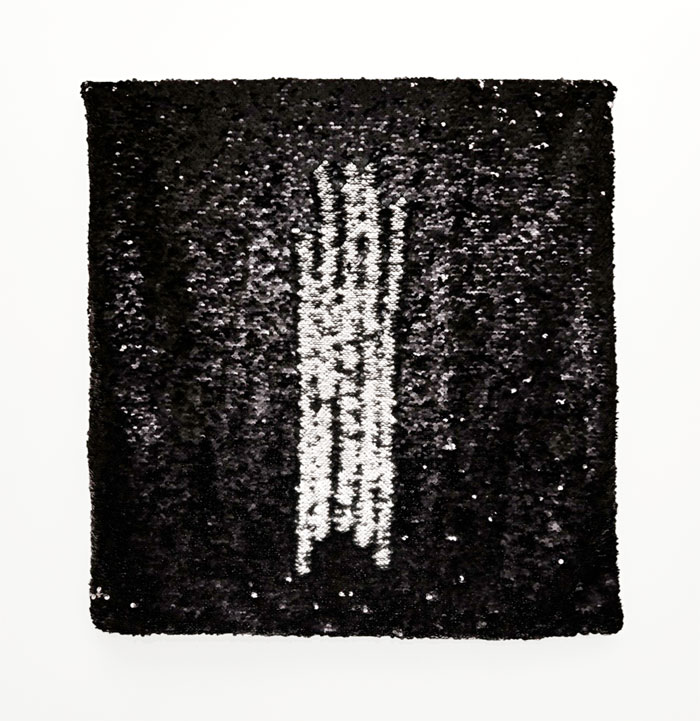
PAULINE BOUDRY / RENATE LORENZ, Untitled (Moving Backwards), 2019
60 x 65 cm
edition 50 + 6 AP
sequin textile, wooden stick, accompanying postcard as certificate
signed, numbered, here nr 20/50
published by the Swiss Pavilion of Biennale di Venezia, Venice
issued on behalf of the Venice Biennale 2019
Here, comes with handmade customised light weight box.
inv.PBou 160
The exhibitions of this artists duo reflect on the current political situation, that is characterised by its regressive and reactionary forces of closure towards the other and towards difference. Faced with the scale of this recent backlash, the artists, instead of practicing an outright opposition, suggest «backward movements» as a potential tool for producing alternative forms of resistance and action.
As Charlotte Laubard observes: «Pauline Boudry / Renate Lorenz conceive their installations as devices that lead us to renegotiate our representations. Their work produces a double inversion: it introduces gestures, images and objects that refer to current political and social issues. At the same time, it grants these elements a high degree of autonomy so that they can interact with the public and establish interrelations that challenge our modes of perception and identification.»
“Long-term symbol of attention-grabbing glamour – from hollywoodian icons’ outfit, cabarets and drag performances – the sequin fabric inhabits the work of Pauline Boudry / Renate Lorenz. Used often as a curtain in their installations and films, its glittering and reflecting texture enhences the physical presence of the canonnical stage material. The curtain refers to roleplay and to the performative dimension of the construction of identities. When touched, abstract and moiré shapes appear. The surface can also completely change color.”
PAULINE BOUDRY / RENATE LORENZ, Wig Piece, 2019
60 x 45 cm
edition 10 + 2 AP signed, numbered
published by the Swiss Pavilion of Biennale di Venezia, Venice
issued on behalf of the Venice Biennale 2019
inv.PBou 000
“By introducing hair in a painting’s visual space, the artists comment here on the tactile, bodily, and even an uncanny aspect of painting. The meeting between a hairpiece as painting creates a composition, an assemblage that is reminiscent of characters in their films like Salome in “Salomania” which gathers in one figure the stories of Alla Nazimova, Wu Tsang, Yvonne Rainer, Oscar Wide or Aida Walker. The hair materiality makes us aware of our sexual bodies as spectators in an exhibition. As a structure that hides and unveils altogether, this curtain of hair refers to role play and to the performative dimension of the construction of identities.”
The exhibitions of this artists duo reflect on the current political situation, that is characterised by its regressive and reactionary forces of closure towards the other and towards difference. Faced with the scale of this recent backlash, the artists, instead of practicing an outright opposition, suggest «backward movements» as a potential tool for producing alternative forms of resistance and action.
Additional information
PAULINE BOUDRY and RENATE LORENZ, Untitled (Wig Painting), 2016
50 x 50 cm
artificial hair, aluminum
edition 5 + 2 AP
numbered, signed
published by Kunsthalle Zurich, Switzerland, € 1.900, April 2019
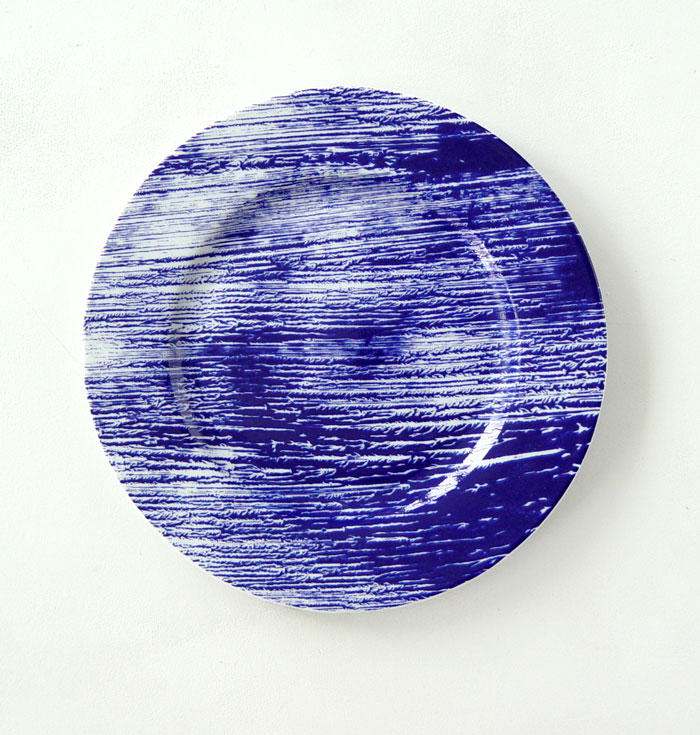
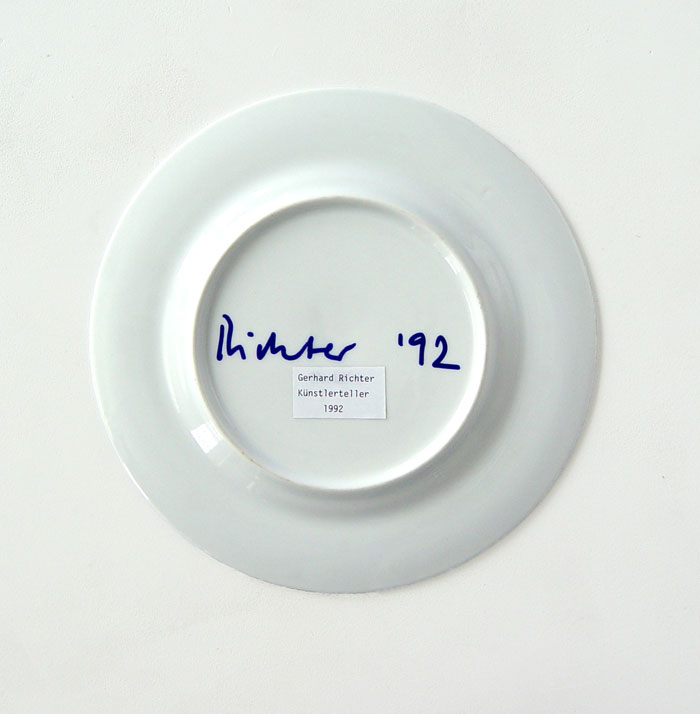
GERHARD RICHTER, cake plate, 1992
diameters 32 cm
porcelain
signed and dated in glazing
published by Edition Obelisco, Cologne, Germany rare
mint
€ 800,- plus € 24 Track & Trace registered EU mail
inv.GR 000-pr
History of price:
eBay-mva130878, Emmerich, Germany € 899,- 8 May 2025
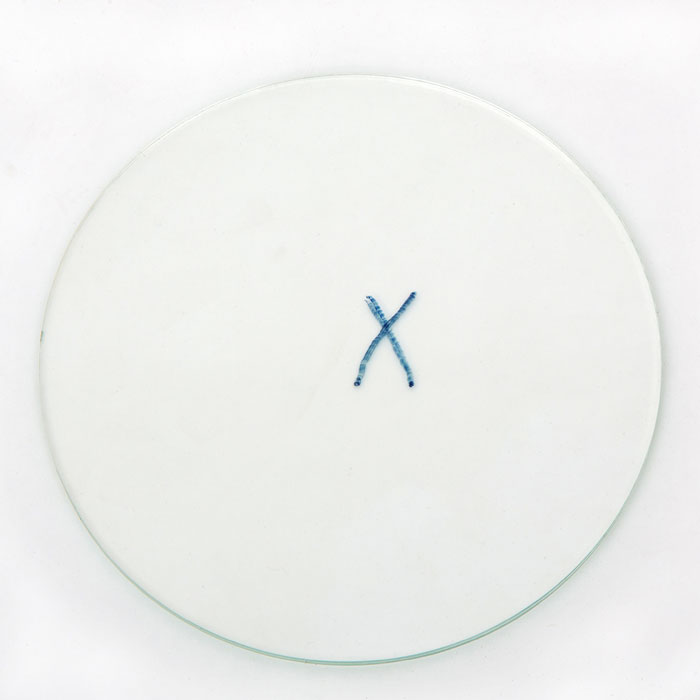
JOËLLE TUERLINCKX, X X, 1999
diameter 14,8 cm
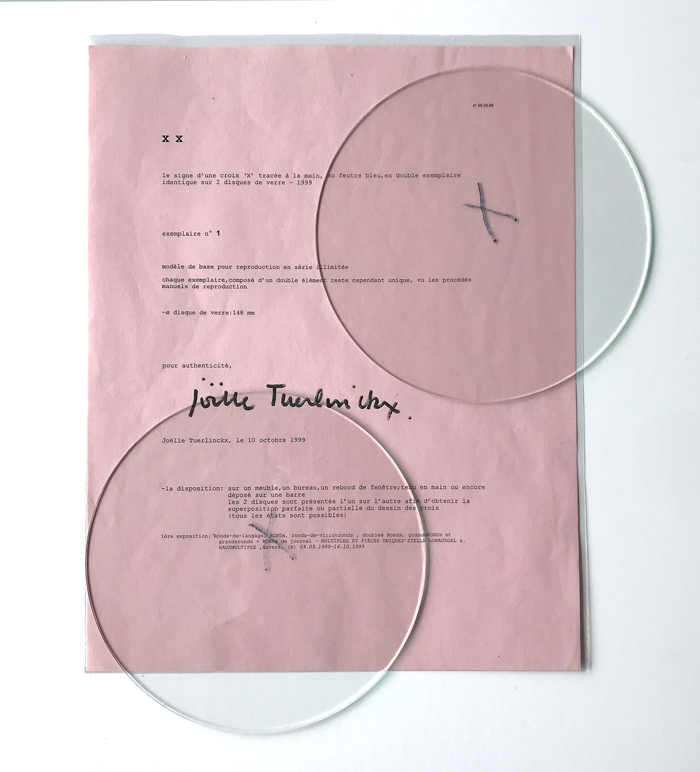
2 parts, felt pen on glass
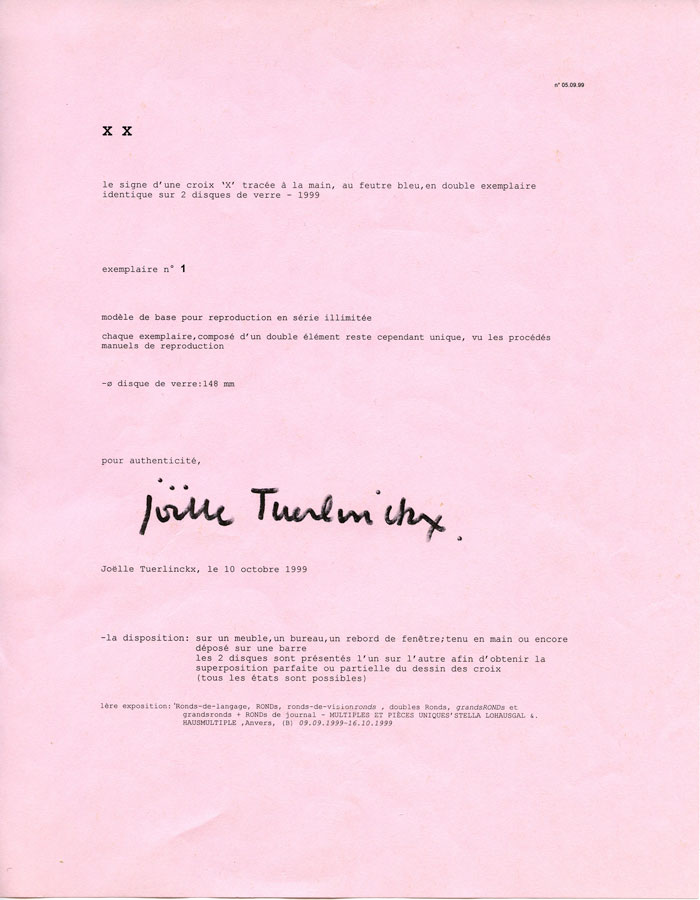
signed, dated sample number 1, certificate (27,5 x 21,5 cm) with instructions
provenance: The Kersten van Steenbergen Collection and acquired from Stella Lohaus Gallery, Antwerp, Belgium
sold
The work ‘X X’ is a series of glass discs that each time is produced on demand, or is for whatever reason by the artist. This sign of a cross “X” is drawn by hand with felt pen, made in duplo on two discs of glass and put on top of each other. This sample is the basis for reproduction of a series of unlimited pairs of discs and seen as such this piece is unique. For display Joëlle Tuerlinckx suggests in the accompanying certificate to use a furniture piece, a desk, a window sill, to hold it in one’s hand or to put it on a shelf. The two discs are shown on top of each other with the crosses not necessarily perfectly fitting, i.e. all positions are right. Right at the top of he certificate it is emphasized by Tuerlinckx that each cross is unique; ‘…considering the manual process of reproduction by hand’.
The work of Joëlle Tuerlinckx should be considered as Fundamental art. Through exhibition interventions she aims to demonstrate how the place in which things are seen shapes our perception of them. It incorporates projections, audio recordings, videos, drawings, collages, photographs, found and crafted objects, and her own writings. She says: ‘An exhibition is an experience of space that proposes action, or reaction, as a means of reflection, of thinking on our human condition…’.
This copy is the basic model for making “X X” in an unlimited edition. This is most likely the only copy from the planned series of unique works, as no second copy has ever been shown or published anywhere.
MAURIZIO CATTELAN, Blah, blah, blah, 2018
190 x 20 cm
scarf, polyacrylic fibres, cardboard hanger, offset
limited edition 400
mint very rare
published by Made in Catteland, Italy
€ 360, – plus € 18,00 Track & Trace registered EU mail
inv.MCat 000
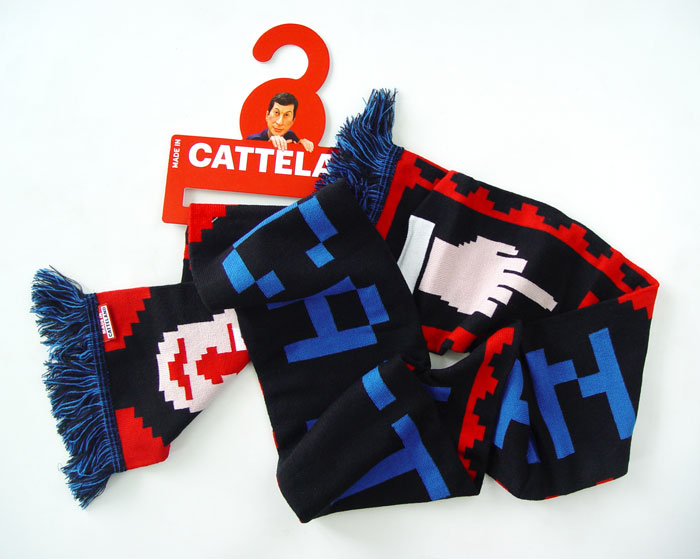
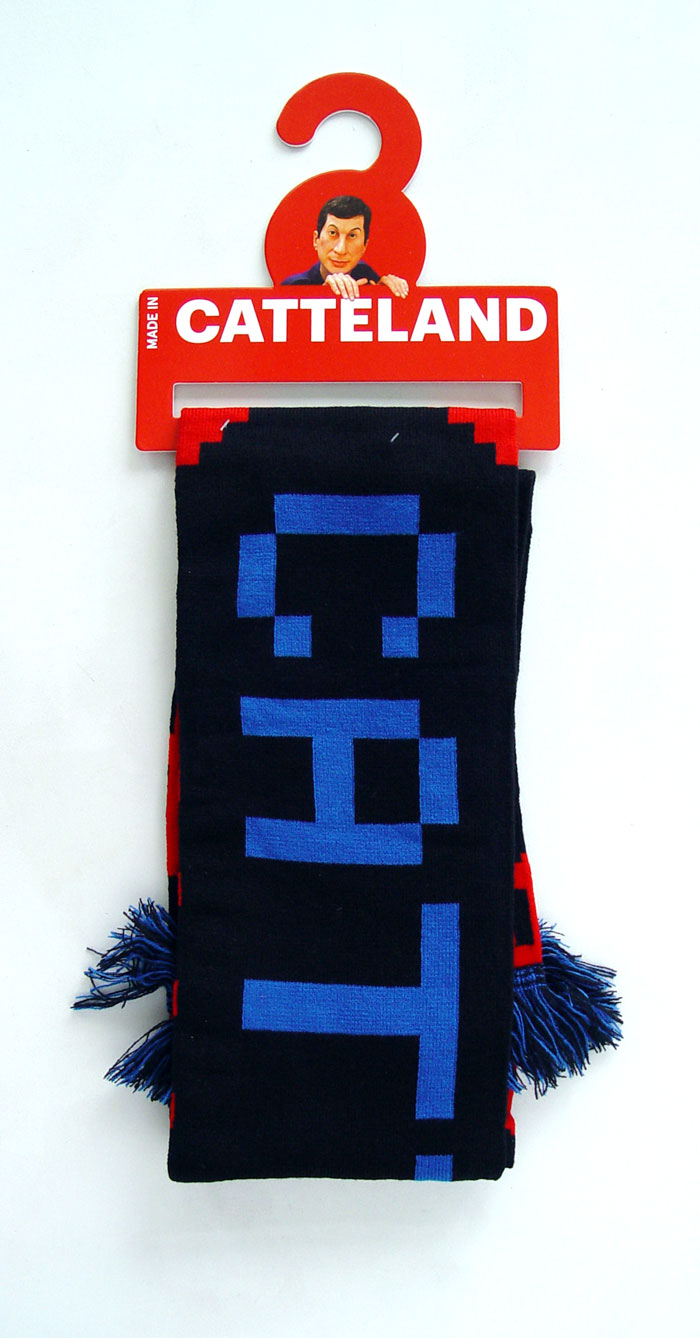
This is the only scarf with the name of Maurizio Cattelan on it, out of a huge series of fan scarfs referring to football clubs and museums situated all over the Western world. The rest of the scarf bears the text ‘Blah, blah, blah’, a digitized self-portrait and a hand with a raised middle finger.
In spite of its edition of 400 copies this item is extremely difficult to find on Internet.
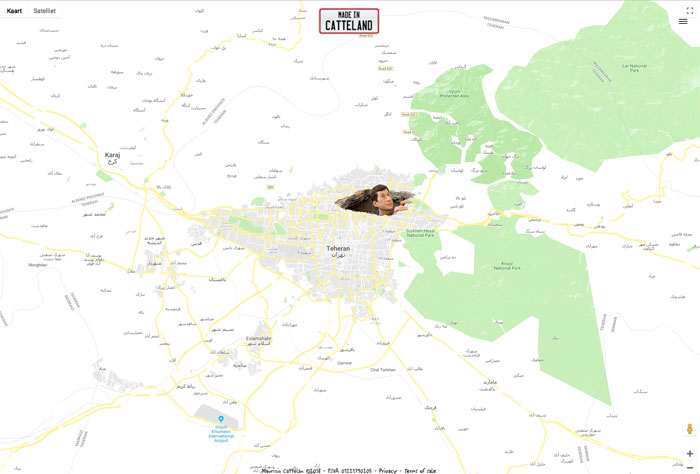
Maurizio Cattelan’s address for contacting Made in Catteland shows the following image:
OLIVIER MOSSET, invitation cards of exhibitions 1990-2010
32 x 26 x 5 cm
printed matter: ring binder with 56 exhibition invites, plastic sleeves
€ 950,- plus € 18,50 Track & Trace registered EU mail
inv. OM 000-pr
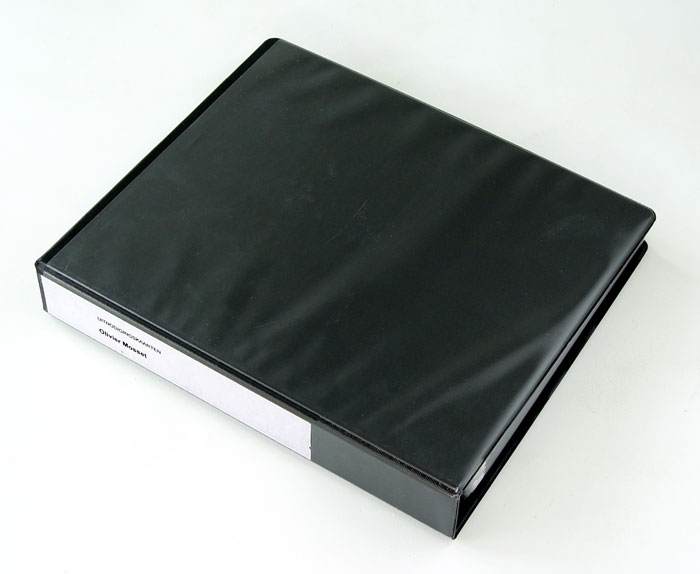
This collection of printed matter is almost a complete set of exhibition invitations from this period.