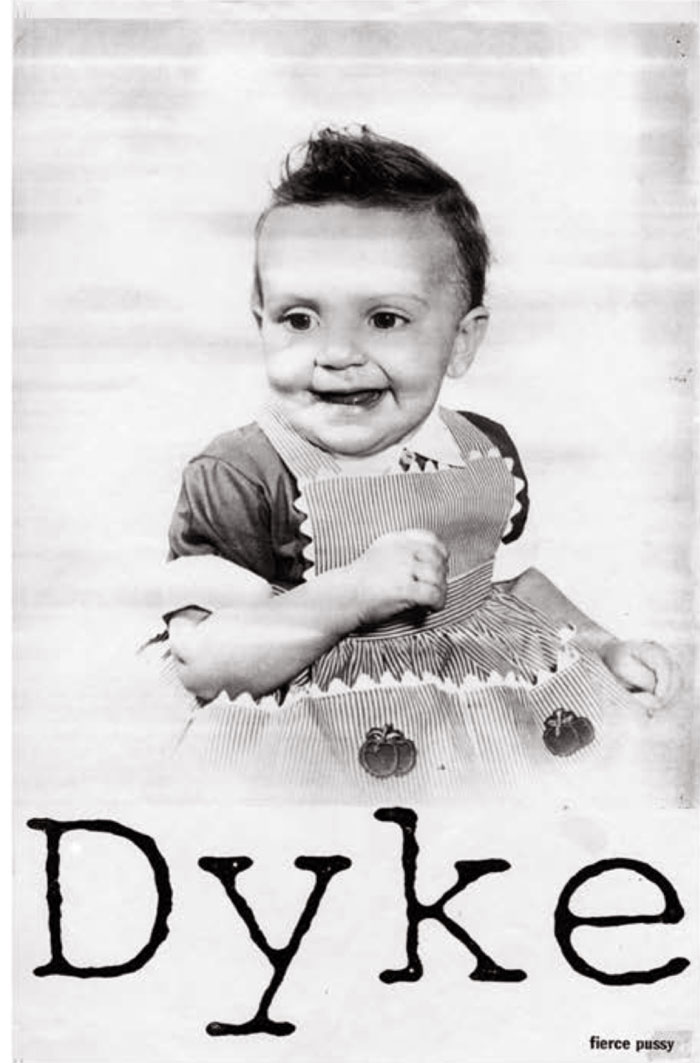
ZOE LOENARD / Fierce Pussy, “List” posters, 1991
each 43,1 x 48 cm
Xeroxgraphy, stack of posters with sticker as issued
some slightly yellowed due to age
provenance: Printed Matter, New York, USA
inv.ZLoe 000
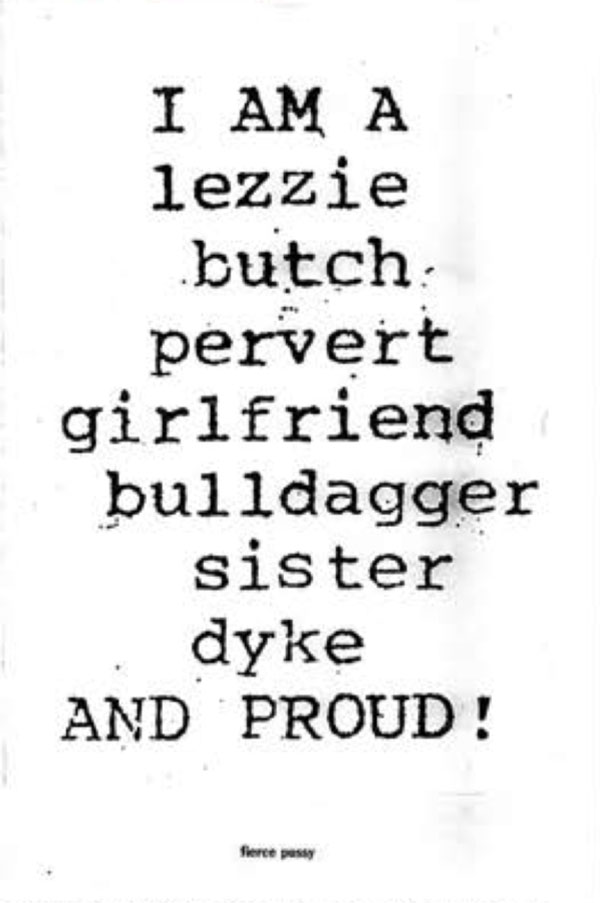
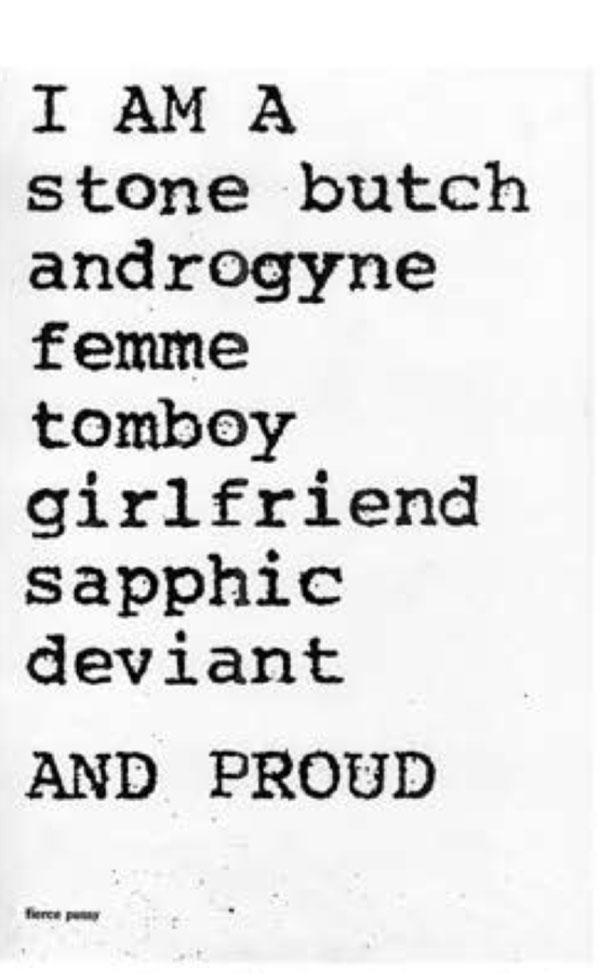
‘During the collective’s first meeting, at Zoe Leonard’s apartment in East Village in 1991, its members adopted Robert’s Rules of Order * and produced a no-frills poster on the spot using paper, scissors, a typewriter and inserted texts in between a matrix with capitals: “I AM A …… AND PROUD!”, i.e. words like “I AM A lezzie, butch, pervert, girlfriend, bulldagger, sister, dyke AND PROUD!” were used.
This is a stack of one of the first “List” posters printed by a New York-based collective with Nancy Brooks Brody and Zoe Leonard in 1991. The latter were respectively working in the design departments at GQ and Traveller magazines in the group’s early days. During quiet moments around the office, they ran off hundreds of patchy Fierce Pussy posters on the available copy machines.’
* Robert’s Rules of Order is the most widely used manual of parliamentary procedure in the United States. It governs the meetings of a diverse range of organizations — including church groups, county commissions, homeowners associations, nonprofit associations, professional societies, school boards, and trade unions — that have adopted it as their parliamentary authority.
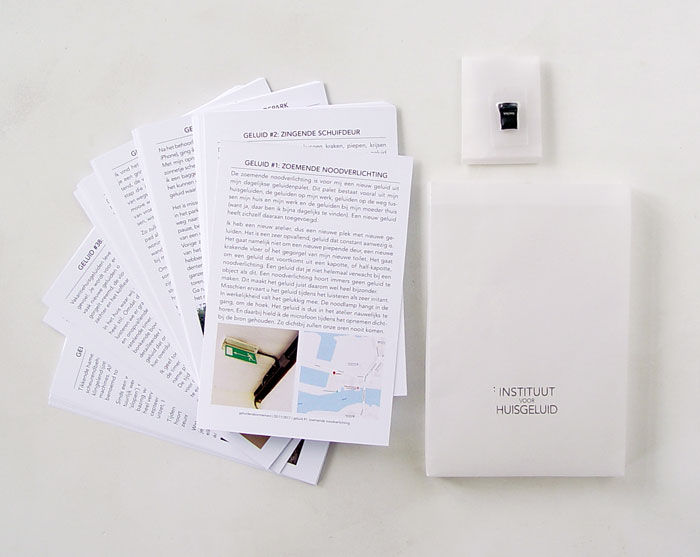
ELISE ‘T HART, Instituut voor Huisgeluid, 2019
21 x 14,5 x 2 cm
52 cards, 52 digital prints, USB stick with 52 sounds, comes in sleeve of tracing paper
texts in Dutch
open edition
published by the artist
info abonnement op uitgaven van Instituut voor Huisgeluid
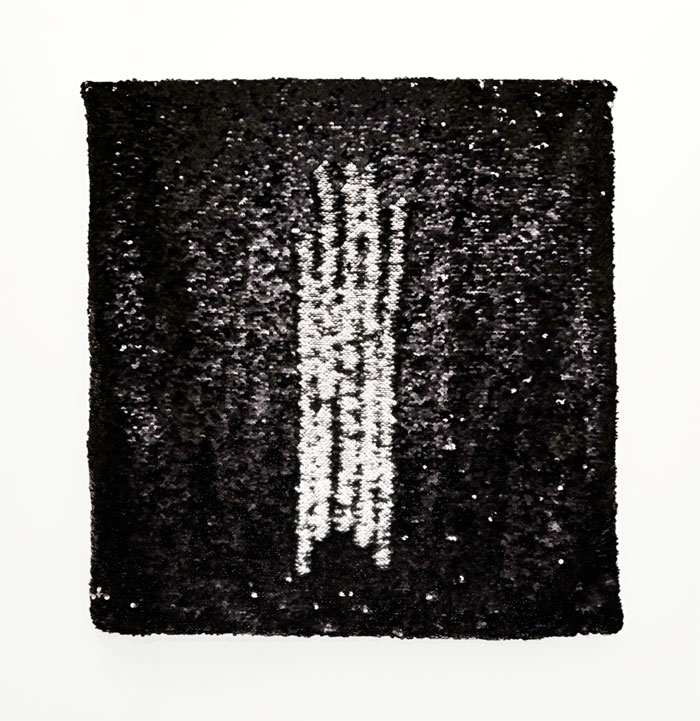
PAULINE BOUDRY / RENATE LORENZ, Untitled (Moving Backwards), 2019
60 x 65 cm
edition 50 + 6 AP
sequin textile, wooden stick, accompanying postcard as certificate
signed, numbered, here nr 20/50
published by the Swiss Pavilion of Biennale di Venezia, Venice
issued on behalf of the Venice Biennale 2019
Here, comes with handmade customised light weight box.
inv.PBou 160
The exhibitions of this artists duo reflect on the current political situation, that is characterised by its regressive and reactionary forces of closure towards the other and towards difference. Faced with the scale of this recent backlash, the artists, instead of practicing an outright opposition, suggest «backward movements» as a potential tool for producing alternative forms of resistance and action.
As Charlotte Laubard observes: «Pauline Boudry / Renate Lorenz conceive their installations as devices that lead us to renegotiate our representations. Their work produces a double inversion: it introduces gestures, images and objects that refer to current political and social issues. At the same time, it grants these elements a high degree of autonomy so that they can interact with the public and establish interrelations that challenge our modes of perception and identification.»
“Long-term symbol of attention-grabbing glamour – from hollywoodian icons’ outfit, cabarets and drag performances – the sequin fabric inhabits the work of Pauline Boudry / Renate Lorenz. Used often as a curtain in their installations and films, its glittering and reflecting texture enhences the physical presence of the canonnical stage material. The curtain refers to roleplay and to the performative dimension of the construction of identities. When touched, abstract and moiré shapes appear. The surface can also completely change color.”
PAULINE BOUDRY / RENATE LORENZ, Wig Piece, 2019
60 x 45 cm
edition 10 + 2 AP signed, numbered
published by the Swiss Pavilion of Biennale di Venezia, Venice
issued on behalf of the Venice Biennale 2019
inv.PBou 000
“By introducing hair in a painting’s visual space, the artists comment here on the tactile, bodily, and even an uncanny aspect of painting. The meeting between a hairpiece as painting creates a composition, an assemblage that is reminiscent of characters in their films like Salome in “Salomania” which gathers in one figure the stories of Alla Nazimova, Wu Tsang, Yvonne Rainer, Oscar Wide or Aida Walker. The hair materiality makes us aware of our sexual bodies as spectators in an exhibition. As a structure that hides and unveils altogether, this curtain of hair refers to role play and to the performative dimension of the construction of identities.”
The exhibitions of this artists duo reflect on the current political situation, that is characterised by its regressive and reactionary forces of closure towards the other and towards difference. Faced with the scale of this recent backlash, the artists, instead of practicing an outright opposition, suggest «backward movements» as a potential tool for producing alternative forms of resistance and action.
Additional information
PAULINE BOUDRY and RENATE LORENZ, Untitled (Wig Painting), 2016
50 x 50 cm
artificial hair, aluminum
edition 5 + 2 AP
numbered, signed
published by Kunsthalle Zurich, Switzerland, € 1.900, April 2019
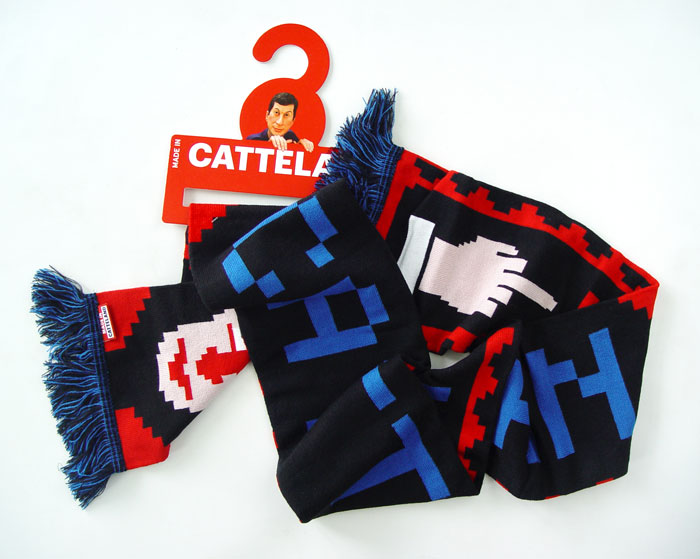
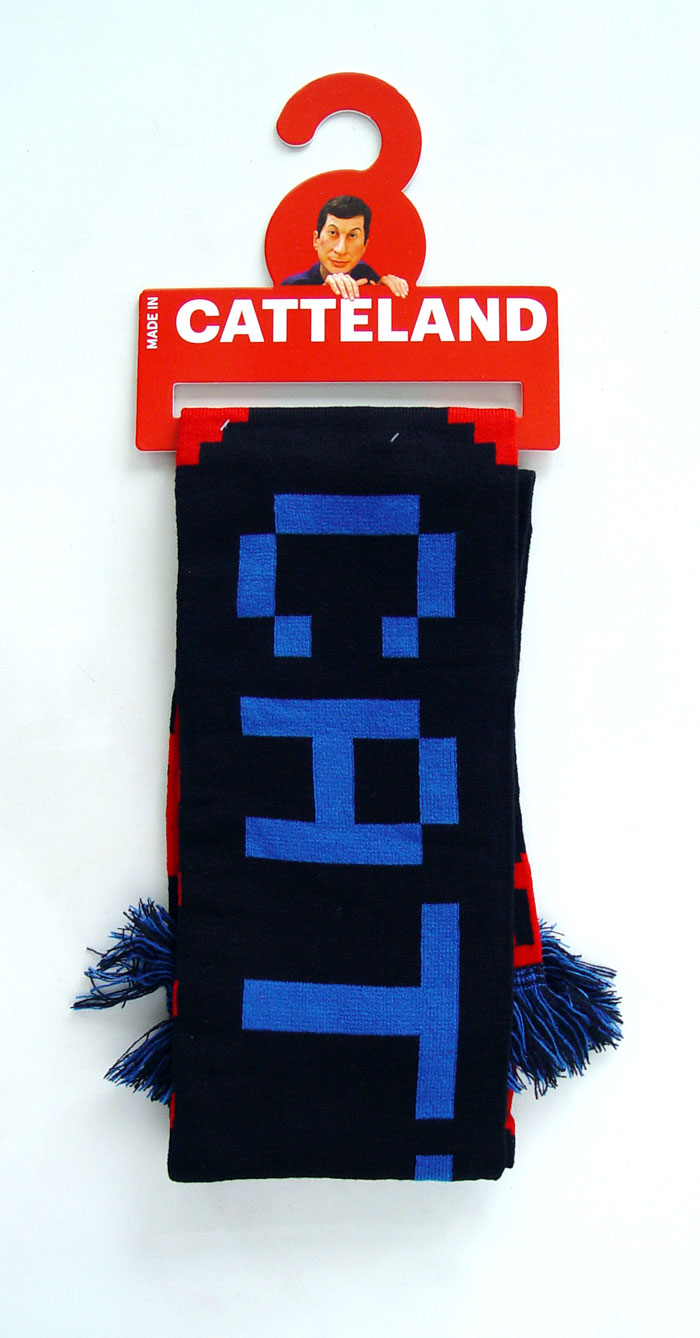
MAURIZIO CATTELAN, Blah, blah, blah, 2018
190 x 20 cm
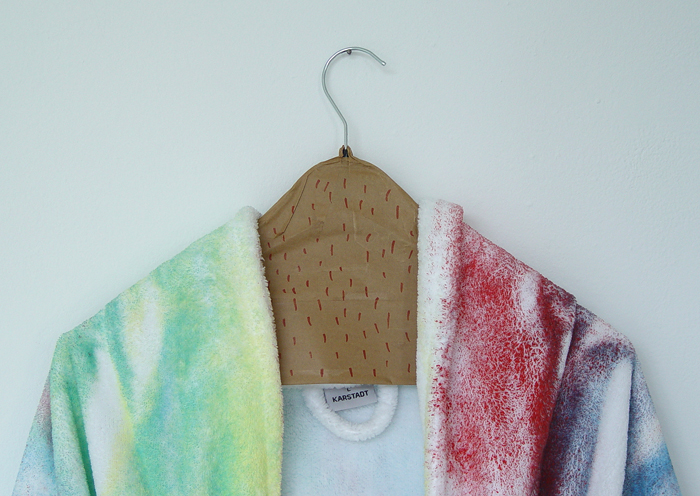
scarf, polyacrylic fibres, cardboard hanger, offset
limited edition 400
mint very rare
published by Made in Catteland, Italy
€ 360, – plus € 18,00 Track & Trace registered EU mail
inv.MCat 000
This is the only scarf with the name of Maurizio Cattelan on it, out of a huge series of fan scarfs referring to football clubs and museums situated all over the Western world. The rest of the scarf bears the text ‘Blah, blah, blah’, a digitized self-portrait and a hand with a raised middle finger.
In spite of its edition of 400 copies this item is extremely difficult to find on Internet.
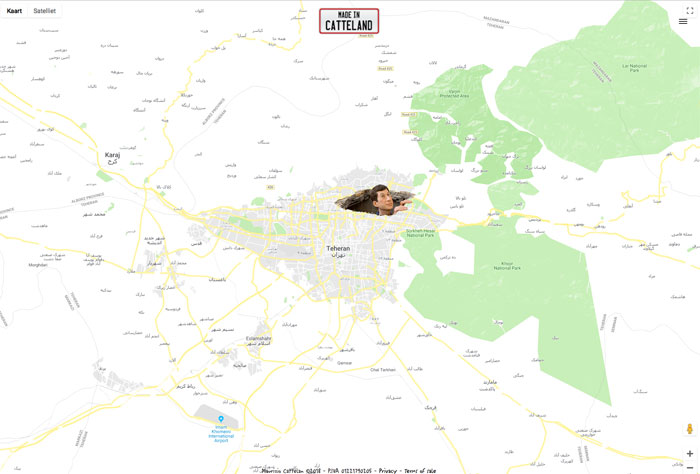
Maurizio Cattelan’s address for contacting Made in Catteland shows the following image:
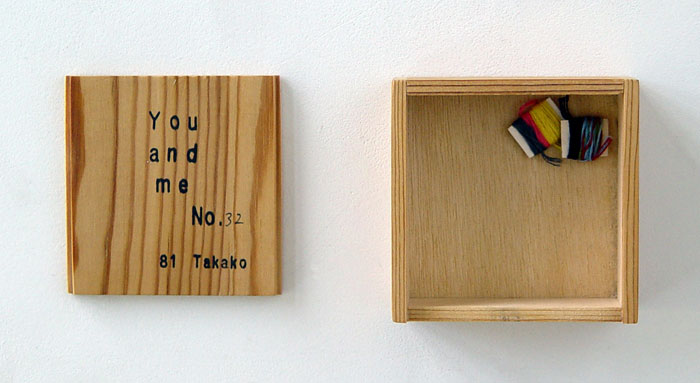
TAKAKO SAITO, You and Me, 1981
3,6 x 8 x 8 cm
yarn spools, coloured threads, wooden box, ink stamps
signed, dated, numbered, here No. 32
€ 960,- plus € 18,- registered mail Track & Trace
inv.TSait 691
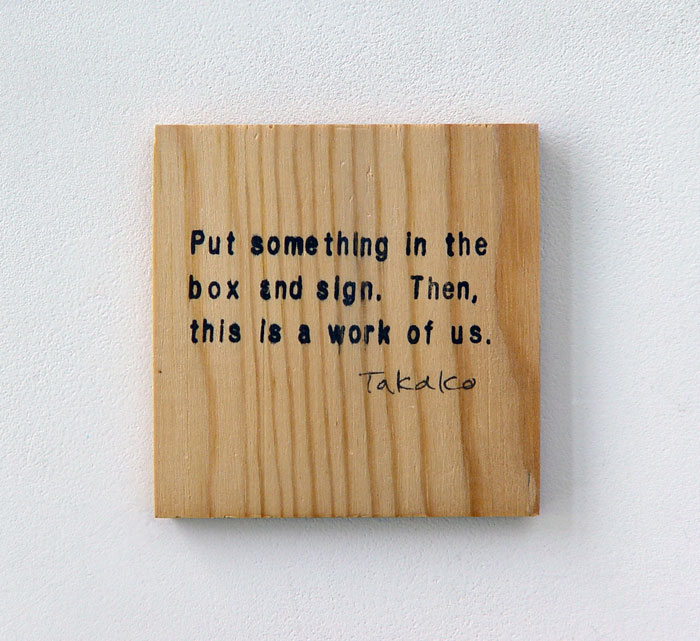
Ink stamped instructions on the reverse of the lid read ‘Put something in the box and sign. Then, this is a work of us.’.
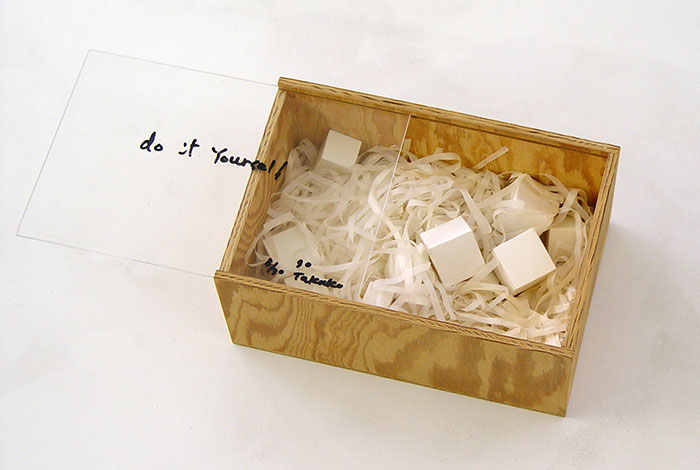
TAKAKO SAITO, Do it Yourself, 1990
10 x 23 x 15.3 cm
17 hand made paper cubes, shredded paper, wooden box, felt pen ink on perspex lid
video tape that accompanied this edition is lacking
signed, dated, numbered
edition 30, here number 8/30
published by Bonner Kunstverein, Bonn, Germany
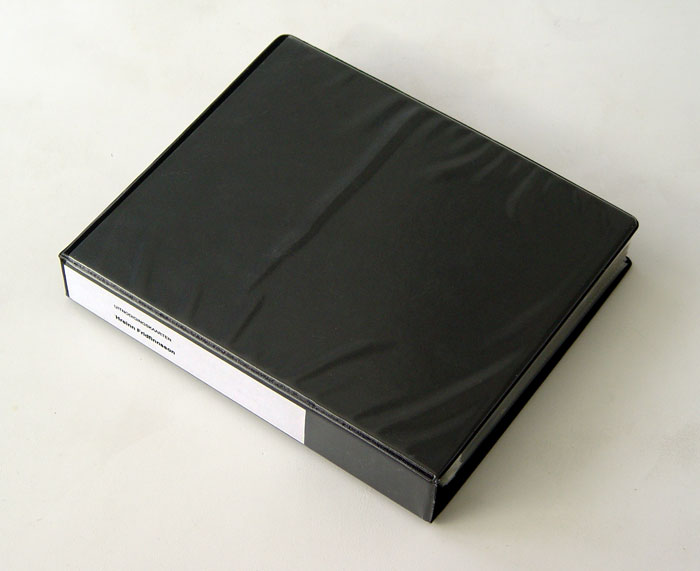
HREINN FRIDFINNSSON, invitation cards of exhibitions 1972-2010
32 x 26 x 5 cm
ring binder with most probably a complete set of exhibition invites in plastic sleeves
€ 1.200,- plus € 24,- Track & Trace registered EU mail
inv.HF 000-pr
The invites in this binder have been collected during a period of 28 years and as such a rarety. It includes a hand written hand-out invite for an exhibition at In-Out Center in Amsterdam in 1972. The card could be considered a self made multiple in tiny envelope, both hand written in pencil. It is unknown if there are any left apart from this one.
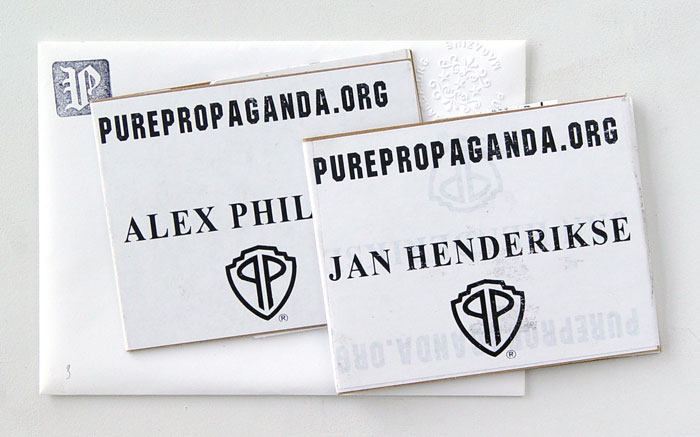
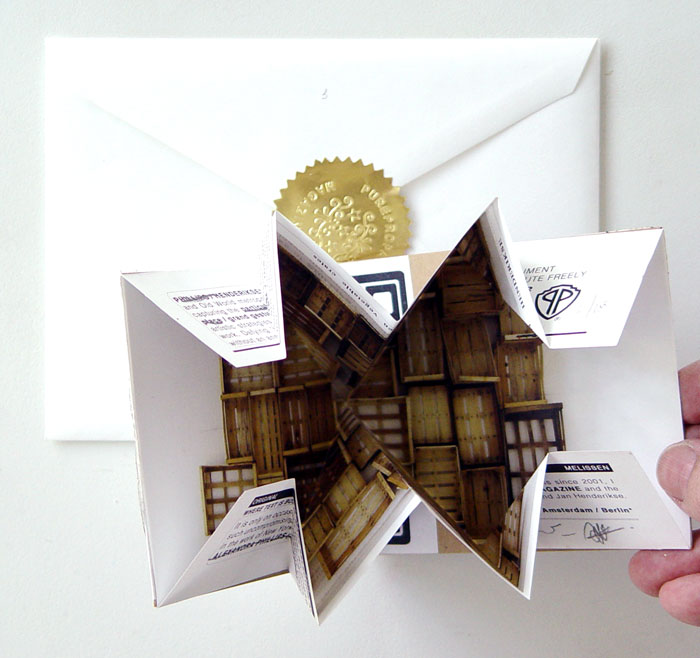
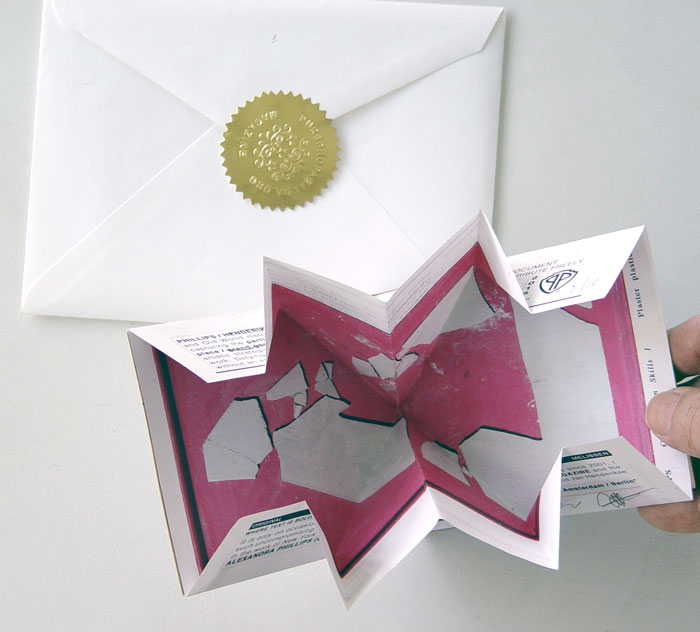
JAN HENDERIKSE / ALEXANDRA PHILLIPS, Pure Propaganda Magazine, 2015
each ca 11 x 14 cm, unfolded 27.7 x 21.5 cm, 2 parts
pop-up card mounted on cardboard, blind and ink stamped envelope with gold seal, colour illustration, text
signed, numbered, here number 3/10
edition 10
published by Antoon Melissen, Amsterdam
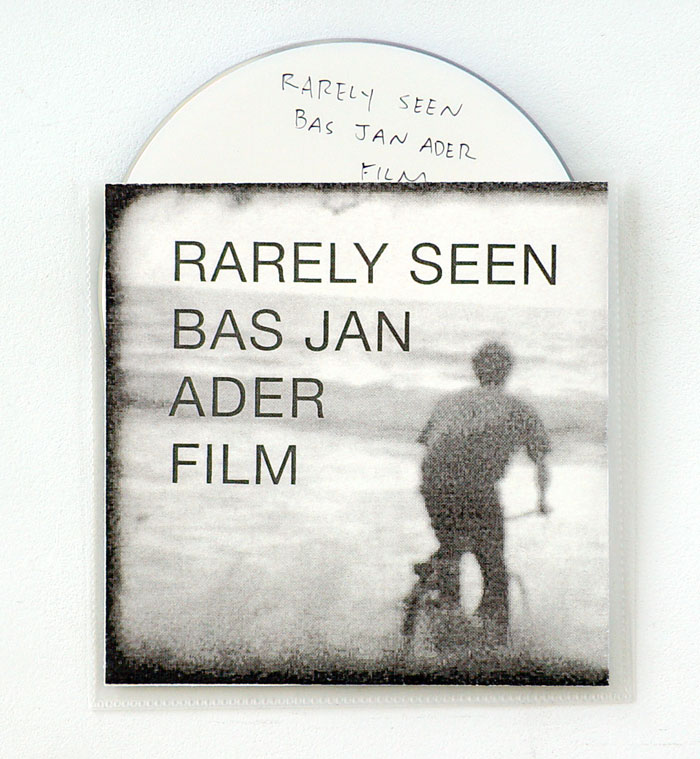
DAVID HORVITZ, Rarely Seen Bas Jan Ader Film, 2009
13 x 13 cm
DVD, plastic sleeve, photo copied cover hand written title by the artist on disc, as issued
edition 30
published by Art Metropole, Toronto, Canada
mint condition extremely rare
inv.DHor 690
‘In 2006 the clip Newly Found Bas Jan Ader Film appeared on YouTube. The six second clip features a man bicycling into the sea. It is announced as a work by Bas Jan Ader found at UC Irvine, where Ader was teaching in the 1970s. The story is not unlikely. Bas Jan Ader, who was lost at sea in 1975 while undertaking an Atlantic crossing that was to be the second work in a series he entitled In Search of the Miraculous, left a small body of highly noticeable works, mostly short films and photographs. One of these works, Fall II, Amsterdam from 1970, is a short sequence showing Ader biking along and then into a canal. The newly found work could be a related iteration. As many of Bas Jan Ader’s works show, he was interested in inserting his own body into a relationship with gravity, investigating phases of transition, the time and space between two locatable states, from standing up to falling down, from hanging from a tree to hitting the surface of the pond below.
It was revealed that Horvitz was in fact the author of this newly found work. Assumingly on request from the gallery Patrick Painter who represents Bas Jan Ader’s estate, Youtube removed the clip for ‘copyright infringement,’ only for it to reappear soon again posted on an account carrying the name of PatrickPainterGaller – most likely Horvitz’s work. Currently you can find the clip as the first video appearing when googling ‘Bas Jan Ader,’ and also on the official Bas Jan Ader website under the section Homages. However tricksterish Horvitz’s effort may appear, it does also expose a great admiration of Ader’s work and kinship to the ideas he brought forth. Newly Found Bas Jan Ader Film was not produced to be shown in a gallery space. It was rather a device that, circulating on the internet, triggered certain mechanisms and revealed how a number of parties reacted to the potential existence of a never before seen Bas Jan Ader work. Horvitz reveals how it is possible to insert new information into already existing narratives and shift their immediate appearance. A work by David Horvitz is today a very visible part of a Google search for ‘Bas Jan Ader’. It is fair to say that he faked his way into this hierarchy of information, but the fact that he succeeded so well is worth our attention. It points to our unfounded reliance on whatever a Google search brings us, and comments on the potentialities of the fake as well as questions our relationship to the real.’ From “But Mr. Horvitz, Where Is The Work?”.
Helga Christoffersen, 2010
Additional information
In 2009 the 2nd Cannons Gallery published a flip book called “Rarely Seen Bas Jan Ader Film” which comprises stills from the film. The book is accompanied with a free 2-sided newsprint David Horvitz produced for his exhibition at the gallery.