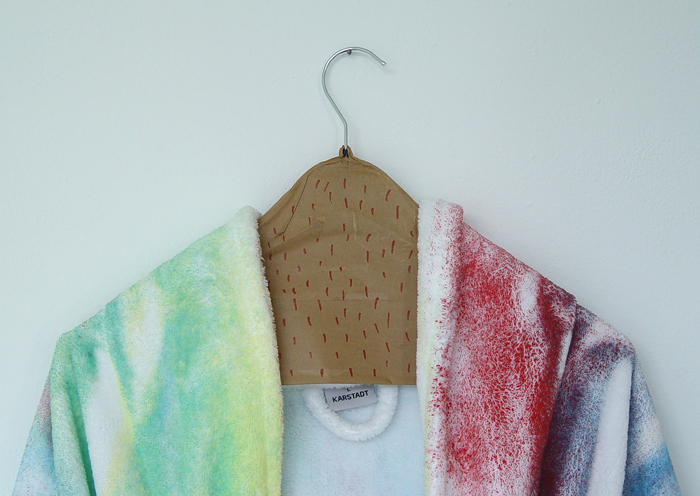
DAMIEN HIRST, Fridge Magnets, n.d. [2012]
21,4 x 17,2 cm
15 kiss cut parts in various sizes, stiff rope envelope, high gloss print on magnets
edition unknown
mint
published by Damien Hirst & Science Ltd, London, UK
€ 125,- plus € 12,- Track & Trace EU registered mail
inv.DHir 805-pr
This edition was published by Damien Hirst & Science Ltd on the occasion of his exhibition at Tate Modern in 2012.
History of prices:
eBay-positive_star_japan, Japan August 2024 US$ 149.-
eBay-japan-culture-market01, Japan August 2024 US$ 300.-
eBay-japan-culture-market01, Japan September 2023 US$ 300.-
eBay-thearteryfineart, Boston MA, USA August 2023 US$ 95.-
DAMIEN HIRST, Magnet Set “Calciferol 1996”, n.d. [2012]
14,5 x 14,5 x 0,7 cm
PVC on magnets, box with transparent lid
9 parts; each magnet is 4 mm deep and 25 mm in diameter
edition unknown rare
published by Damien Hirst & Science Ltd., London, UK
€ 185,- + € 15,- Track & Trace registered EU mail
inv.DHir 000-pr
This edition was published by Damien Hirst & Science Ltd on the occasion of his exhibition at Tate Modern in 2012.
GLENN LIGON,’2000-2009′, 2011
Epson Ultra Chrome K3 print on Museo Max 365 GSM paper
76,2 x 56 cm / 22 x 30 inch
edition of 30 + 5 AP + 5 PP
not available
History of prices offered and determined by:
LACMA, Los Angeles € 3200,- / US$ 4000.- (members US$ 3600.-) June 2012
Over the last three decades, Glenn Ligon has produced a substantial body of work engaged, as one critic has succinctly noted, with the “presence of the past in the present.” In this print Glenn Ligon has layered the figures of the years ten on top of each other.
Ligon draws from the aesthetic language and formalism of minimalism and the textual and philosophical modes of conceptual art, and enriches this all through his formative engagement with the modes of cultural studies and critical theory that have gained prominence since the 1980s.
JOHN BALDESSARI, Wrong, n.d. [ca 2010]
5 x 7 x 2 cm
eraser, issued in bare plastic bag
Definitively a shopping item for raising money for LACMA, yet interesting enough as a practical example of the artist’s way of thinking. Partly based on John Baldessari’s painting “Wrong” from 1967.
BEN VAUTIER, Écrire entre les lignes, 2012
box size: 3,5 x 17,5 x 5 cm
chromed Parker pen, extra ink filling, printed text, wrapped in cardboard holder
edition unknown
published by Parker Pen Company, Newhaven, East Sussex, England.
Collection Kees van Gelder, Amsterdam
Untitled, n.d. [ca 1980-1990]
27 x 21 cm
offset, book page, signed in black ink
Collection Kees van Gelder, Amsterdam
€ 1.200,- + € 12,- Track & Trace registered mail
In 1980-1990’s an Autographengruppe in Bonn started to collect signatures of people well-known in sports, literature and the arts. Not only postcards but also pages of books were cut out of art catalogues that were signed on the spot during openings or more often requested by the club members through mail. In the early beginning of this century the collector’s group decided to sell little by little a part of their collection on Internet through eArt.de and eBay.
“This work is part of an extensive unique collection of catalogue pages and various printed matter signed by Gerhard Richter. The way the signatures are placed on the reproductions create a distance and deconstruction of the illusion of the image. A phenomenon that is very similar to the signed Goslar Kerze poster of 1988. His signature positioned straight on top of the image as an ultra short painter’s gesture – opposite to the hard labour of his elaborate swept paintings – high lightens the gap between the reproduced and the uniqueness of each handwriting apparently integrated in the image.
One of the most important characteristics is the way the artist creates a distance between emotions possibly aroused by an image and the way a painting is blurr painted. Or in this case is reproduced and then disturbed by the gesture of a hand writing. The question about what the reproduced represents is put aside or at least put on hold by showing us two separate moments of two different ‘images’. This is opposite to what Roland Barthes called “punktum”. The depicted arouses direct emotions of recognition or disgust, caused by a meaning that pops up before we realize this. Nothing is in the way and these meanings suddenly appear to come out of the photo, id est here out of the abstract picture. This is in contrast to what Barthes calls the ‘studium’, which refers to the longing of a search of meanings in a picture. In fact it is ajourning the pass of a judgement on what is seen until the addition sum is made. In his catalogue pages, each signed on loose prints, the two never seem to come together due to the different levels and meaning of each ‘image’. The abstract painting here reproduced in print never reconciles with the image of authorization a signiture stands for. The viewer has to look to the dimension of the reproduced being confronted again and again with the un-pictorial “standard sweep curtain” of Richter’s signature.”
Kees van Gelder, October 2006
WJM KOK
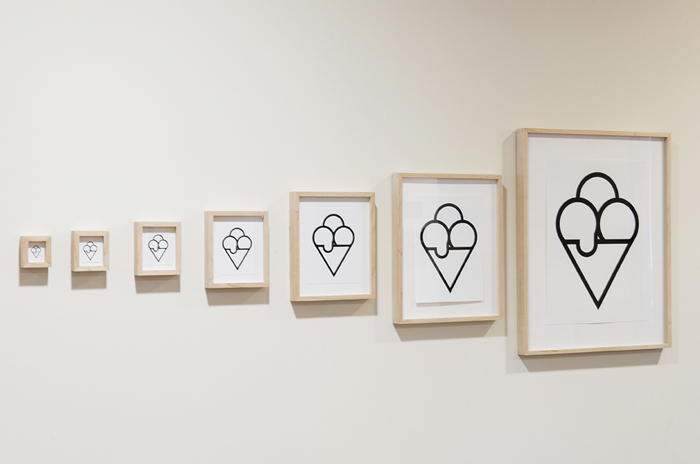
Maxi-Color (Ice Cream), 2012
various sizes, 7 parts, framed
print on paper
unique series of 36
Collection Utrechts Medisch Centrum, Utrecht, Netherlands
published by the artist
€ 3.000,- October 2012
inv. WJM 000
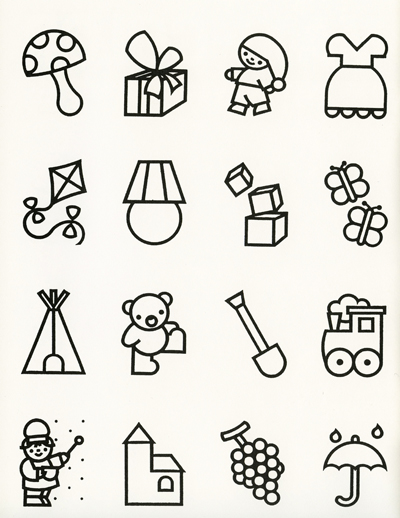
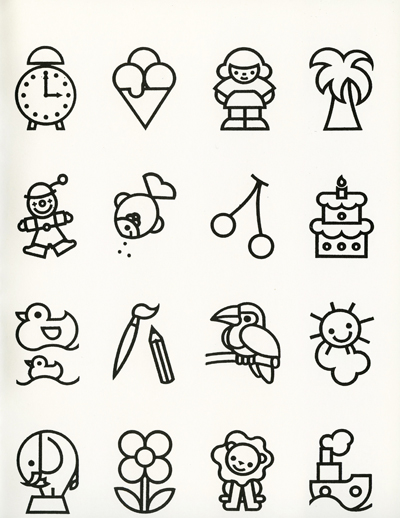
Each image of this unique series Maxi-Color in seven parts in size successively reproduced from circa stamp size to A4 comes from a children colour book called Maxi-Color. All together there are 32 different icons framed as ready mades.
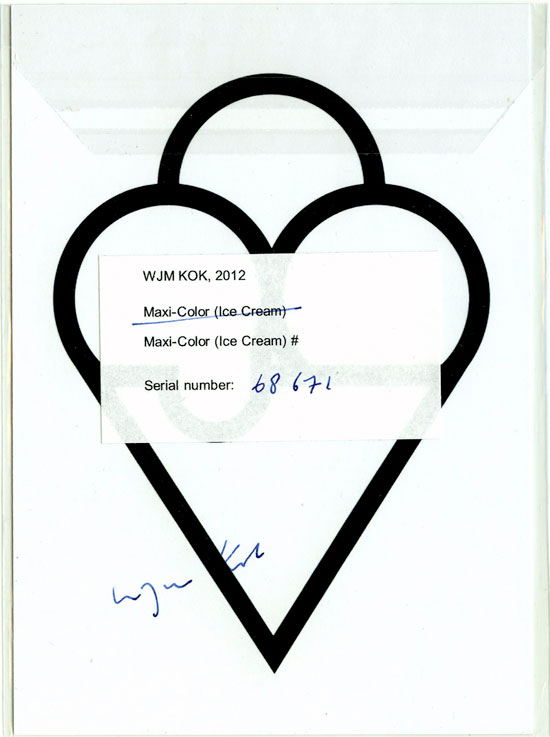
WJM KOK, Maxi-Color (Ice Cream)# – Serial number 68671, 2012
14,8 x 10,5 cm
card, printed recto-verso, cellophane envelope, sticker
signed verso, numbered on sticker
edition ca 25
inv. WJM 000-pr