JOËLLE TUERLINCKX, X X, 1999
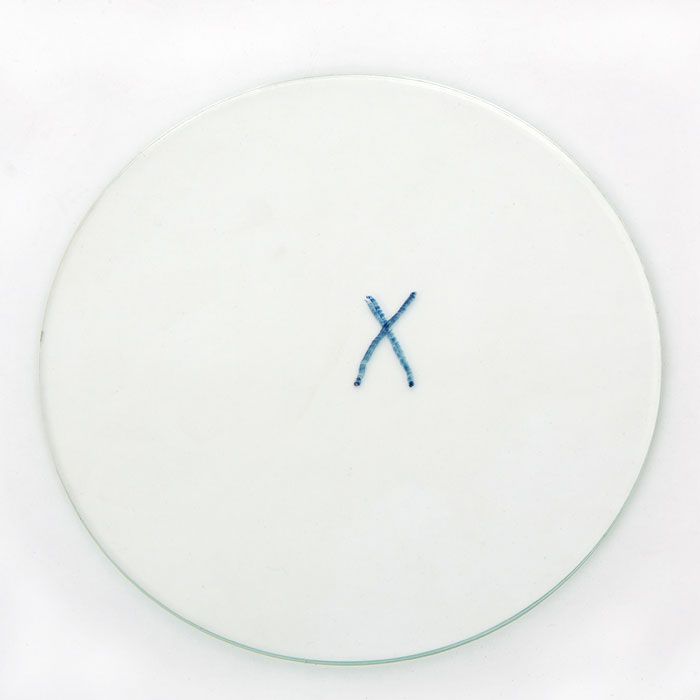
diameter 14,8 cm
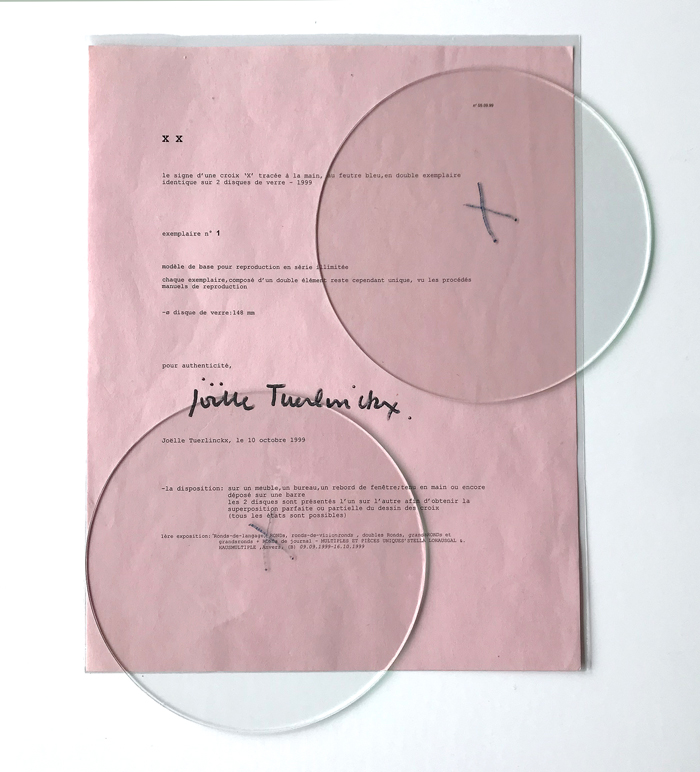
2 parts, felt pen on glass
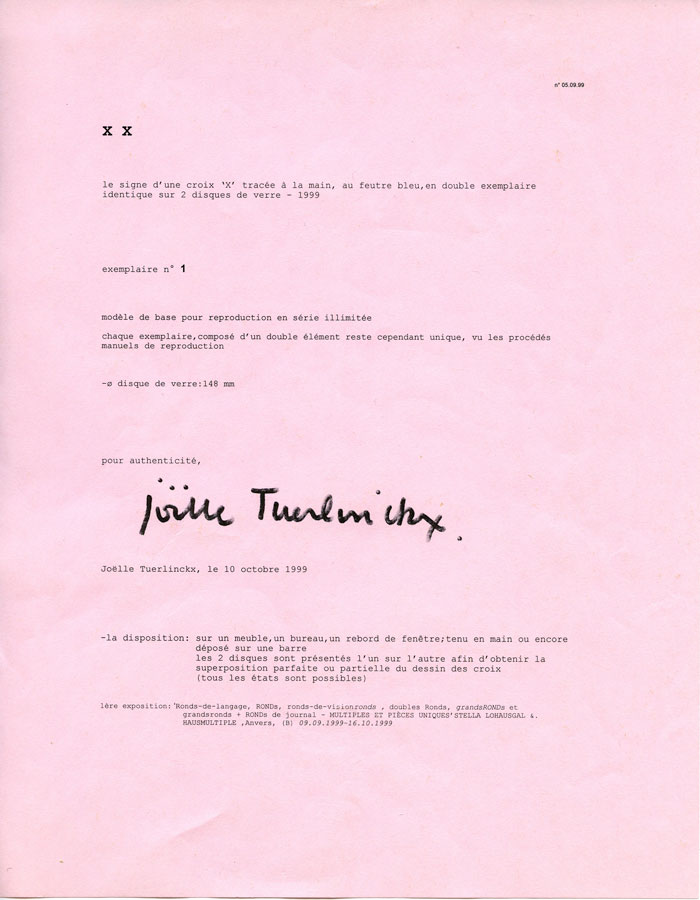
signed, dated sample number 1, certificate (27,5 x 21,5 cm) with instructions
provenance: The Kersten van Steenbergen Collection and acquired from Stella Lohaus Gallery, Antwerp, Belgium
sold
The work ‘X X’ is a series of glass discs that each time is produced on demand, or is for whatever reason by the artist. This sign of a cross “X” is drawn by hand with felt pen, made in duplo on two discs of glass and put on top of each other. This sample is the basis for reproduction of a series of unlimited pairs of discs and seen as such this piece is unique. For display Joëlle Tuerlinckx suggests in the accompanying certificate to use a furniture piece, a desk, a window sill, to hold it in one’s hand or to put it on a shelf. The two discs are shown on top of each other with the crosses not necessarily perfectly fitting, i.e. all positions are right. Right at the top of he certificate it is emphasized by Tuerlinckx that each cross is unique; ‘…considering the manual process of reproduction by hand’.
The work of Joëlle Tuerlinckx should be considered as Fundamental art. Through exhibition interventions she aims to demonstrate how the place in which things are seen shapes our perception of them. It incorporates projections, audio recordings, videos, drawings, collages, photographs, found and crafted objects, and her own writings. She says: ‘An exhibition is an experience of space that proposes action, or reaction, as a means of reflection, of thinking on our human condition…’.
This copy is the basic model for making “X X” in an unlimited edition. This is most likely the only copy from the planned series of unique works, as no second copy has ever been shown or published anywhere.
MAURIZIO CATTELAN, Blah, blah, blah, 2018
190 x 20 cm
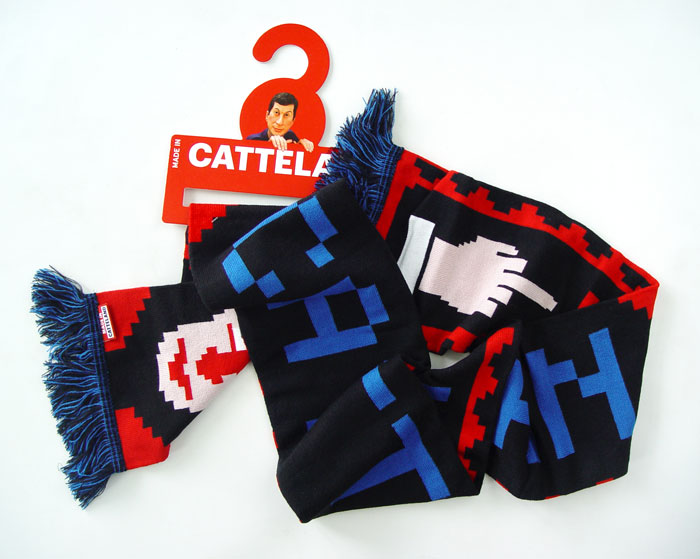
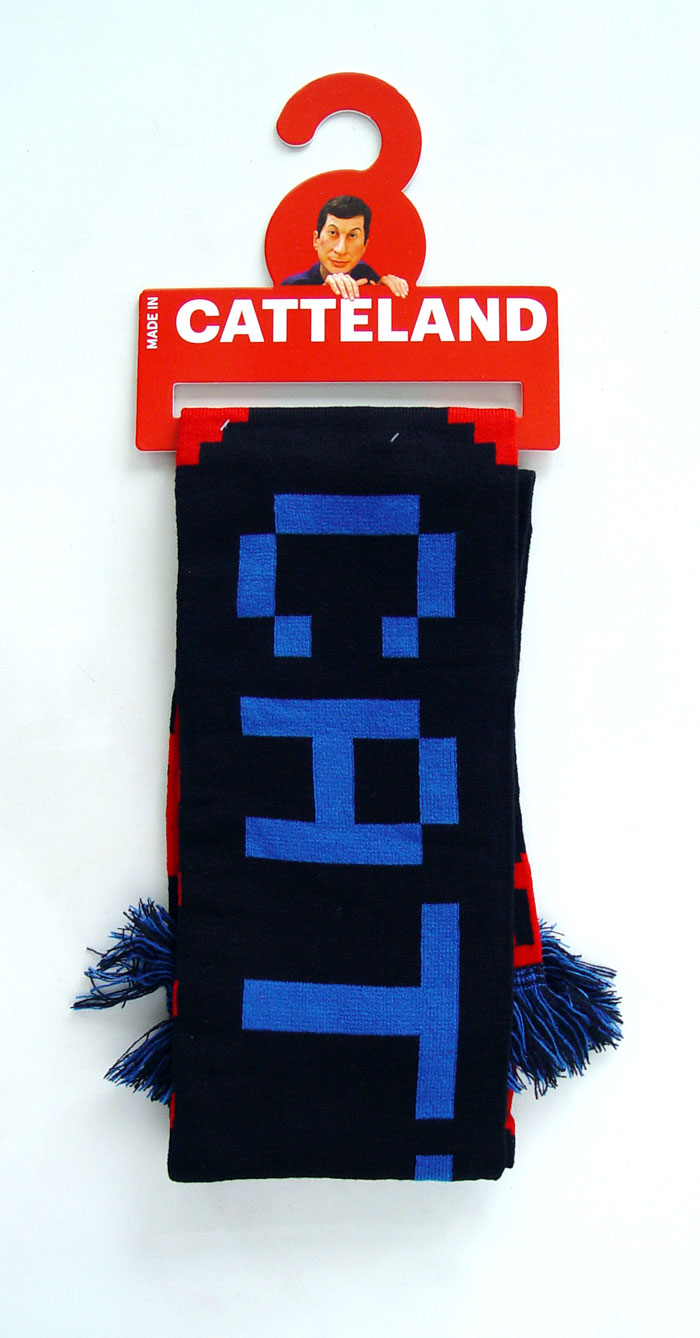
scarf, polyacrylic fibres, cardboard hanger, offset
limited edition 400
mint very rare
published by Made in Catteland, Italy
€ 360, – plus € 18,00 Track & Trace registered EU mail
inv.MCat 000
This is the only scarf with the name of Maurizio Cattelan on it, out of a huge series of fan scarfs referring to football clubs and museums situated all over the Western world. The rest of the scarf bears the text ‘Blah, blah, blah’, a digitized self-portrait and a hand with a raised middle finger.
In spite of its edition of 400 copies this item is extremely difficult to find on Internet.
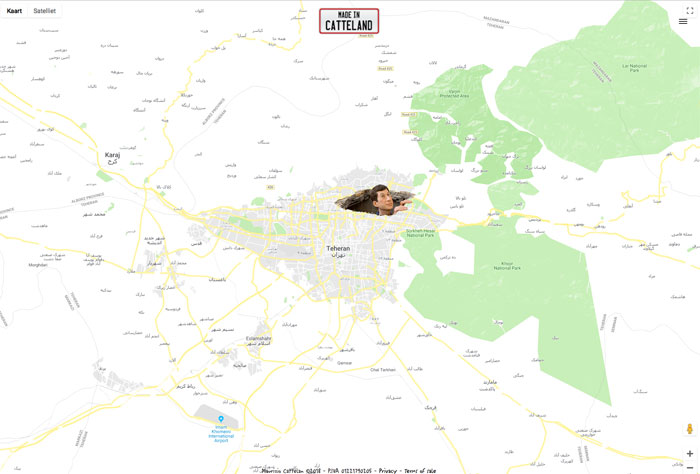
Maurizio Cattelan’s address for contacting Made in Catteland shows the following image:
OLIVIER MOSSET, invitation cards of exhibitions 1990-2010
32 x 26 x 5 cm
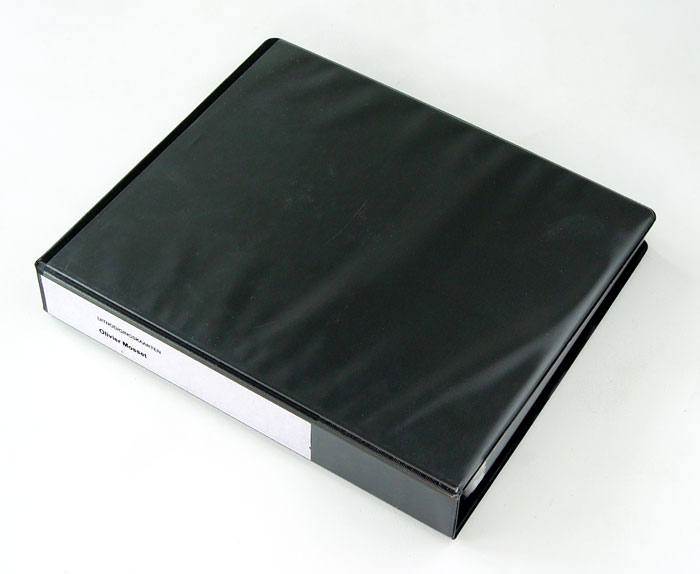
printed matter: ring binder with 56 exhibition invites, plastic sleeves
€ 950,- plus € 18,50 Track & Trace registered EU mail
inv. OM 000-pr
This collection of printed matter is almost a complete set of exhibition invitations from this period.
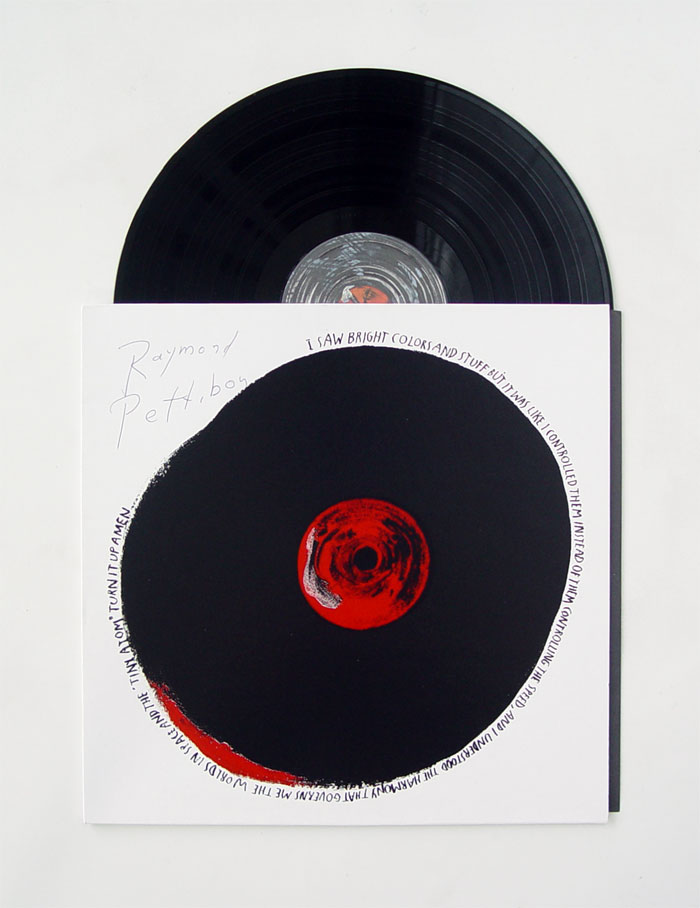
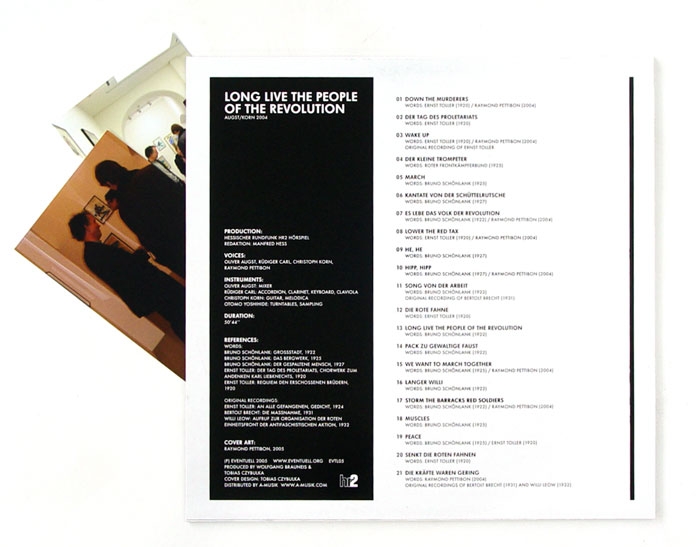
RAYMOND PETTIBON, Blank / “Long Live the People of the Revolution”, 2005
31,1 x 31,5 cm
LP, 12″
signed on cover
comes with 2 private photos of sign event
edition 400, of which unknown signed copies rare
published by Eventuell, Cologne, Germany
€ 450,- plus € 32,- Track & Trace registered EU mail
inv.RPett 698
The cover is a reproduction of a drawing with the following text: ‘I saw bright colors and stuff but it was like I controlled them instead of them controlling the speed, and I understood the harmony that governs me the worlds in space and the ‘tiny atom’ turn it up amen….’ This record is in the collection of MoMA, New York, USA.
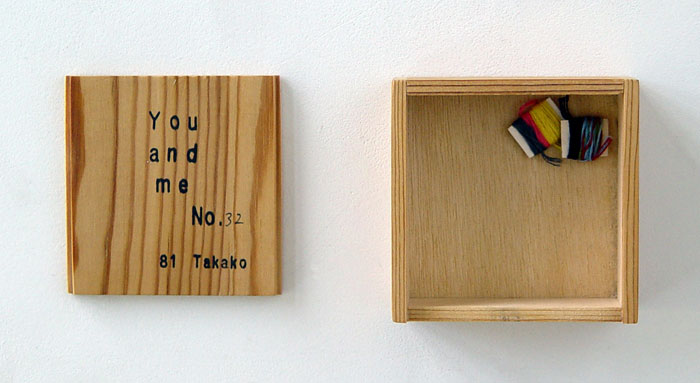
TAKAKO SAITO, You and Me, 1981
3,6 x 8 x 8 cm
yarn spools, coloured threads, wooden box, ink stamps
signed, dated, numbered, here No. 32
€ 960,- plus € 18,- registered mail Track & Trace
inv.TSait 691
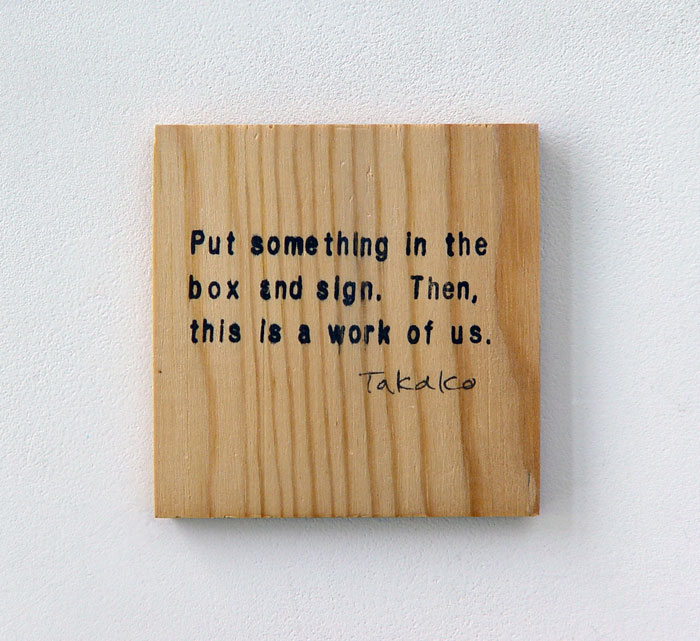
Ink stamped instructions on the reverse of the lid read ‘Put something in the box and sign. Then, this is a work of us.’.
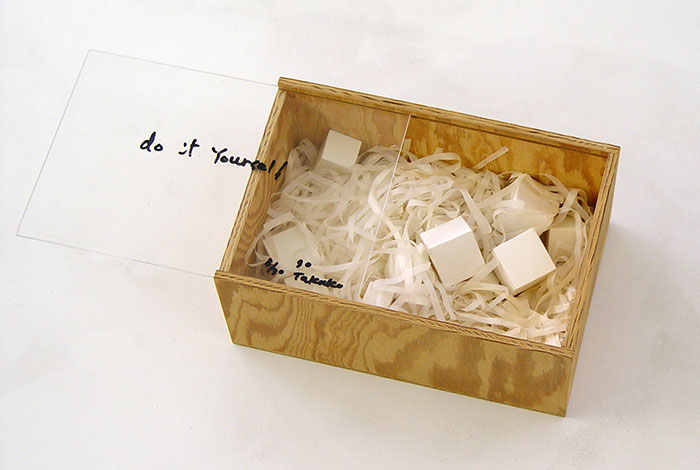
TAKAKO SAITO, Do it Yourself, 1990
10 x 23 x 15.3 cm
17 hand made paper cubes, shredded paper, wooden box, felt pen ink on perspex lid
video tape that accompanied this edition is lacking
signed, dated, numbered
edition 30, here number 8/30
published by Bonner Kunstverein, Bonn, Germany
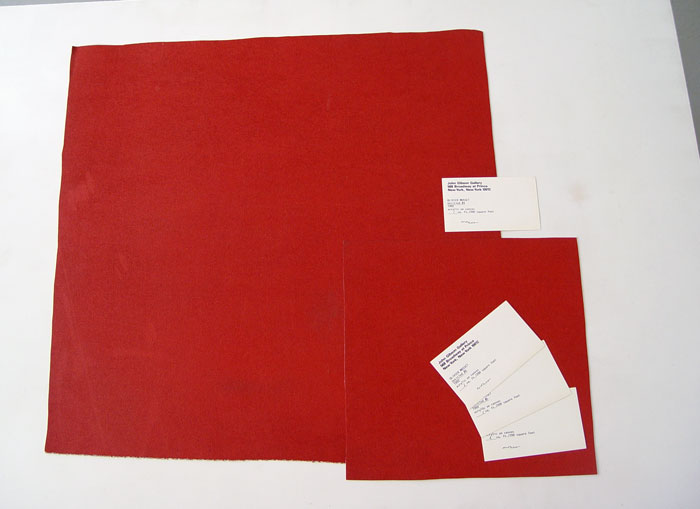
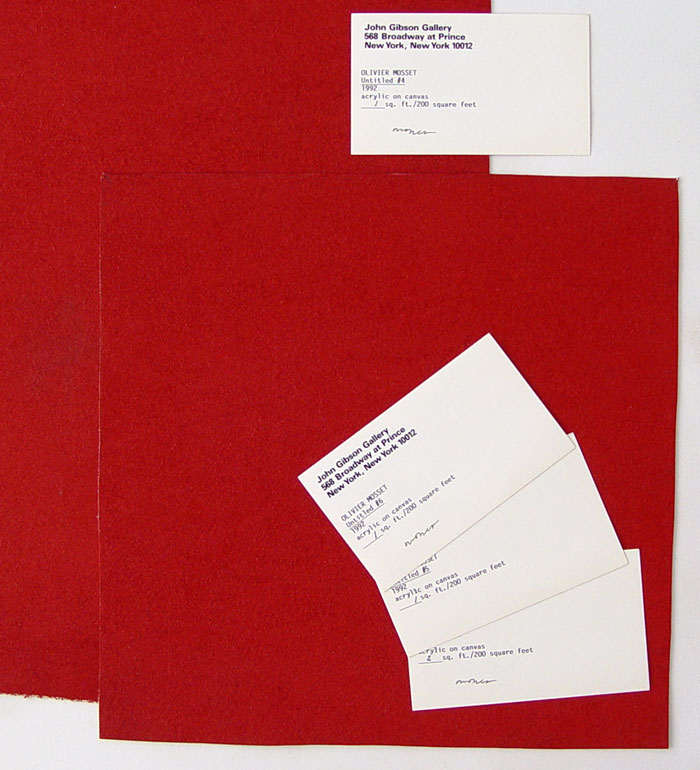
OLIVIER MOSSET, Untitled # 3, #4, #5 and #6, 1992
ca 60 x 60 cm (4 sq. feet) / 31 x 30.5 cm (1 sq. foot)
two pieces of acrylic paint on canvas, 4 labels; 6 parts
signed on 3 labels
numbered and dated in print only sold as unique piece of work
p.o.r.
inv.OM 696-697-pr
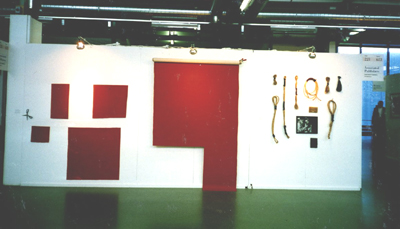
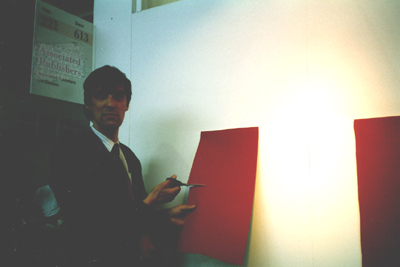
In 1992 John M Armleder proposed several gallerists to show together multiples at the Basel Art Fair under the name Associated Publishers. Participating publishers were Daniel Buchholz, Cologne / Ecart, Geneva / Gallery John Gibson, New York / Galerie van Gelder, Amsterdam / Daniel Newburg, New York and Caroline Nitsch Editions, New York. Gallery John Gibson showed a 10 meters long rolled up canvas originally rejected by Olivier Mosset and kept in his studio. For the Art Basel Editions 1992 he proposed to revive this painting by adding a pair of scissors to the red roll, including pre-signed labels for each sale. This was meant for buyers to cut out a piece of one square foot or more.
During the Art Basel art fair no visitor bought a piece of the edition and at the end of the art fair Kees van Gelder and John Gibson swapped an edition with each other. After the fair the roll of canvas and samples got lost and until today Olivier Mosset has never seen it again. This makes the set pictured above into an unique piece that originally was meant as a kind of DIY edition until the canvas was finished.
Since the roll of red painted canvas is lost for over a period of thirty years, let alone the signed labels, this work should be considered as more than unique. It is a set of three signed editions cut out from the vintage rol for the very first time on the Basel Art Fair. This is all that is left over and therefore this group of works ought to stay together in order to preserve a lucid idea of Olivier Mosset to give a twist to his originally disapproved very large painting. KvG
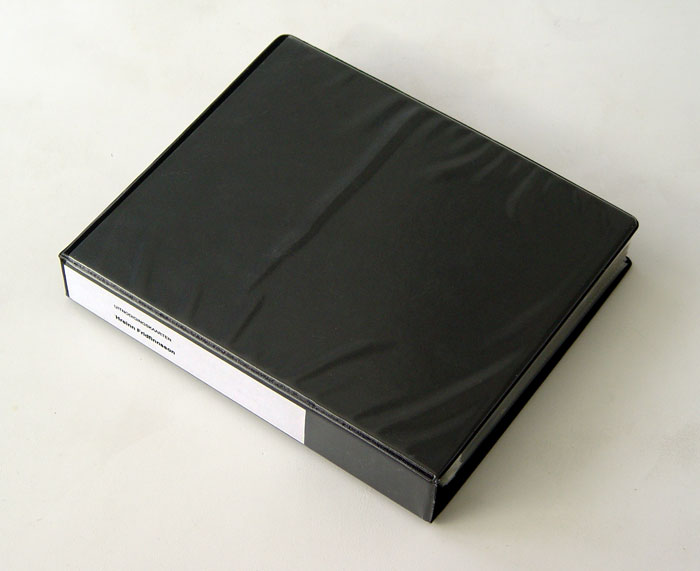
HREINN FRIDFINNSSON, invitation cards of exhibitions 1972-2010
32 x 26 x 5 cm
ring binder with most probably a complete set of exhibition invites in plastic sleeves
€ 1.200,- plus € 24,- Track & Trace registered EU mail
inv.HF 000-pr
The invites in this binder have been collected during a period of 28 years and as such a rarety. It includes a hand written hand-out invite for an exhibition at In-Out Center in Amsterdam in 1972. The card could be considered a self made multiple in tiny envelope, both hand written in pencil. It is unknown if there are any left apart from this one.
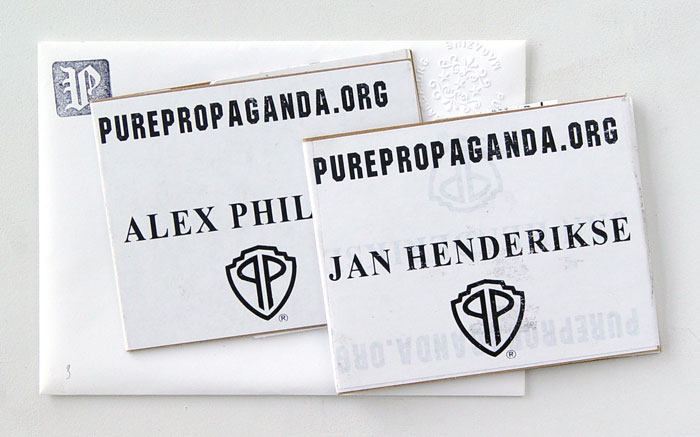
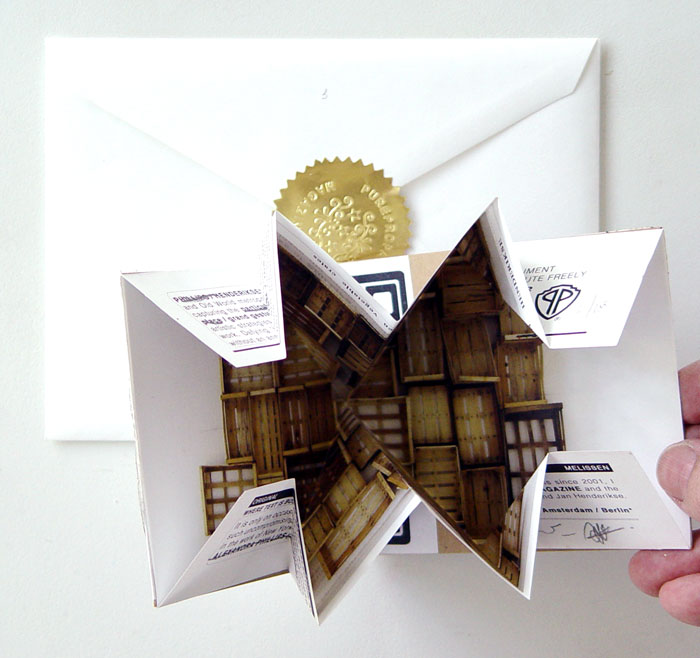
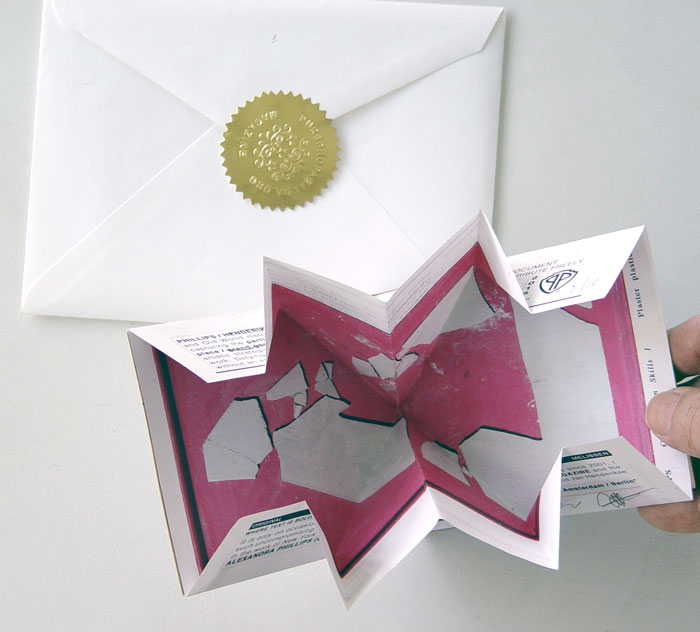
JAN HENDERIKSE / ALEXANDRA PHILLIPS, Pure Propaganda Magazine, 2015
each ca 11 x 14 cm, unfolded 27.7 x 21.5 cm, 2 parts
pop-up card mounted on cardboard, blind and ink stamped envelope with gold seal, colour illustration, text
signed, numbered, here number 3/10
edition 10
published by Antoon Melissen, Amsterdam
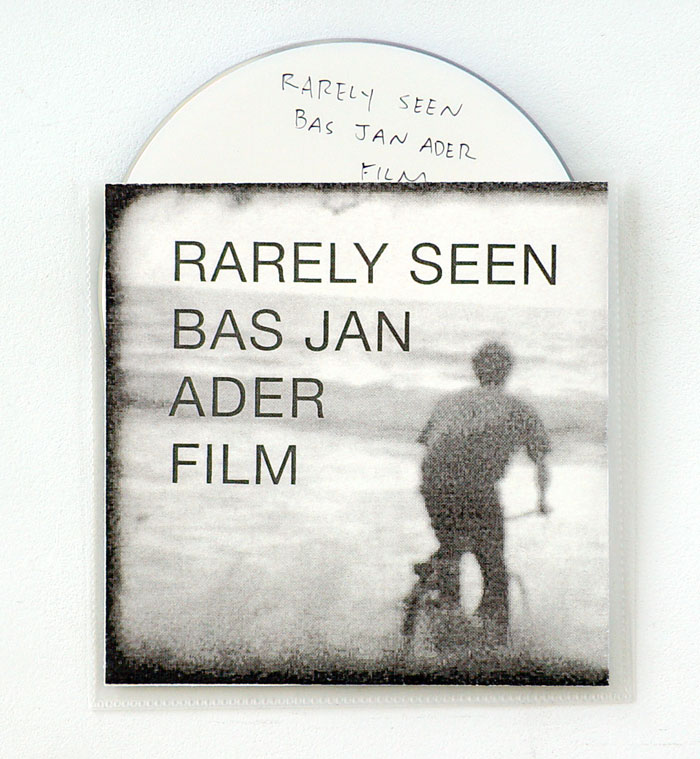
DAVID HORVITZ, Rarely Seen Bas Jan Ader Film, 2009
13 x 13 cm
DVD, plastic sleeve, photo copied cover hand written title by the artist on disc, as issued
edition 30
published by Art Metropole, Toronto, Canada
mint condition extremely rare
inv.DHor 690
‘In 2006 the clip Newly Found Bas Jan Ader Film appeared on YouTube. The six second clip features a man bicycling into the sea. It is announced as a work by Bas Jan Ader found at UC Irvine, where Ader was teaching in the 1970s. The story is not unlikely. Bas Jan Ader, who was lost at sea in 1975 while undertaking an Atlantic crossing that was to be the second work in a series he entitled In Search of the Miraculous, left a small body of highly noticeable works, mostly short films and photographs. One of these works, Fall II, Amsterdam from 1970, is a short sequence showing Ader biking along and then into a canal. The newly found work could be a related iteration. As many of Bas Jan Ader’s works show, he was interested in inserting his own body into a relationship with gravity, investigating phases of transition, the time and space between two locatable states, from standing up to falling down, from hanging from a tree to hitting the surface of the pond below.
It was revealed that Horvitz was in fact the author of this newly found work. Assumingly on request from the gallery Patrick Painter who represents Bas Jan Ader’s estate, Youtube removed the clip for ‘copyright infringement,’ only for it to reappear soon again posted on an account carrying the name of PatrickPainterGaller – most likely Horvitz’s work. Currently you can find the clip as the first video appearing when googling ‘Bas Jan Ader,’ and also on the official Bas Jan Ader website under the section Homages. However tricksterish Horvitz’s effort may appear, it does also expose a great admiration of Ader’s work and kinship to the ideas he brought forth. Newly Found Bas Jan Ader Film was not produced to be shown in a gallery space. It was rather a device that, circulating on the internet, triggered certain mechanisms and revealed how a number of parties reacted to the potential existence of a never before seen Bas Jan Ader work. Horvitz reveals how it is possible to insert new information into already existing narratives and shift their immediate appearance. A work by David Horvitz is today a very visible part of a Google search for ‘Bas Jan Ader’. It is fair to say that he faked his way into this hierarchy of information, but the fact that he succeeded so well is worth our attention. It points to our unfounded reliance on whatever a Google search brings us, and comments on the potentialities of the fake as well as questions our relationship to the real.’ From “But Mr. Horvitz, Where Is The Work?”.
Helga Christoffersen, 2010
Additional information
In 2009 the 2nd Cannons Gallery published a flip book called “Rarely Seen Bas Jan Ader Film” which comprises stills from the film. The book is accompanied with a free 2-sided newsprint David Horvitz produced for his exhibition at the gallery.