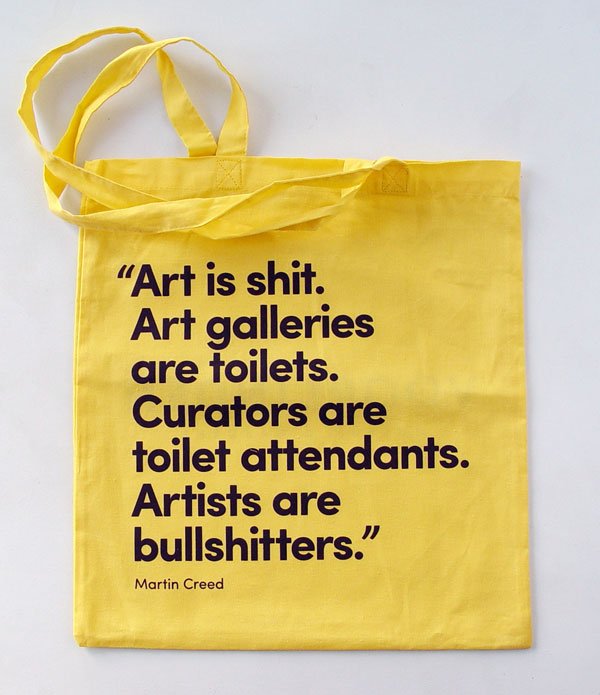
MARTIN CREED, Art is shit., 2017
ca 59 x 38 cm (41 x 38)
text on tote bag
published by Museum Voorlinden, Wassenaar, Netherlands
For purchase see: Martin Creed, shop Museum Voorlinden
inv.Tassen 619
Screen printed text on fabric: “Art is shit.
Art galleries are toilets.
Curators are toilet attenders.
Artists are bullshitters.”
This is a tote bag with a syllogistic quote from the artist: ‘Art is shit. Art galleries are toilets. Curators are toilet attendants. Artists are bullshitters.’ Apparently in the eyes of Martin Creed galleries show shit and curators are therefore toilet attendants, while artists produce shit. He says: ‘The more I work, the more I think I don’t know what I am doing. I have absolutely no idea what I am doing. It is like sweat or shit. It comes out as I go along …’.
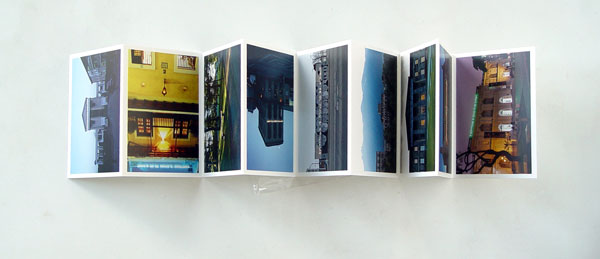
MARTIN CREED, Everything is going to be alright – leporello, n.d. [ca 2012]
104,5 x 14,8 cm
offset postcards, leporello in cellophane envelope
edition unknown
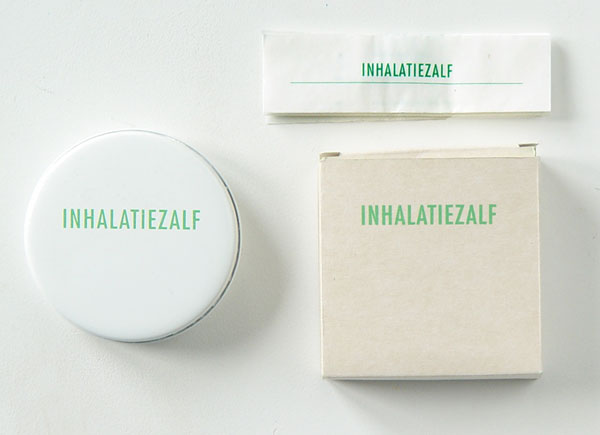
JOB KOELEWIJN, Inhalatiezalf, 1995
7,9 x 7,9 x 2,7 cm
eucalyptus ointment in tin can, cardboard box, folded leaflet, 3 parts
edition unknown
published by the artist
Ref. Collectie Stedelijk Museum, Amsterdam: Job Koelewijn Inhalatiezalf, 1995
This multiple was issued on behalf of Job Koelewijn’s solo exhibition at Galerie Fons Welters in Amsterdam in 1995.
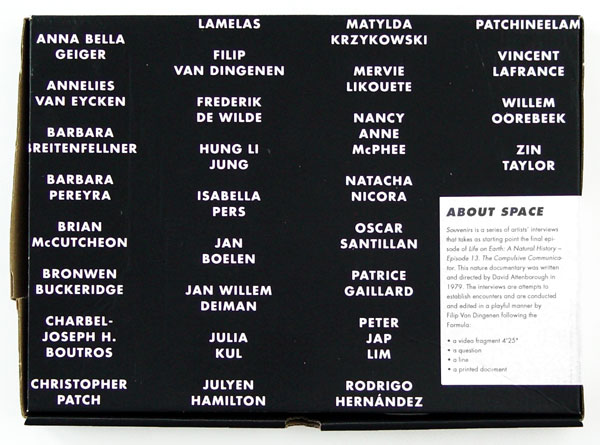
MARK DION, About Space – Souvenirs, 2014
22,5 x 31 x 3,7 cm
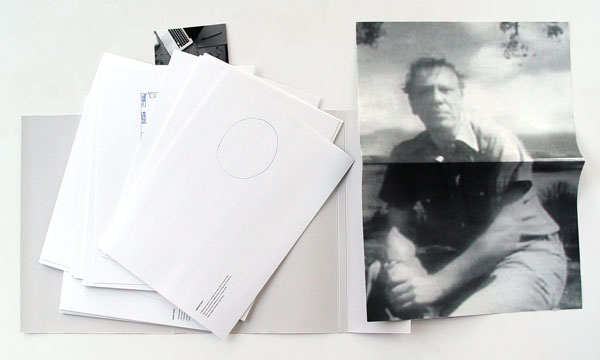
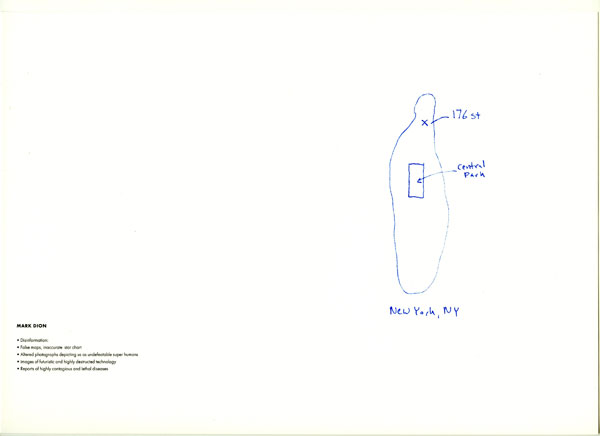
45 loose A4 cards in folder, black cardboard box, folded poster (42 x 59,4 cm), signed in plate by David Attenborough, black and white photo (10 x 15,2 cm) edition 80 + XX AP, here IX/XX
small tear in edge box
published with the support of Jan van Eyck Academie, Maastricht, Netherlands
This box contains a series of artist drawings/statements of David Lamelas, Willem Oorebeek, Zin Taylor, Matt Mullican, Adrian Paci, a.o.
JONATHAN MONK, Push or Pull?, 2012
30 x 20 x 0,8 cm
anodized aluminum door sign, transparent perspex
signed and numbered on certificate, edition of 20 + 3 A.P.
More Publishers, Brussels, Belgium
inv.JMon 000
In 2006 Jonathan Monk told David Shrigley in an interview: “I now think the only thing that stayed with me after art school was the idea of context. What and where things are placed in relationship to other things in the world.” The work ‘Push or Pull?’ could be quite well considered as such a thing, the more since the question mark seems to refer to anyone who stands in front of a glass door swiftly deciding either to push or pull. If this sign would be mounted on a glass door in a practical way, the question mark in the title would’t make much sense apart from being very practical for getting a door open in the right way. In order to safe the interrogative part in this work one could easily imagine to mount the transparant persex door sign in a non-practical way on a glass door. Meaning that if one pushes the door it will be blocked and at once the question is raised: ‘Push or Pull?’. KvG May 2013
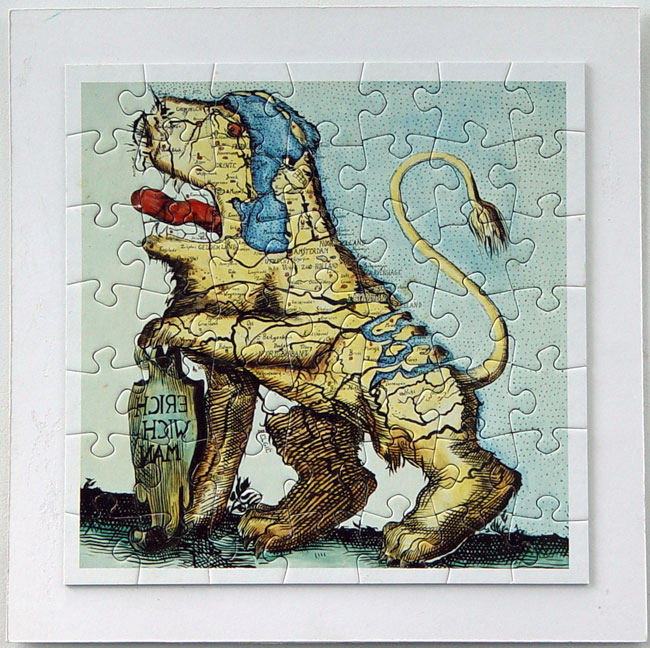
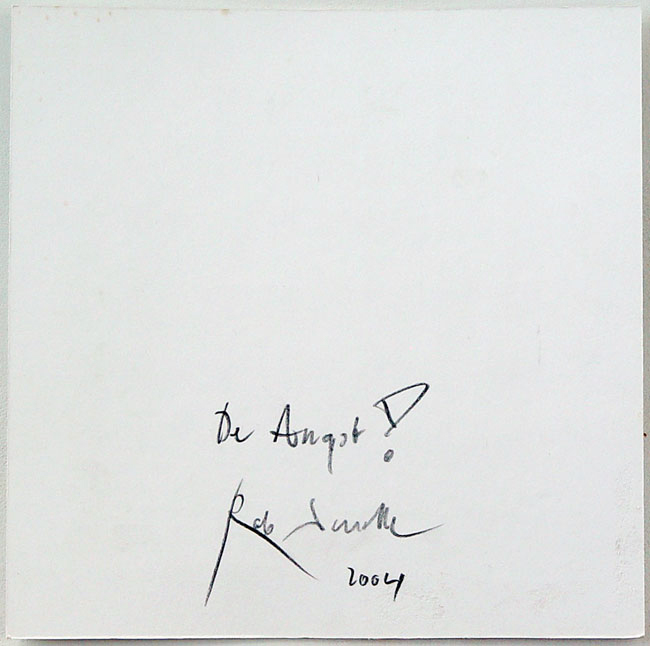
ROB SCHOLTE, De Angst!, 2004
22,3 x 22,3 cm (18,3 x 18,3)
jigsaw puzzle, glued on cardboard as issued
signed, dated
edition unknown
condition: splendid very rare
inv.RSch 000-pr
It is not clear whether the image is a cartoon, as almost all medieval etchings show the Dutch-Belgian lion looking to the right. The lion on Rob Scholte’s puzzle looks to the left with the shield mirrored, engraved with “Erich Wichman”. The names of the towns and rivers on the map stayed readable. Is the lion’s gaze pointing back towards an opposite direction?
Erich Wichmann joined the Amsterdam city council in 1921 as co-founder with his Rapaille Party ‘Had-je-me-maar’. The puzzle is above all a tribute to contrariness in general and not so much to Wichmann’s sympathies for fascism at the end of his life. He was a Dutch artist, eccentric, anti-parliamentary troublemaker and anti-bourgeois writer. His paintings (on display in, among others, the Centraal Museum, Utrecht) are not without merit as such.
“Begin jaren 90 heeft Scholte De Angst! als jigsaw-puzzle doen uitgeven, waarvan dit een exemplaar is. De oplage is onbekend, maar de uitgave is uiterst zeldzaam. Door Scholte achterop getiteld, gedateerd (2004) en gesigneerd. Ref. De Angst ! text in Dutch; Rob Scholte Museum, Den Helder, Netherlands
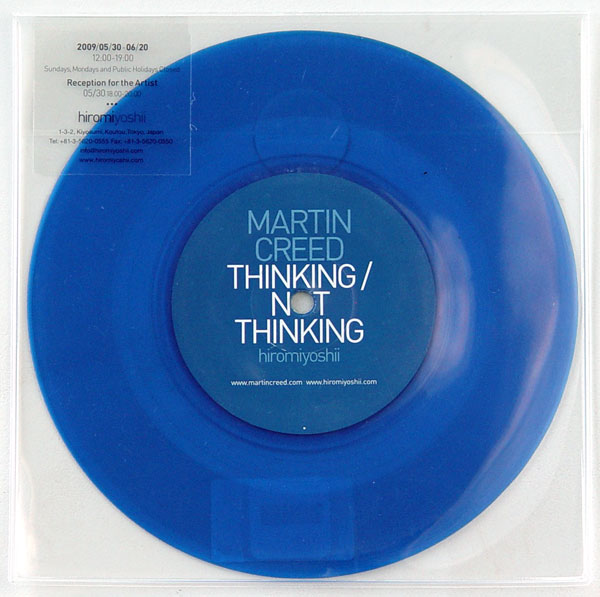
MARTIN CREED, Thinking, not thinking, 2009
7″ vinyl record (blue), plastic sleeve, incl. invitation sticker, sealed
published by Hiromi Yoshii Gallery, Tokyo, Japan
inv. MCre 000-pr
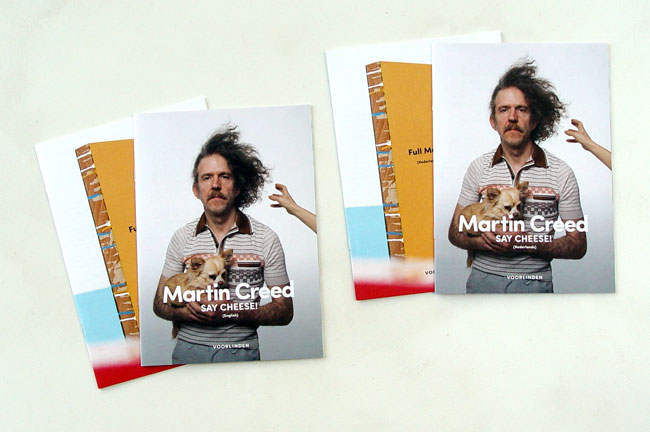
MARTIN CREED, Say Cheese!, 2017
21 x 14,8 cm
catalogue, stapled brochures, each 16 pp.
2 parts: publication in English and Dutch, incl. entrance ticket
Added: “Full Moon”, 2017, 21 x 14,8 cm, catalogue, stapled brochures, each 16 pp., 2 parts: publication in English and Dutch.
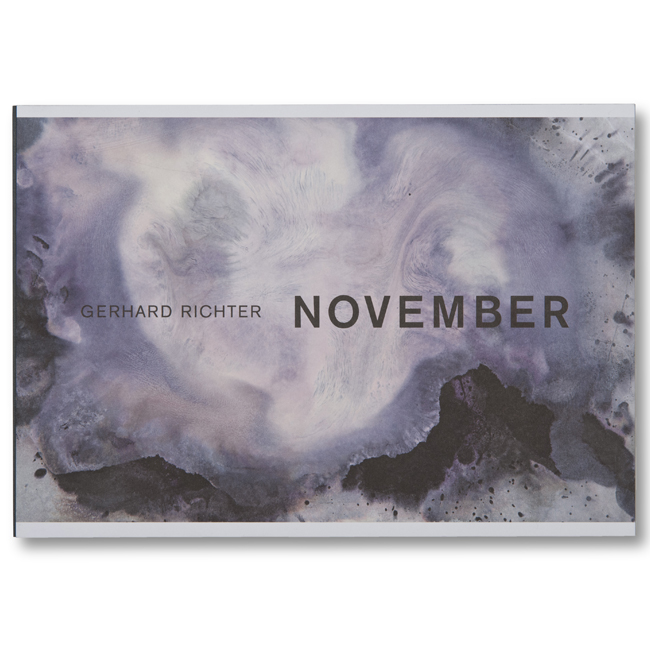
GERHARD RICHTER, November, 2013
31,5 x 21,8 cm
offset
edition 800
signed, numbered
published by Heni Publishing, London, England
pristine
sold out
Richter produced NOVEMBER, a series of 54 works in ink. These works were created using a variety of ways to manipulate the consistency of ink and its flow on highly absorbent paper. The ink permeated through the sheets creating two related images, one on the front and one on the back of each of the 27 sheets used. In some cases Richter also applied lacquer or pencil.
Richter had a complete set of facsimiles made, so both sides of the 27 sheets could be viewed at the same time. However, the sequence of mirrored pairs of images is disrupted, as some of the images have been rotated by 180 degrees. The book displays the images of the pairs, one on the front and one on the back of each page and ends with an overview of all 54 works.
In the artist’s book November Richter not only made use of sheets with a mirror image of the motif on the reverse; in some cases the ink that had soaked through layers of sheets created what looked like visual echoes. His manipulation of the given sequence was distinctly restrained: for instance, November 2nd (recto) is placed upside down, disturbing the regularity of the mirror-image idea. In addition to this, the obscuring over-painting of this same sheet and of November 3rd draws attention to the differences between the two, rather than to any repetition. In the case of the pairs of sheets dated November 4th and 5th, the verso images are again rotated by 180º; it also appears that the sequence of front and back has been reversed in the case of the latter. The given reflections are thus just the point of departure for an interlocking web of playfulness, which in turn creates simultaneity from a temporal and material sequence. In the same way that original and facsimile per sheet and page are barely distinguishable, any distinctive qualities in the different ink markings are all but impossible to discern – with the initial disposition on one side and copy, duplicate and replica on the other. It has become a work in itself.
History of prices:
Antiquariat an der Uni Muenchen, Munich, Germany € 1.500,- January 2021
The Archive is Limited, Amsterdam € 950,- December 2020
Tate Museum, London, England € 470,- / GBP 400.- April 2013
New Art Editions € 800,- March 2017
ED RUSCHA, Make New History, 2009
6,5 x 19,5 x 13 cm
linen bound note book, text in stamp printing on book block, 624 blank pages signed in print on endpaper of book
original cardboard box, incl.loose paper with colophon and statement of the artist, dated: ‘Ed Ruscha November 10, 2009’
edition 1000
published by MOCA, Los Angeles, USA
mint extremely rare in this mint condition
€ 3.450,- plus € 38,- Track & Trace registered EU mail
On the occasion of the 30th Anniversary of the Museum of Contemporary Art in Los Angeles this edition of 1000 copies was produced for distribution to members and attendees of its anniversary gala and not sold to the public. The pages of the book are blank, Edward Ruscha’s intention being for the owner to write his or her own history on the pages.
Due to its weight and thickness this artist’s book may also be considered as a real object or conceptual sculpture.
History of prices:
EHC Fine Art, USA US$ 4,500.- April 2023
1st Dibs, New York, USA € 4.736,- 24 September 2022
Douglas Stewart Fine Books, Australia US$ 1.513 – € 1.561,- &#nb; 24 September 2022
Douglas Stewart Fine Books, Australia AU$ 2.250 – € 1.468,- &#nb; 25 February 2021
LA Modern Auctions, Los Angeles, USA US$ 2,000.- &#nb; 18 October 2020
EHC Auctions + Artsy, Lot 5, highest bid US$ 1,900.- estimate US$ 2.500-US$ 3.000 &#nb; 31 March 2020
The Archive is Limited, Amsterdam € 1.950,- &#nb; 28 March 2020
Rago Arts & Auction Center, Lambertville, NJ, USA & nbsp; – Lot 733, $ 1,063 &#nb; 16 November 2013