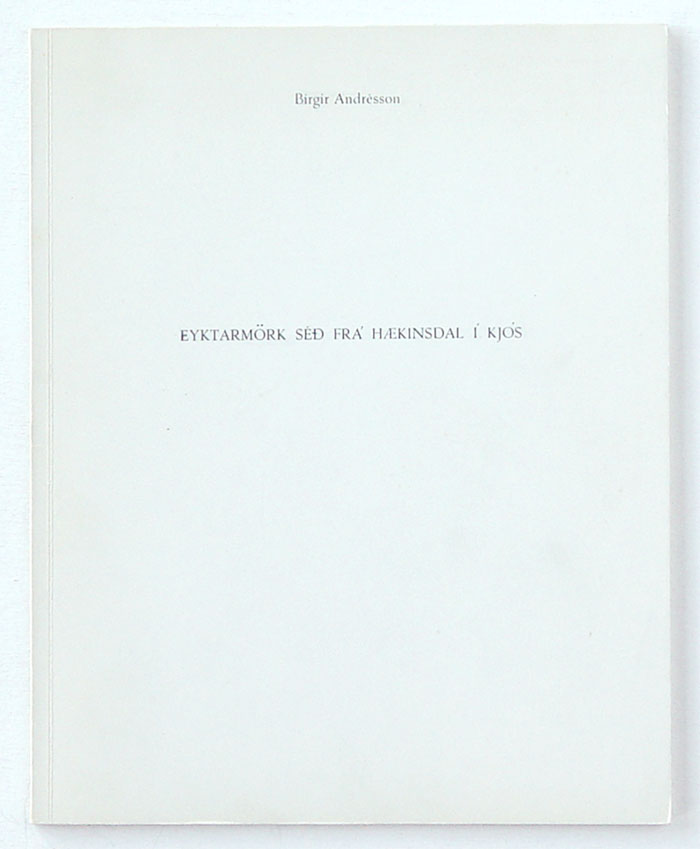
BIRGIR ANDRÈSSON, Eyktarmörk se∂ frá Haekinsdal í Kjós, n.d. [1979]
20 x 16 cm
artist’s book, SC, 8 pp. + 7 pages of tracing paper in between the photographic images
published by the artist / printed at the Jan van Eyck Academie, Maastricht, Netherlands
splendid condition, very rare
sold
The title of Eyktarmörk se∂ frá Haekinsdal í Kjós could at best be translated as Orientation point of dayparts seen from Haekinsdal in Kjós.
This artist’s book of Birgir Andrèsson (1955 – 2007) shows seven parts of the day with the help of reading the shadows on surrounding mountains at fixed moments of the day. In the 18th century Icelanders in the countryside used this method for reading the time within each period of 24 hours. The eighth period of twelve ‘o clock at night was never used.
The book is dedicated to Douwe Jan Bakker (1943-1997) who lived and worked in Haarlem and visited several times Iceland where he studied the Icelandic vocabulary related to different conditions and characteristics of the Icelandic landscape.
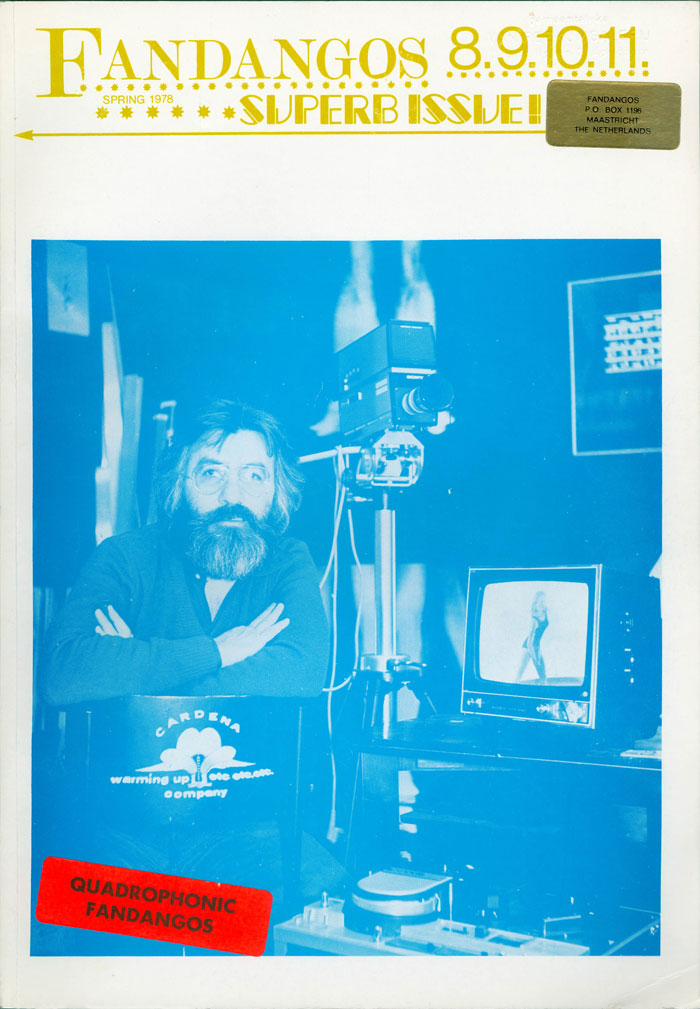
FANDANGOS – nrs. 8.9.10.11 superb issue!, 1978
30 x 21 cm
stickers, ink stamps signed by Raúl Marroquin as Superbman
edition 500
published by Raúl Marroquin, Maastricht, Netherlands
excellent condition, very slightly aged
€ 225,- plus € 12,- Track & Trace registered mail
inv.RMar 969
This 4-in-1 Fandangos magazine has been the last issue of a series of 11 publications.
Numerous contributions by Raúl Marroquin including ‘From Video to T.V where he writes that ‘It is about time that Video Art becomes Television Art’ and Marroquin’s Vampires project, Paul Carter, Julia Hayward, Jana Haimsohn, Darcy Lange, Antonio Caro, Baladi, Angelika Schmid, Jonier Marin, Montadas, C. Garcia, Tobe Carey, Klaus Staek (2 pages), Jan Patric, David Zacki, J. Charlin, Eduard Bal, Sanja Ivekovic, Michel Cardena’s Live Video Performance (7 pages, includes Cardena rubberstamp), Tony Morgan’s live video performance at de appel, Marjo Schumans, Ben D’Armagnac, Elsa Stansfield, Madieon Hooykaas, Jantje Tetelepta, I. Akel, Joshua Jansen, Relly Carlo, Nan Hoover photographs from video by Koos Bay, Tony Pegotti (5 pages), Michael Krzyzanowski (2 pages), Ger van Dijk, John Liggins, Bob Takes/Michiel Romeyn, ‘Languages my friends speak’ by Ulises Carrion, Jorgos Chronis, Michael Gibbs, Marten Hendriks/ Ad Gerritsen, Marianne Heske, Kirsten Bates and Taki Bluesinger ‘Plumbing Repairs simplified’ (4 pages), Jenna Van Eegan, Richard Hefti, Yves de Smet, Nikolaus Urban, Jan Hendrix (3 pages), Reindeer Werk, Martha Hawley, Charlemagne Palestine, Peter Hutchinson, Phillip Pearlman, Anne Tardos, Roger Cutforth, Willoughby Sharp’s collage narratives ‘The Nation, the Region, Ideas and trends.’ (10 pages), R Heyman, Douglas Davis, Jean Depuy, Scott Burton, Larry Miller, Jacki Apple, Laurie Anderson, Jeffrey Deitch, Dalibor Martinis, Marcia Resnick, Anna Banana (3 pages), Rita Yokoi. The photographs by Geurt Van Dijk, A.Rainer and Dieter Rot, Luigi Ontani, Boltanski, Ad Gerritsen, A.Messager, Jurgen Klauke, B.Sleeuwenhoek all include the artists’ names in rubber stamps next to the images. Also ink stamps of various emblemata.
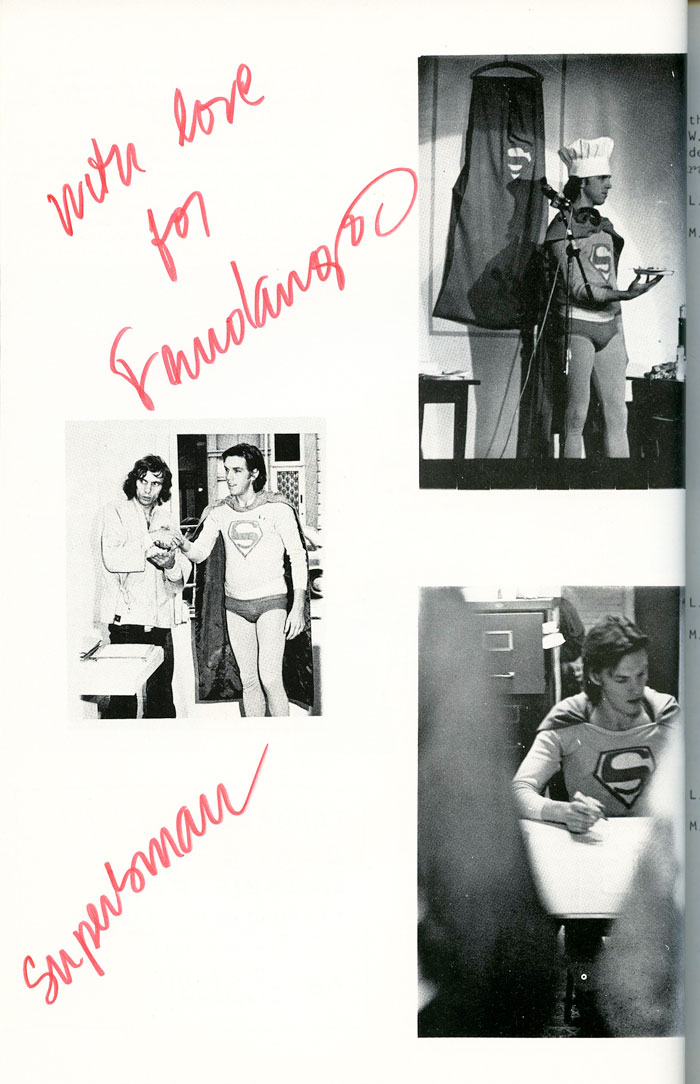
Includes articles on “Superbman”, the ‘nation’s number one citizen’, a character created by Raul Marroquin who, the article describes, was appointed as “Friendship Ambassador to Europe”. The article is uniquely handsigned by Raul Marroquin as Superbman: “With love Fandangos – Superbman” in red marker pen. Includes another article on Superbman’s nemesis a sado-masochistic underworld-type character called ‘Nikos Nukos the Worst’.
Other articles include “A lecture on video in museum” by Drs I.L Szenassy (5 pages in Dutch) and ‘Visual poetry as a form of marginal art’ by Peter Frank. Interviews with Ulises Carrion (in English) Maarten van Regteren Altena (in English), Robert Filliou (in Spanish), ‘Yogo’ the false-name of a Dutch drug trafficker (in English), Costa Gravas (in French), Art Taylor (in English), and Mohammed Ali (In English). Articles and texts vary between in English, Dutch, Spanish and French.
History of prices:
UnOriginals, UK April 2024 GBP 245.-
William Allen Word & Image, London 26 December 2020 GBP 125.-
JULIEN MONNERIE, untitled, 2018
10,7 x 8,8 cm
polaroid photo
series of 20 unique photos
felt pen signed, dated
published by Connoisseurs, Paris, France
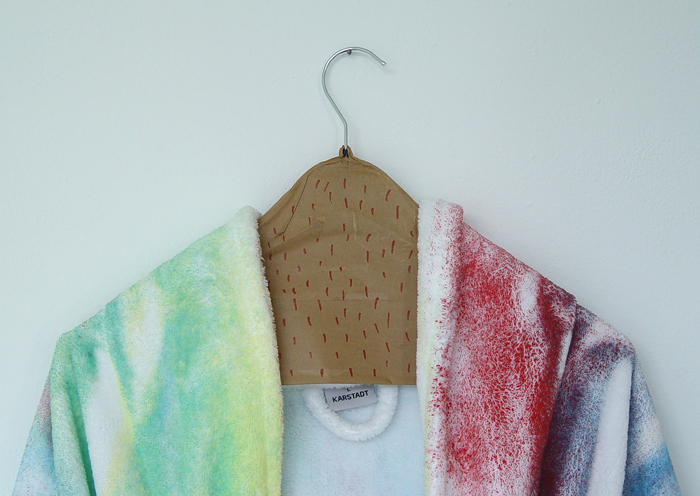
With a necktie, cuff-inks, collar pins or his signature Julien Monnerie shows a preference for making works related to his body. Since 2014 he is specifically interested integrating his initial-like signature in his paintings and prints. In this polaroid edition he shaved his hair in the shape of his signature, playfully referring to artists like Man Ray and Yves Klein. KvG
HANA MILETIĆ, Your façades are peeling off like red onions (words found in Zagreb), 2015
32.3 x 21.9 cm
stapled artist’s book, offset, 27 pp. signed, numbered
edition 70, here nr 68/70
published by Mark Pezinger Verlag, Vienna, Austria
mint
€ 150,- plus € 12,- Track & Trace registered EU mail
inv.HMil 000-pr
Hana Miletić started a collection of photographs that she has made over the years of graffiti on the city walls in Zagreb. These writings on the wall helped her to understand what is at stake on a (micro)political level in her hometown. By isolating the words from their environment and by expanding them onto the pages of a book Miletić is able to amplify their more basic qualities.
Hana Miletić refers to weaving as a kind of ‘care work’; more than just the production of cloth, it doubles as a mode of conscious reparation through which she can process the damage and disrepair she notices in the world into precious artefacts. No longer merely serviceable or disposable like their referents, they are ends in themselves. Yet they also seem to perform an ironic take on the economy of weaving, exchanging modest materials – albeit woven ones like tarpaulins and gaffer tape – for rich ones and trading functionality for aesthetic worth.
MUNGO THOMSON, Font Study (TIME), 2011
33,7 x 26 cm
artist’s book, offset, HC, 196 pp.
signed, numbered
edition 20/50
published by LACMA / Los Angeles Museum of Art, Los Angeles, USA
mint
Ref. LACMA shop Mungo Thomson US$ 325.-
All right pages show a different font used during the decades Time Magazine was issued.
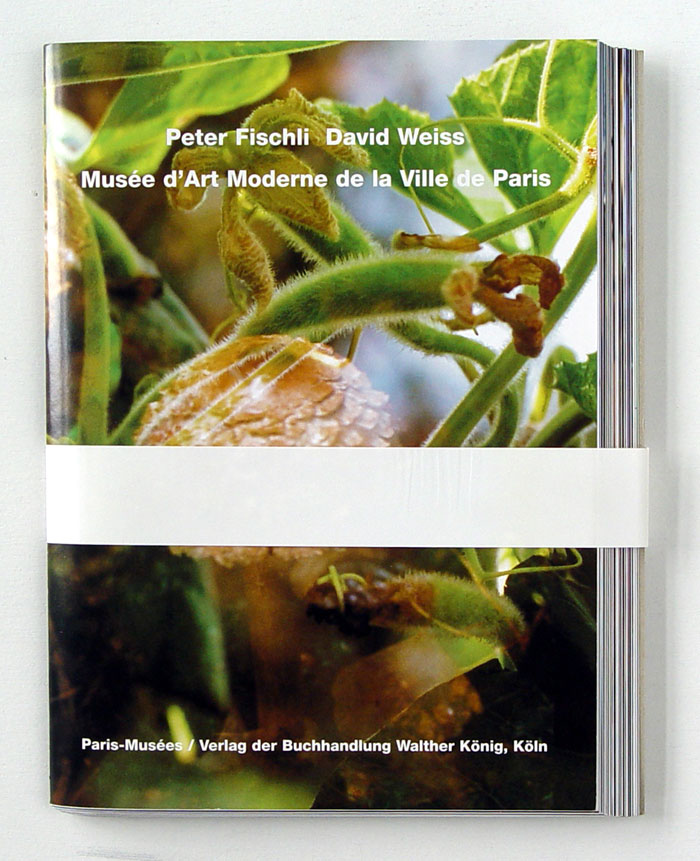
PETER FISHLI & DAVID WEISS, Musée d’Art Moderne de la Ville de Paris, 1999
27,5 x 21,5 cm
SC, 160 pp., offset, high gloss MC paper
original grey cardboard in the middle, incl. sleeve as issued
published by Buchhandlung Walther Koenig, Cologne, Germany mint
€ 280,- plus € 18,- registered mail
inv.F&W 000-pr
Peter Fischli: “We were interested in the element of chance”. David Weiss: “When the photographs come off, it’s like receiving a gift.”
and “In fact, they tread quite a thin line: we want to seduce viewers with floral opulence. But you can’t exactly view them ingenuously, either.”
This ‘book’ is one of the most outstanding visuals issued in the nineties as an industrially made artist’s book. The loose pages folded together as a book make each photographic double exposure on each spread an evocative experience for the eye. Soon one year later in 2000 a second edition was published due to its success.
ADITYIA MANDAYAM, The Ooze, 2018
12 x 17 cm
book, offset, SC, 144 pp.
interview and texts by Aditya Mandayam (ca 30%), Chris Fitzpatrick, Andrea Liu, Michal Novotny and Kees van Gelder
edition 500
published by Roma Publications, Amsterdam, Netherlands / Kunstverein München, Germany
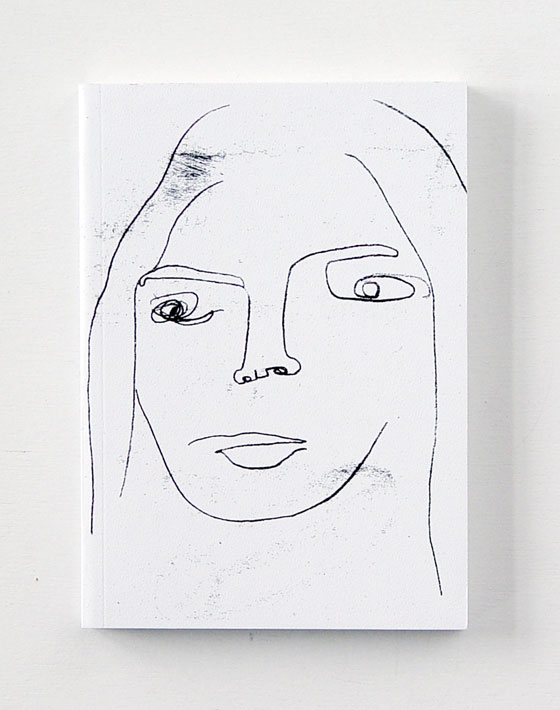
Usually so-called artist’s books with texts by others than the artist involved are expelled from The Archive is Limited. This book invites to make an exception. “The Ooze” contains 49 pages of 144 that have been written by Aditya Mandayam. The front and back of the cover show drawings by the artist. “The Ooze” gives an insight in the thinking of Brud through theories and statements.
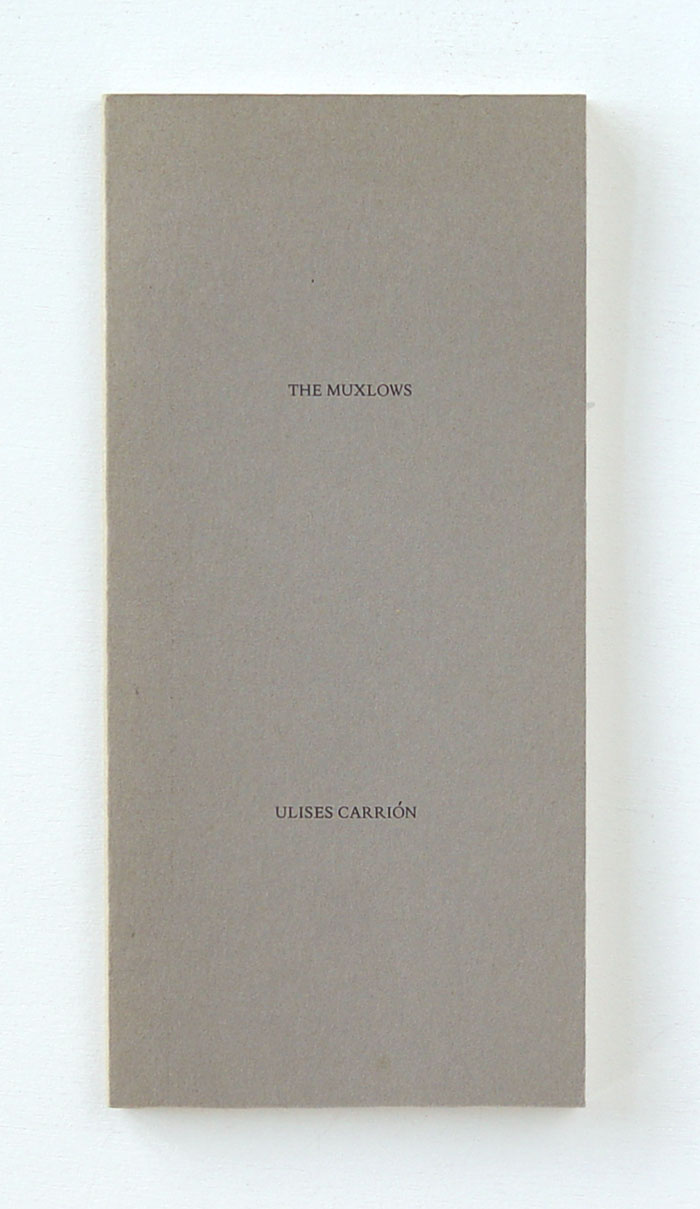
ULISES CARRIÓN, The Muxlows, 1978
22.9 x 11 cm
artist’s book, 100 pp., SC
edition 300
published by Verlaggalerie Leaman, Düsseldorf, Germany
condition: excellent, although slightly discolored cover
€ 1.450,- plus € 12,- Track & Trace registered mail
inv.UCar 000-pr
Introduction on fly leave: ‘The Muxlows’ is the history of an English family from Yorkshire. I found it in 1972, in the city of Leeds, in the last pages of a badly damaged bible. U.C.’
This book is a dry list of names that goes back to 1835 when Thomas Muxlow was born. It is the start of genealogical facts limited to birth and death. The first chapter “Parents names” is followed by “Childrens names”, “Marriages” and “Other family events”. In this way a family story is told as a family drama of generations, i.e. family members come and go. Again with this book Carrión’s shows his strong affinity with the method of archival order to set out a story similar to writing a novel.
KvG
A copy is in the collection of Stedelijk Museum, Amsterdam.
History of price:
Ecart-Books, Geneva, Switzerland October 2023 SFr 1.700,-
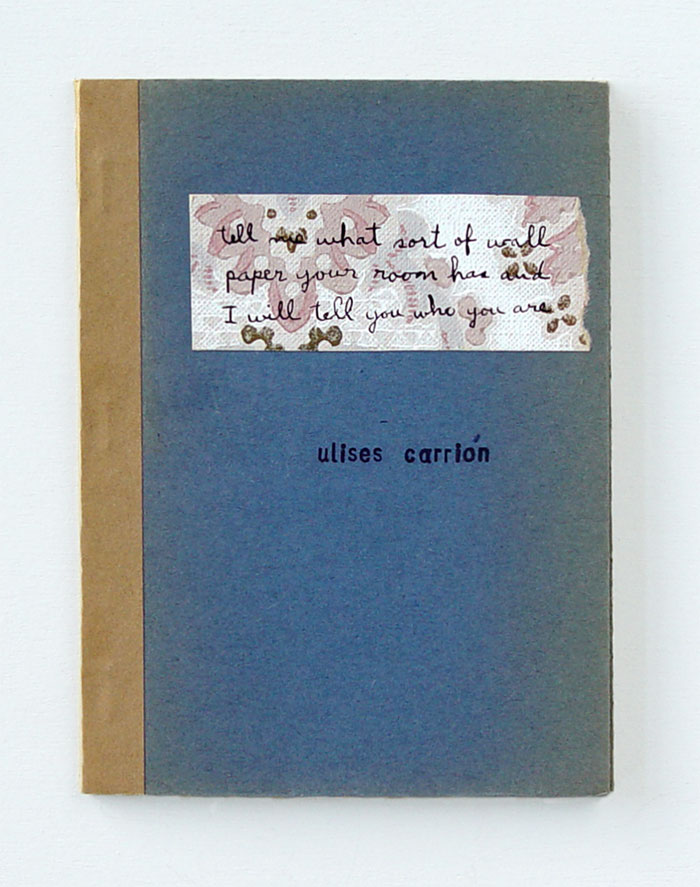
ULISES CARRIÓN, Tell me what sort of wallpaper your room has and I will tell you who you are, 1974 (“2nd edition”)
16,7 x 12,3 cm
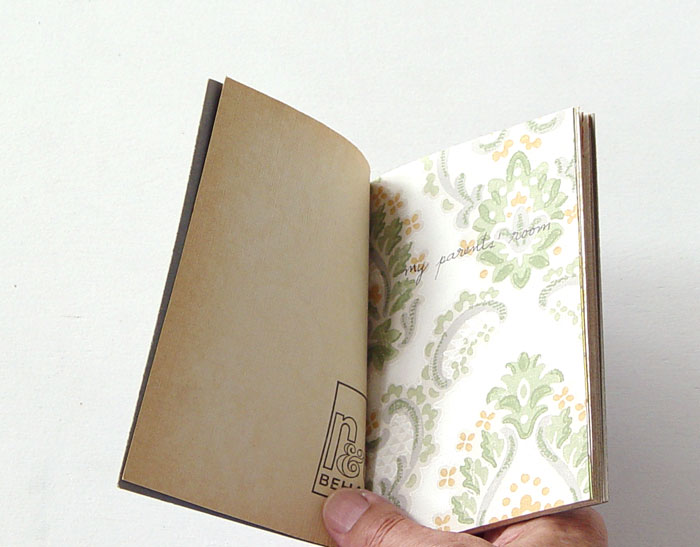
20 pp., SC, collage on couver, hand written texts – as issued – on samples of wallpaper, ink stamped name
stamp dated
edition ca 50
published by In-Out Productions, Amsterdam, Netherlands
condition: very good, although with discoloured cover
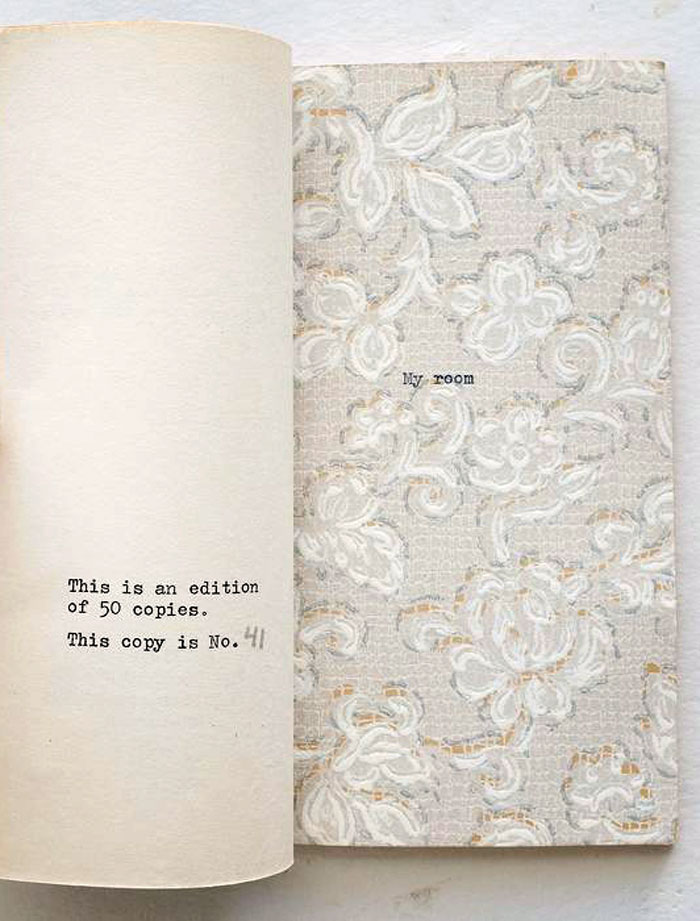
This copy is a second edition, but more personal than the first one. Opposite to the first edition that was typewritten this one is handwritten by Ulises Carrión. Therefore when one pages though the book one notices a more artisan look; in fact compared to the first edition the directness of this one makes it into a different bookwork.
On one particular day, Carrión was very happy to find the fashion books of a wallpaper company on the street in front of Rath & Doodeheefver, well-known for their outstanding quality (now in the collection of the Amsterdam Museum). He cut them to become the pages of his book “Tell me what sort of wallpaper your room has and I will tell you who you are”. He used the different designs for the identification of the rooms, such as: my sister’s room, my guestroom, my psychiatrists’ room. Some booklets were sold and others were given away, and soon a second edition of 50 copies was required, made with handwritten designations as opposed to the first series’ typewritten designations. A copy of this wallpaper book is in the collection of Stedelijk Museum. Tineke Reijnders, 2017