DAVID HORVITZ, The Distance of the Day, 2013
ca 12,5 x 18 cm, 2 parts
set of leporello postcards, beach sand from Maladives and Los Angeles in cellophane envelopes
edition 25, here numbers 12/25
signed, dated, numbered
mint
€ 250,- plus € 18,- Track & Trace registered EU mail
inv.DHor 000-pr
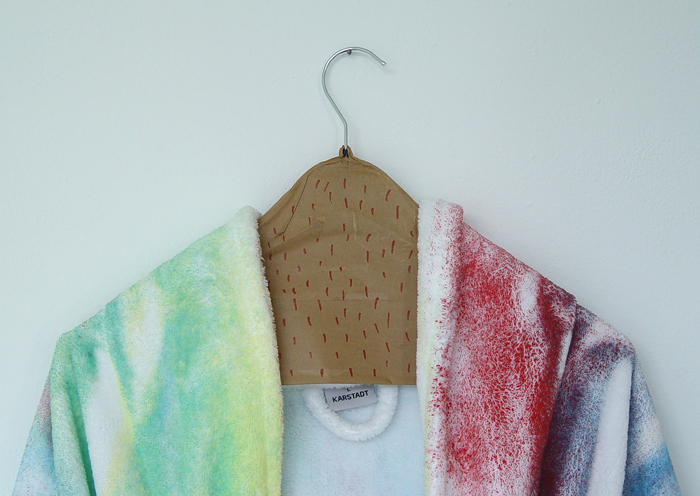
‘In early February I asked my mom to go and watch the sunset and make a video. She did this from the Palos Verdes Peninsula, where I used to watch the sunset when I lived in California. She made the video with her iPhone taped to a metal barrier that protects people from falling over the cliffs.
In synchronicity with her, I too was looking at the sun and making a video. From my perspective the sun was rising. I had calculated where the the sun would be seen as rising at the exact same moment it was seen as setting in Los Angeles. In early February this was the Maldives, a location which may not exist in the near future due to the rising of the seas.
As my mom watched the sun set into the Pacific Ocean, I was watching it rise over the Laccadive Sea. Synoptic is a useful term here. It comes from the Greek syn, meaning “together”, and optic, meaning “seen”. Though separated by thousands of miles, we were watching the sun together.
The title, The Distance of a Day, is a reference to the idea of the journey. Originally, journey meant the distance one traveled in a day. Here, the spatial distance that separated my mother and myself was not defined by the distance one could travel in a day, but by the day itself. By the delimitations of a day – where the sun rises and where the sun sets.
Phones were chosen to make (and display) the video because they are devices that orient us spatially and temporally. They are like contemporary pocket-watches and compasses that we carry with us. They coordinate and synchronize us. They broadcast moments instantaneously across distances. Or, what seems to be instantaneously. There is always some delay.
The same two phones that were used to shoot the videos, that were once on opposite sides of the world, are now used to display the videos. They are now only inches away.
Right now somewhere the sun is simultaneously setting and rising. Someone or something is probably bearing witness to this.’
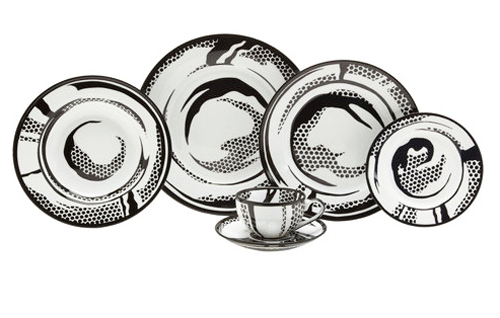
ROY LICHTENSTEIN, Dish Set, 1966-2013
10.75″ dinner plate, 9″ salad plate, 6.5″ bread/butter plate, 8.5″ soup bowl and 6″ saucer
ceramics, 6 parts
edition unknown
published by Barneys, New York, USA
not available
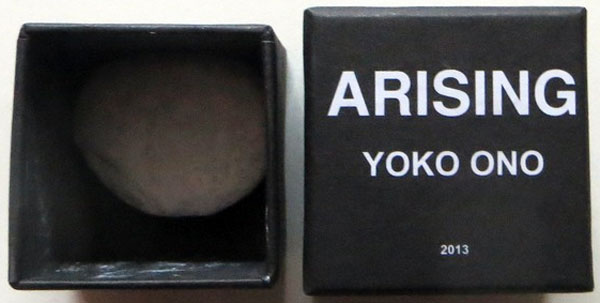
YOKO ONO, Arising, 2013
4,5 x 4,5 x 4,5 cm
limestone pebble, cardboard box, printed text on lid
published on behalf of Venice Biennale, Venice, Italy
mint
edition unknown
uncommon
€ 195,- plus € 8,- Track & Trace registered EU mail
inv.YOno 000-pr
Yoko Ono made a call to women of all ages from around the world to send her their stories of how they had suffered simply because they were women, accompanied by a picture of their eyes. In this sense the “Arising” was a call expressed and visualized in Ono’s installation at the Venice Biennale in 2013. The pebble multiple “Arising” was issued on behalf of the Venice Biennale 2013.
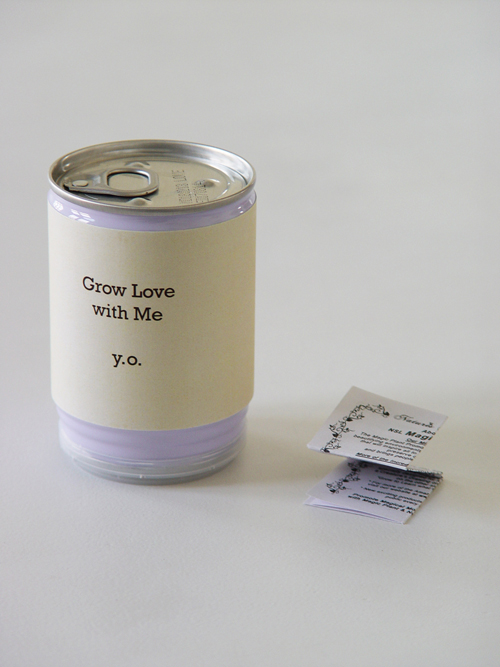
YOKO ONO, Grow Love with Me, 2013
height ca 10, diameter 6 cm
aluminium can with glued matte paper label, plastic lid, bean,
manual with growing instructions in 4 languages, colophon on label of Serpentine Gallery
initials in print
edition unknown added: label Serpentine Gallery
published by Serpentine Gallery, London, England
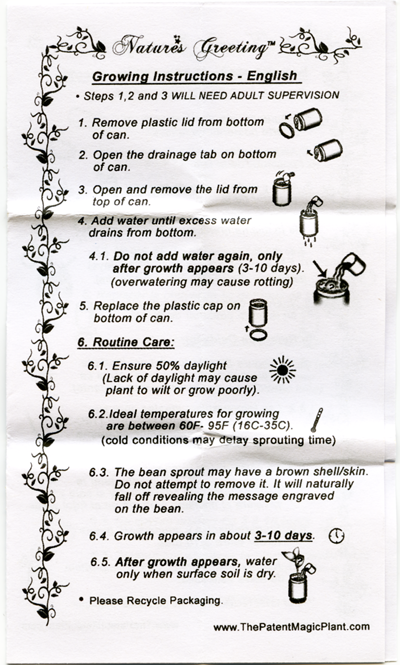
This artwork consists of a ‘magic bean’, which when grown, reveals the word LOVE. Laser etched onto the seed by a patented process, the word first appears on the outer seed coat covering the inner cotyledon. Without coaxing, after a day or two the seed coat will fall away to reveal the word on the inner cotyledon. At first the inner cotyledon is yellow, but with the addition of sunlight quickly turns green. The seed then begins to splay open, shooting a leaf upward, bearing the same word LOVE.
PHILIPPE DECRAUZAT, Untitled [wallpaper], 2013
0,53 x 10 meters / 20.86 inches x 11 yardsprinted wallpaper
limited edition 264
published by Wallpaper by Artists, Lyon, France
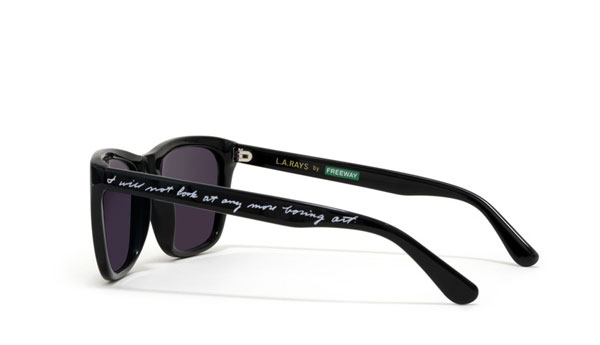
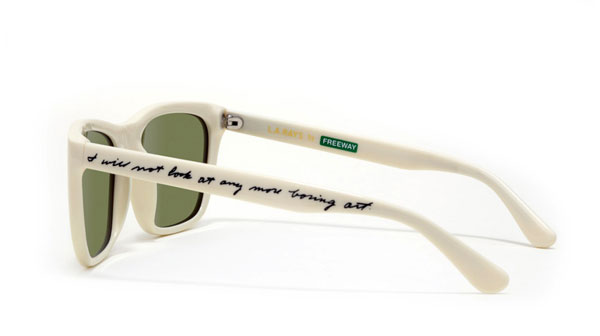
JOHN BALDESSARI, I will not look at any more boring art, 2013
signed in print on leg
black version with white text and dark lenses
edition 100
published by Freeway, Los Angeles, USA
JOHN BALDESSARI, I will not look at any more boring art, 2013
signed in print on leg
white version with white text and green lenses
edition 100
published by Freeway, Los Angeles, USA
History of price:
Freeway, Los Angeles, USA April 2014 US$200.00 – sold out
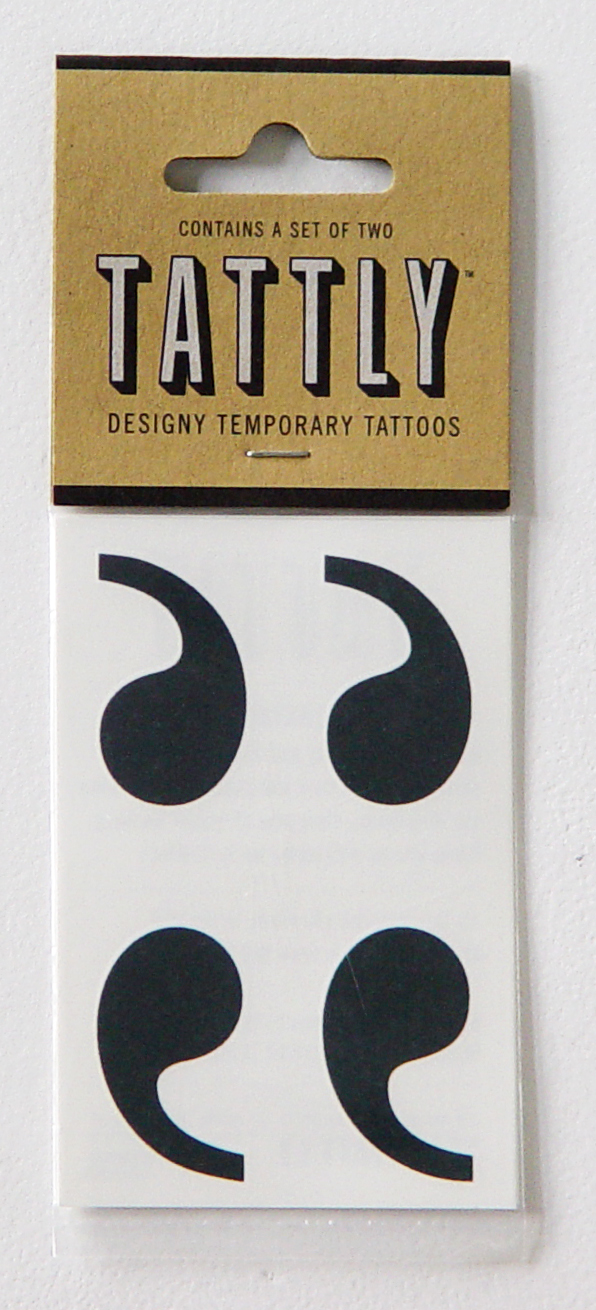
RICHARD ARTSCHWAGER, Quotation marks, 2012 [tattoos]
7,7 x 5 cm
4 quotation marks in plastic envelope, transfer prints, printed paper, staple
edition unknown
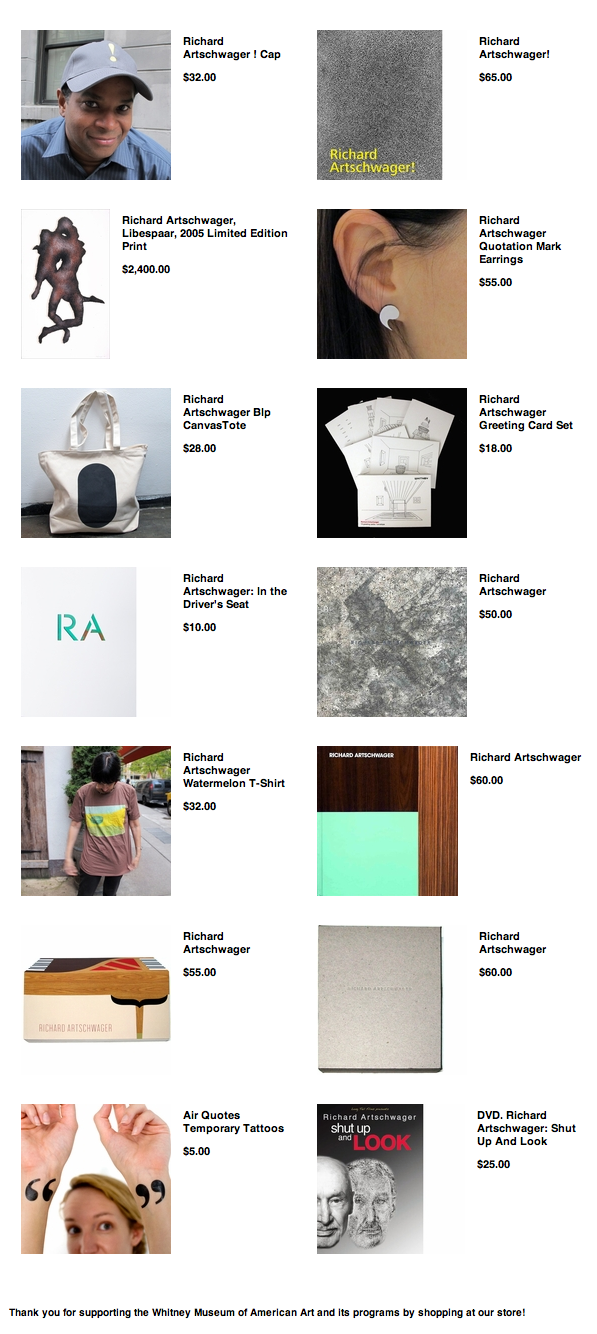
For sale in 2013 at the Whitney Museum, New York, USA
The space between two quotation marks either on human skin or e.g. on a gallery wall emphasize these spaces in between. This tattoo work with quotation marks is apparently not made to unravel what is ‘quoted’ in a given space. Whitney Museum, New York – March 2013
In March 2013 on its website the Whitney Museum categorizes this multiple as an edition that is ‘Reminiscent of Richard Artschwager’s artwork, where he utilizes punctuation outside of its normal realm, rendering its meaning questionable’ and was sold as “Air Quotes Temporary Tattoos”. There is no printed name of Richard Artschwager as a kind of authorization comparable to the “Richard Artschwager Quotation Earrings” The Whitney had simultaneously for sale.
LILY VAN DER STOKKER, This Belongs To Me, 2013
45 x 32,5 x 5 cm
4 parts + seal bag with utensils
two pencils, two brushes, two spatulas, three cups, rubber and sharpener, hand painted colour samples, manual, template, table of installation history to be filled in, artist’s impression of installation, cardboard box, hand signed, dated and numbered in print
edition 6 + 1 AP
published by the artist
€ 3.500,- plus 6% V.A.T.
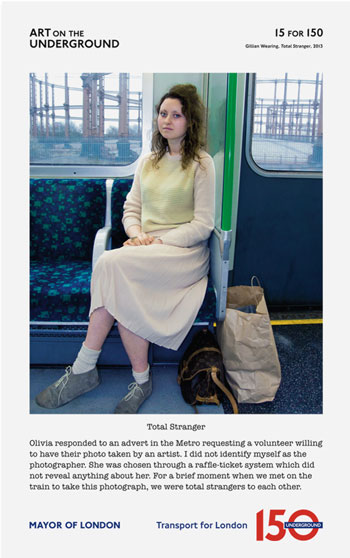
GILLIAN WEARING, Total Stranger, 2013 – present
photo work in commission
signed, numbered
published by Art on the Tube Edition, London, England
GBP 3,000.- March 2014
“The Tube is full of strangers. We acknowledge this fact, knowing that we too are strangers to others. My project is to photograph a stranger. The person came forward via an open call advertised in the Metro newspaper and on the TfL website. I chose them through a raffleticket system, which did not reveal their name, age or gender. Until we met on a train and I took her photograph, I still didn’t know her identity, and she didn’t know who I was either. For a brief moment, we were total strangers to each other.” Gillian Wearing